• Skip to primary navigation
  • Skip to main content
  • Skip to primary sidebar

fundsforNGOs News

Grants and Resources for Sustainability

  • Subscribe for Free
  • Premium Support
  • Premium Login
  • Premium Sign up
  • Home
  • Funds for NGOs
    • Agriculture, Food and Nutrition
    • Animals and Wildlife
    • Arts and Culture
    • Children
    • Civil Society
    • Community Development
    • COVID
    • Democracy and Good Governance
    • Disability
    • Economic Development
    • Education
    • Employment and Labour
    • Environmental Conservation and Climate Change
    • Family Support
    • Healthcare
    • HIV and AIDS
    • Housing and Shelter
    • Humanitarian Relief
    • Human Rights
    • Human Service
    • Information Technology
    • LGBTQ
    • Livelihood Development
    • Media and Development
    • Narcotics, Drugs and Crime
    • Old Age Care
    • Peace and Conflict Resolution
    • Poverty Alleviation
    • Refugees, Migration and Asylum Seekers
    • Science and Technology
    • Sports and Development
    • Sustainable Development
    • Water, Sanitation and Hygiene (WASH)
    • Women and Gender
  • Funds for Companies
    • Accounts and Finance
    • Agriculture, Food and Nutrition
    • Artificial Intelligence
    • Education
    • Energy
    • Environment and Climate Change
    • Healthcare
    • Innovation
    • Manufacturing
    • Media
    • Research Activities
    • Startups and Early-Stage
    • Sustainable Development
    • Technology
    • Travel and Tourism
    • Women
    • Youth
  • Funds for Individuals
    • All Individuals
    • Artists
    • Disabled Persons
    • LGBTQ Persons
    • PhD Holders
    • Researchers
    • Scientists
    • Students
    • Women
    • Writers
    • Youths
  • Funds in Your Country
    • Funds in Australia
    • Funds in Bangladesh
    • Funds in Belgium
    • Funds in Canada
    • Funds in Switzerland
    • Funds in Cameroon
    • Funds in Germany
    • Funds in the United Kingdom
    • Funds in Ghana
    • Funds in India
    • Funds in Kenya
    • Funds in Lebanon
    • Funds in Malawi
    • Funds in Nigeria
    • Funds in the Netherlands
    • Funds in Tanzania
    • Funds in Uganda
    • Funds in the United States
    • Funds within the United States
      • Funds for US Nonprofits
      • Funds for US Individuals
      • Funds for US Businesses
      • Funds for US Institutions
    • Funds in South Africa
    • Funds in Zambia
    • Funds in Zimbabwe
  • Proposal Writing
    • How to write a Proposal
    • Sample Proposals
      • Agriculture
      • Business & Entrepreneurship
      • Children
      • Climate Change & Diversity
      • Community Development
      • Democracy and Good Governance
      • Disability
      • Disaster & Humanitarian Relief
      • Environment
      • Education
      • Healthcare
      • Housing & Shelter
      • Human Rights
      • Information Technology
      • Livelihood Development
      • Narcotics, Drugs & Crime
      • Nutrition & Food Security
      • Poverty Alleviation
      • Sustainable Develoment
      • Refugee & Asylum Seekers
      • Rural Development
      • Water, Sanitation and Hygiene (WASH)
      • Women and Gender
  • News
    • Q&A
  • Premium
    • Premium Log-in
    • Premium Webinars
    • Premium Support
  • Contact
    • Submit Your Grant
    • About us
    • FAQ
    • NGOs.AI
You are here: Home / cat / Solar Energy in Aquaculture: Securing the Future of Fish Farming

Solar Energy in Aquaculture: Securing the Future of Fish Farming

Dated: November 27, 2025

Mukhiya Fish Farms, located in Sahidnagar Municipality, Madhesh Province, Nepal, has been a pioneering institution in the country’s aquaculture sector for nearly 40 years. Established by Boyalal Mukhiya and now managed by his son Kanhaiya and daughter-in-law Manju Devi Mukhiya, the farm has grown from general fish farming to a high-demand hatchery business. Despite challenges such as land fragmentation and theft, the family consolidated their operations in Nanupatti, Dhanusha, where they now produce over 40 million hatchlings annually. Manju, in particular, stands out in a socio-cultural context where women running fish farms is rare, managing all aspects of the operation alongside her husband.

The farm faces substantial operational costs, with feed and energy being the primary expenses. Feed costs are high, and the nutritional quality of market feed is inconsistent, affecting fish growth rates. Energy demands are particularly significant in the breeding center, which requires continuous water pumping, aeration, and maintenance of optimal conditions for the development of hatchlings, fry, and fingerlings. With seven 3-horsepower and two 4-horsepower pumps running constantly, the farm consumes an average of 1,600 electricity units per month, circulating approximately 470,000 liters of water daily. This dependence on energy drives up operational costs, as aquaculture is not eligible for the subsidized agricultural electricity rates available to other farmers in Nepal.

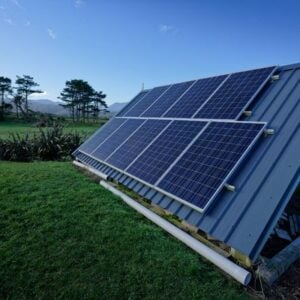
The high energy costs have become a critical issue for Nepali fish farmers competing in regional markets. Solar power is increasingly seen as a viable solution to reduce electricity expenses. Government-subsidized solar pumps are gaining traction for aquaculture and irrigation, and their adoption can lower operational costs significantly. At Mukhiya Fish Farms, solar technology is being explored through the installation of an automatic solar-powered feeder, subsidized partially by the National Agriculture Modernization Program. This approach demonstrates the potential for solar technology to enhance operational efficiency and profitability.

Despite the promising benefits, solar adoption in Nepal’s aquaculture sector remains limited, with most support focused on technical assistance and pond management rather than energy solutions. Some initiatives, such as those by the Veterinary Hospital and Animal Service Expert Centre in Madhesh Province, have provided off-grid solar pumps, highlighting the potential for broader integration. As energy costs continue to rise, solar-powered pumps offer a practical and sustainable pathway for fish farmers like the Mukhiyas, reducing expenses and supporting more resilient and environmentally sustainable aquaculture operations.

Related Posts

  • How Solar Energy Is Keeping Ukraine’s Health Clinics Operational During Power Cuts
  • Boosting Fisheries: Zimbabwe Introduces New Fish Hatchery Management Guidelines
  • Mission 300: $57 Million Boost for Africa’s Clean and Just Energy Transition
  • World Bank’s IFC Partners with PDT and Ditrolic Energy on Major Renewable Energy Corridor in Johor
  • Asian Development Bank Updates Energy Policy to Promote Access and Energy Security

Primary Sidebar

Latest News

Asia Fund II: $220M Raised by Circulate Capital for Circular Economy Growth

Circulate Capital Secures $220M for Asia Circular Economy Fund

WINGS Initiative: Supporting Nigeria’s Displaced Women

Mongolia Housing Upgrades Boost Urban Jobs

Scaling Mobile Data for Statistics in West Africa

Türkiye Railway Jobs: Empowering Women in Transport

South Sudan Development: Strengthening Resilience and Governance

Development Accounting for Accountants: A Practical Perspective

Financial Institutions and the Emerging Resilience Market

Investing in Armenia: How Tourism Boosts Local Economies

Bangladesh Gas Sector Project: Efficiency and Carbon Reduction Opportunities

Turning Ethiopia’s State-Owned Enterprises into Growth Engines

Women’s Health Crisis: How Lack of Knowledge Drives Illness

TotalEnergies Faces $7.4B Setback in South Africa, Raising African Oil Risks

UN80 Initiative Moves to Delivery Phase as Member States Review Progress

Improving Nutrition in Pakistan: Key Initiatives and Impact

Brazil: IDB Backs $80M for Rio Grande do Sul Infrastructure, MSME Support

Ukraine’s Heating Resilience: Lessons for Europe

Building Digital Skills for Jobs: Lessons from Zambia’s TVET

Empowering Communities: Civil Society Partnerships for Water Security in Asia-Pacific

Guyana’s Carbon Market Success: Lessons for Caribbean Green Finance

75 Years of Strategic Philanthropy: Lessons from the Joyce Foundation

India Plastic Waste Rules 2026: Recycled Content Mandate and Stricter EPR Norms

Malawi COVID-19 Lessons: Systemic Risks and Disaster Resilience

Building a Stronger NGO Framework in Lesotho: Key Lessons from Sierra Leone

India Tightens Foreign NGO Funding Rules with New FCRA Amendment

UNDP Launches E-Course on Sovereign Credit Ratings for African Officials

UNDP Training Helps Pryluky Community Attract UAH 160 Million for Local Development

UN Digital Readiness Toolkit Supports Human Rights Institutions in Safe Digital Transformation

UNESCO Expands We Are ABLE Project to Promote Inclusive STEAM Education in Vietnam

CDB Approves $10 Million Credit Line to Boost SMEs in Trinidad and Tobago

Peru Secures $37.5M Climate Fund Boost to Protect Amazon and Indigenous Communities

Southern Water Opens Funding for Business Water-Saving Projects

IOM Funds Youth-Led Climate Mobility Projects in Kenya and Burundi

UK Expands £500M Innovation Fund to Seven New Regions

$50M Climate Fund Boosts Jamaica’s Farm Resilience with FAO Support

FAO and Flanders Launch $1M Project to Support Farmers in War-Hit Mykolaivska

FAO Expands Cash Support to Gaza Farmers, Urges Input Import Liberalization

Eastern Africa Sets Roadmap to Accelerate Agrifood Systems Transformation

WHO Cyprus Initiative Delivers First Emergency Aid Shipment to Gaza

Funds for NGOs
Funds for Companies
Funds for Media
Funds for Individuals
Sample Proposals

Contact us
Submit a Grant
Advertise, Guest Posting & Backlinks
Fight Fraud against NGOs
About us

Terms of Use
Third-Party Links & Ads
Disclaimers
Copyright Policy
General
Privacy Policy

Premium Sign in
Premium Sign up
Premium Customer Support
Premium Terms of Service

©FUNDSFORNGOS LLC.   fundsforngos.org, fundsforngos.ai, and fundsforngospremium.com domains and their subdomains are the property of FUNDSFORNGOS, LLC 1018, 1060 Broadway, Albany, New York, NY 12204, United States.   Unless otherwise specified, this website is not affiliated with the abovementioned organizations. The material provided here is solely for informational purposes and without any warranty. Visitors are advised to use it at their discretion. Read the full disclaimer here. Privacy Policy. Cookie Policy.