In the early 1990s, Armenia faced a severe energy crisis following the collapse of the Soviet Union and political tensions that disrupted energy supplies. The country’s only nuclear power plant, Metsamor, had been halted after the 1988 Spitak earthquake, leaving Armenia almost entirely dependent on hydropower. Widespread blackouts paralyzed industries and households, with electricity available for only one or two hours a day in many areas. Until 2017, the national substation relied on outdated equipment, requiring manual switching and grounding, which posed serious safety risks. Even after Metsamor resumed operations in 1996, the reliability of Armenia’s electricity supply remained poor due to decades of underinvestment in transmission infrastructure.
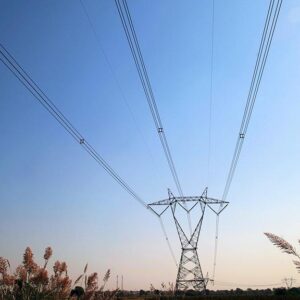
Transmission lines, which carry power from generation plants to homes, businesses, and industries, form the backbone of Armenia’s energy system. By the early 2010s, much of this infrastructure, including key substations and transmission lines, had deteriorated to the point of frequent outages, disrupting production, delaying investment, and limiting the integration of renewable energy. The lack of a reliable grid also constrained business growth and competitiveness.
In 2011, the Government of Armenia and High Voltage Electric Networks (HVEN), the national transmission system operator, partnered with the World Bank to launch the Electricity Supply Reliability Project, marking the first major transmission investment in decades. This project rehabilitated 230 km of high-voltage transmission lines and three key substations, followed by a 2015 expansion that upgraded additional substations serving residential and industrial consumers.
Supported by the World Bank and other partners, HVEN has continued modernizing substations, with nearly 75% now upgraded, strengthening grid reliability, safety, and operational performance. These upgrades are critical for businesses and households, ensuring uninterrupted electricity supply, reducing outages, and supporting competitive industrial production. Further investments in regional interconnectivity and the distribution network will be needed to fully realize efficiency gains, especially as Armenia transitions toward a liberalized electricity market.
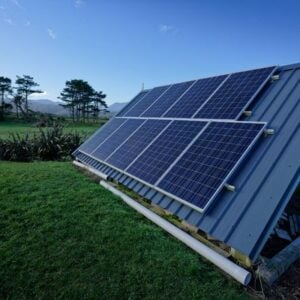
Looking ahead, Armenia plans to integrate more solar and wind energy into its grid. In 2024, the World Bank approved the Armenia Enabling the Energy Transition Program under the Europe and Central Asia Renewable Energy Scale-up initiative. This five-year program will complete substation rehabilitation, expand grid automation, and introduce a digital platform for real-time monitoring and control, along with automated protection and smart metering. These improvements will reduce losses, minimize outages, and allow renewable energy to flow reliably, providing stable power for homes and businesses and supporting private-sector growth.
Beyond infrastructure, the World Bank is assisting Armenia with key energy sector reforms, including modernizing the renewable energy regulatory framework, liberalizing the electricity market, and enhancing HVEN’s governance and financial performance. These measures aim to increase the commercial viability of Armenia’s power sector, reduce reliance on government guarantees, and support a sustainable transition to a cleaner, more reliable energy system.