A new World Bank report has called for a strategic shift in Bangladesh’s agricultural public spending to strengthen productivity, improve resilience, and create better employment opportunities across the country’s agrifood system.
The report, titled Repurposing Agricultural Public Spending for Quality Growth and Jobs in Bangladesh’s Agrifood System, notes that Bangladesh currently allocates about 10% of total public expenditure to agriculture. Despite this significant investment, agricultural growth has slowed, productivity gains have weakened, and the sector has struggled to diversify into higher-value crops and food products that match changing consumer demand.
A large portion of agricultural spending is directed toward subsidies, particularly fertilizer support and rice production. Fertilizer subsidies alone account for roughly 80% of the Ministry of Agriculture’s budget, with benefits disproportionately favoring larger landowners. According to the report, the top 20% of landholders receive about half of total subsidy benefits, while the bottom 40% receive only around 15%. The imbalance in fertilizer use also remains a challenge, with only a small share of farmers applying balanced nutrient combinations within recommended ranges, limiting potential yield improvements.
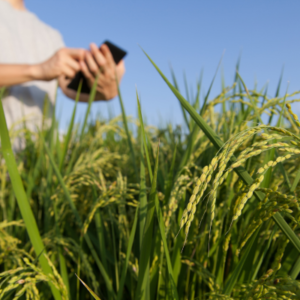
Rice continues to dominate agricultural policy support, occupying around 72% of cultivated land and receiving about 80% of subsidy benefits. However, the report highlights that livestock, fisheries, vegetables, and agro-processing offer stronger potential for income growth, job creation, and diversification of the rural economy.
The World Bank emphasizes that climate risks, shifting consumption patterns, and global supply disruptions are exposing structural weaknesses in current spending priorities. It recommends gradually redirecting public investment toward higher-return areas such as research, irrigation, advisory services, market access, and climate resilience.
Proposed reforms include expanding soil testing services, strengthening agricultural extension systems, and introducing digital tools such as farmer identification cards and e-vouchers to improve the targeting and efficiency of subsidies. Over time, these changes are expected to free up fiscal resources for more productive investments that benefit smallholders and climate-vulnerable farmers.
The report concludes that modernizing fertilizer subsidy systems and improving spending efficiency could significantly boost productivity, improve soil health, reduce foreign exchange pressure, and generate more inclusive and better-paid rural jobs across Bangladesh’s agricultural sector.