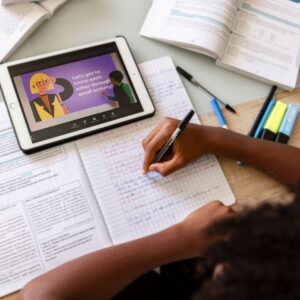
In Somaliland, a growing number of young women are entering professions that have traditionally been dominated by men, helping to challenge long-standing gender stereotypes and create new opportunities for economic independence. Among them is Shukri Hussein, a young trainee who enrolled in an electricity and solar installation course to gain practical skills and build a stronger future for herself.
By choosing a field where women remain underrepresented, Shukri has become part of a broader movement aimed at increasing female participation in technical and vocational professions. Her training focuses on developing practical, market-oriented skills that are increasingly important as communities expand access to electricity, renewable energy technologies, and modern infrastructure.
The course begins with foundational knowledge of electricity, helping participants understand how electrical systems operate in everyday environments. Through structured learning, trainees gain an understanding of concepts such as electrical current, voltage, circuits, and energy systems. These lessons provide the theoretical background necessary for more advanced practical applications.
A major component of the training is hands-on experience. Participants learn by assembling simple electrical circuits, working with batteries and lighting systems, identifying conductors and insulators, and practicing the use of switches and testing equipment. This practical approach enables trainees to apply classroom knowledge directly to real-world situations and prepares them for employment opportunities within the electrical and renewable energy sectors.
Safety training forms an essential part of the curriculum. Participants are taught how to handle electrical equipment responsibly, identify potential hazards, and use protective gear correctly. Learning safe working practices helps ensure that trainees can perform technical tasks confidently while minimizing risks in professional environments.
For Shukri, the experience represents more than vocational training. It has strengthened her confidence and provided a sense of purpose by demonstrating that women can succeed in careers traditionally viewed as unsuitable for them. Her participation reflects changing attitudes among young people and growing recognition that technical professions should be accessible to everyone regardless of gender.
The training is delivered through the Inclusive Livelihoods for Vulnerable Pastoral Groups project, implemented by the Danish Refugee Council with support from the Swedish International Development Cooperation Agency under the Somali Resilience Program. The initiative seeks to strengthen livelihoods, improve employability, and reduce long-term dependency by providing vulnerable individuals with practical and market-relevant skills.
Beyond technical education, the program aims to expand economic opportunities for young people throughout Somaliland. Working with local partners, the initiative offers vocational training in several communities, including Arabsiyo, Salahley, and Jaleelo. Courses are carefully selected based on local labor market demand and areas where participants have realistic opportunities to generate income and build sustainable livelihoods.
In addition to electricity and solar installation, the program provides training in fields such as plumbing, tailoring, and beauty services. More than 100 young people are currently participating across multiple training classes, reflecting growing demand for vocational education and workforce development opportunities.
An important objective of the initiative is to encourage greater participation of women in sectors where they have historically been underrepresented. By creating inclusive learning environments and providing access to technical skills, the program helps women overcome social barriers and pursue careers that can improve their economic prospects and contribute to community development.
Shukri’s journey highlights the transformative impact that vocational training can have on individuals and communities. As more young women gain access to technical education and employment opportunities, they are helping reshape perceptions about gender roles while building the skills needed to participate in emerging industries and support local economic growth.
Her story demonstrates how targeted investments in education, skills development, and inclusive livelihood programs can empower individuals, promote gender equality, and create pathways toward greater economic resilience and self-sufficiency.