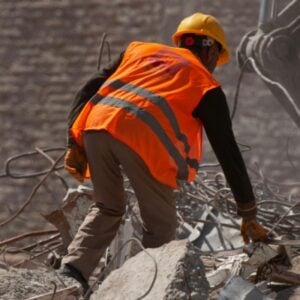
A new report from the United Nations Office for Project Services (UNOPS) emphasizes the critical role of rubble management and recycling in supporting recovery efforts following conflicts and climate-related disasters. As crises continue to increase globally, millions of tonnes of debris are generated each year, creating major challenges for affected communities. The report argues that treating rubble as a valuable resource rather than waste can accelerate reconstruction, reduce environmental impacts, restore essential services, and support long-term community resilience.
The scale of debris generated by recent crises is unprecedented. In the Gaza Strip alone, an estimated 68 million tonnes of rubble have accumulated following widespread destruction of infrastructure and buildings. This amount is equivalent to the capacity of nearly 3,000 container ships, with each resident surrounded by an average of approximately 30 tonnes of debris. Similar challenges have emerged elsewhere, including Lebanon, where conflict generated 14.5 million metric tonnes of rubble in 2024, and the Türkiye-Syria earthquakes of 2023, which produced around 210 million metric tonnes of debris.
According to the report, unmanaged rubble can overwhelm local waste management systems, delay reconstruction efforts, damage ecosystems, and contribute to greenhouse gas emissions. In many cases, a single disaster or conflict can generate debris volumes equivalent to five to fifteen times a community’s annual solid waste production. Without effective strategies for handling this material, recovery efforts can become slower, more expensive, and less sustainable.
The report highlights the significant potential of reusing and recycling rubble as part of a circular economy approach to reconstruction. Materials recovered from damaged structures can be processed and reused in rebuilding projects, reducing the need for new raw materials and lowering overall reconstruction costs. This approach can also help restore critical infrastructure, including water systems, schools, healthcare facilities, and other essential public services that communities depend on during recovery.