In rural Montserrado County’s Morris Farm in Liberia, community activist Betty Moore walks through her neighborhood using illustrated posters to spark conversations about household relationships, decision-making, and power dynamics. As one of 250 activists supported by the Liberia Women Empowerment Project (LWEP), she works to promote a vision where women are not only safe but also empowered to work, earn, and thrive. Her effectiveness is rooted in local trust and her understanding of community dynamics, which helps her guide sensitive discussions with care and credibility.
Across Liberia, LWEP engages community leaders, activists, traditional authorities, and religious figures to foster dialogue on respect, partnership, and gender equality. This approach recognizes that women’s safety is closely linked to their economic participation. In Liberia, over half of ever-partnered women report experiencing intimate partner violence, and evidence shows that gender-based violence significantly reduces women’s earnings and economic activity while also imposing broader national economic costs.
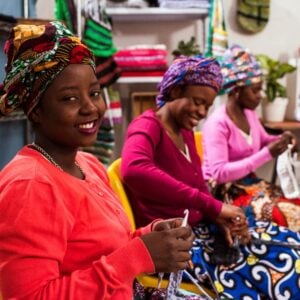
In communities such as Dougee Town in Grand Gedeh County, participants in LWEP sessions have highlighted how empowerment and protection are interconnected. Women have shared ideas for small businesses and local solutions that strengthen both their safety and economic independence, reflecting the program’s focus on community-led change and women’s leadership.
Launched in 2022 with World Bank support and implemented by the Government of Liberia, LWEP combines livelihood support with efforts to shift social norms and strengthen women’s agency. Through training, business support, livelihood grants, and the SASA! methodology, the project engages hundreds of communities to encourage behavior change and expand opportunities for women and men alike. Thousands of enterprises have been supported, hundreds of women-led groups have received financing, and many beneficiaries have gained business and financial skills to improve income and productivity.
Beyond economic support, LWEP also strengthens national systems to ensure sustainability. It builds capacity among service providers, supports school-based clubs that promote safe spaces for youth, and enhances government services such as a national GBV call center that offers psychosocial support and referrals. The project also maps service gaps to improve coordination and access to essential services across the country.
Overall, LWEP demonstrates that addressing gender-based violence alongside women’s economic empowerment is key to inclusive growth in Liberia. By linking safety with opportunity and strengthening both community engagement and national systems, the initiative is helping women build sustainable livelihoods while contributing to stronger local economies and long-term development.