• Skip to primary navigation
  • Skip to main content
  • Skip to primary sidebar

fundsforNGOs News

Grants and Resources for Sustainability

  • Subscribe for Free
  • Premium Support
  • Premium Login
  • Premium Sign up
  • Home
  • Funds for NGOs
    • Agriculture, Food and Nutrition
    • Animals and Wildlife
    • Arts and Culture
    • Children
    • Civil Society
    • Community Development
    • COVID
    • Democracy and Good Governance
    • Disability
    • Economic Development
    • Education
    • Employment and Labour
    • Environmental Conservation and Climate Change
    • Family Support
    • Healthcare
    • HIV and AIDS
    • Housing and Shelter
    • Humanitarian Relief
    • Human Rights
    • Human Service
    • Information Technology
    • LGBTQ
    • Livelihood Development
    • Media and Development
    • Narcotics, Drugs and Crime
    • Old Age Care
    • Peace and Conflict Resolution
    • Poverty Alleviation
    • Refugees, Migration and Asylum Seekers
    • Science and Technology
    • Sports and Development
    • Sustainable Development
    • Water, Sanitation and Hygiene (WASH)
    • Women and Gender
  • Funds for Companies
    • Accounts and Finance
    • Agriculture, Food and Nutrition
    • Artificial Intelligence
    • Education
    • Energy
    • Environment and Climate Change
    • Healthcare
    • Innovation
    • Manufacturing
    • Media
    • Research Activities
    • Startups and Early-Stage
    • Sustainable Development
    • Technology
    • Travel and Tourism
    • Women
    • Youth
  • Funds for Individuals
    • All Individuals
    • Artists
    • Disabled Persons
    • LGBTQ Persons
    • PhD Holders
    • Researchers
    • Scientists
    • Students
    • Women
    • Writers
    • Youths
  • Funds in Your Country
    • Funds in Australia
    • Funds in Bangladesh
    • Funds in Belgium
    • Funds in Canada
    • Funds in Switzerland
    • Funds in Cameroon
    • Funds in Germany
    • Funds in the United Kingdom
    • Funds in Ghana
    • Funds in India
    • Funds in Kenya
    • Funds in Lebanon
    • Funds in Malawi
    • Funds in Nigeria
    • Funds in the Netherlands
    • Funds in Tanzania
    • Funds in Uganda
    • Funds in the United States
    • Funds within the United States
      • Funds for US Nonprofits
      • Funds for US Individuals
      • Funds for US Businesses
      • Funds for US Institutions
    • Funds in South Africa
    • Funds in Zambia
    • Funds in Zimbabwe
  • Proposal Writing
    • How to write a Proposal
    • Sample Proposals
      • Agriculture
      • Business & Entrepreneurship
      • Children
      • Climate Change & Diversity
      • Community Development
      • Democracy and Good Governance
      • Disability
      • Disaster & Humanitarian Relief
      • Environment
      • Education
      • Healthcare
      • Housing & Shelter
      • Human Rights
      • Information Technology
      • Livelihood Development
      • Narcotics, Drugs & Crime
      • Nutrition & Food Security
      • Poverty Alleviation
      • Sustainable Develoment
      • Refugee & Asylum Seekers
      • Rural Development
      • Water, Sanitation and Hygiene (WASH)
      • Women and Gender
  • News
    • Q&A
  • Premium
    • Premium Log-in
    • Premium Webinars
    • Premium Support
  • Contact
    • Submit Your Grant
    • About us
    • FAQ
    • NGOs.AI
You are here: Home / cat / Nepal’s Labour Laws Need Continued Alignment, Says ILO

Nepal’s Labour Laws Need Continued Alignment, Says ILO

Dated: March 24, 2026

The International Labour Organization’s (ILO) Committee of Experts on the Application of Conventions and Recommendations (CEACR) published its 2026 report, marking the 100th anniversary of this independent supervisory body. The report assesses how ILO member states implement ratified international labour standards in national law and practice, promoting accountability, consistency, and progress toward social justice and decent work.

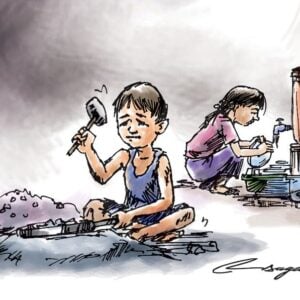
The 2026 report highlights Nepal’s application of key international labour conventions, including the Right to Organise and Collective Bargaining Convention (No. 98), the Minimum Age Convention (No. 138), the Tripartite Consultation Convention (No. 144), and the Worst Forms of Child Labour Convention (No. 182). It urges Nepal to accelerate the elimination of child labour, particularly in hazardous sectors, by strengthening labour inspections, improving data systems, and providing rehabilitation for children affected by bonded labour, trafficking, and exploitation. The Committee acknowledged Nepal’s progress through the National Master Plan on Child Labour (2018–2028), the National Children’s Policy (2024), and enhanced action against trafficking and bonded labour.

On the minimum age for employment, the report encourages further elimination of child labour and alignment of national legislation with international standards, especially in the informal economy. Regarding freedom of association and collective bargaining, the Committee called for stronger legal protections against anti-union discrimination, transparent arbitration processes, and ongoing labour law reforms in consultation with social partners. The report also stresses the importance of effective tripartite dialogue among government, employers, and workers to support law reform and implementation of labour standards.

The Committee encourages Nepal to continue leveraging ILO technical assistance for legislative reform, institutional strengthening, and effective tripartite engagement. Sustained collaboration among government, employers, and workers is essential to translate commitments into measurable improvements in workers’ rights and child protection. The ILO reaffirmed its support to Nepal in strengthening labour rights and eliminating child labour in line with international standards.

The CEACR is composed of 20 independent legal experts who examine how ILO conventions and recommendations are applied by member states. The 2026 report will be submitted to the 114th Session of the International Labour Conference, where governments, employers, and workers will review its findings and discuss implementation strategies.
Related Posts

  • Japan Supports Child Labour Elimination and Formalisation in India
  • ILO Partners with Spanish Labour Centres on Decent Work
  • Zambia Pledges Fast-Track Action on Social Protection Laws
  • Amnesty International Report Warns Crackdown on Palestinian Solidarity in Austria Is Limiting Free Expression
  • ILO Adopts First Global Guidelines on Labour Rights for Professional Athletes

Primary Sidebar

Latest News

Akshaya Patra Celebrates 5 Billion Meals at 25-Year Milestone

How Technology Is Transforming Nonprofits in Asia-Pacific

Devon County Council Opens £78M Minor Engineering Works Tender

Highmark Foundation Awards $1M to Expand Food for Mountaineers Program

UK £718bn Infrastructure Pipeline: Managing Rising Costs

2026 MENA Conflict Threatens Fintech Deals and Growth

Fintech at Risk: Iranian Cyber Attacks and Data Centre Strikes

How the 2026 Iran Conflict Is Disrupting Global Payments and Trade

Why African SMEs Need an Integrated Risk Strategy to Thrive

EU Financing Supports Port of Rotterdam’s Greening Efforts

EIB Global and BOI Partner to Boost Healthcare in Nigeria

EIB Global, BOI Strengthen Nigeria’s Private Sector and Sustainable Farming

Malawi Orders Reclamation of Auctioned Refugee Goods

Uzbekistan Modernizes Transport Infrastructure with World Bank Support

Barbados Modernizes Early Education with World Bank Support

Columbia University Students Explore Root Causes of Forced Labour

Nepal’s Labour Laws Need Continued Alignment, Says ILO

EBRD Provides €70M Loan to Boost SMEs in Serbia

FAO Innovations Cut Human–Wildlife Conflict in Southern Africa

Planetary Warming Accelerates: UN Issues Climate Alert

Conflict in Middle East Damages Historic Sites

Hormuz Crisis Sparks Global Fertiliser Supply Threat

Stamping Out Racial Discrimination: UN Calls for Action

EIB Global Expands MSME Support in Azerbaijan

Afghanistan NGOs Urge Respect for Humanitarian Law

Swedfund Commits $600,000 for Maternal Care in Kenya

Peace Journalism Training in CAR: 3 Key Lessons

Environment Agency Seeks Contractors for £6.6bn Framework

How Climate Change Is Driving Youth Innovation

Helmsley Grants $8.6M for CHCC Surgical Expansion

$6.7M Supports Safer First Nations Communities

Where Water Security Begins for Communities

Water Resilience Boosts Gender Equality in Caribbean

Tony Elumelu Foundation Selects 3,200 Africans for 2026

Rockefeller and GEA Cross $100M for Africa Power

Water, Illness and Malnutrition: Breaking the Cycle

Conflict and Drought Push Lebanon into Water Crisis

Luxembourg NGOs Oppose Development Aid Cuts

Technology Driving Change for Nonprofits in Asia-Pacific

Empowering CBPs and Nonprofits with ImpactCollab

Funds for NGOs
Funds for Companies
Funds for Media
Funds for Individuals
Sample Proposals

Contact us
Submit a Grant
Advertise, Guest Posting & Backlinks
Fight Fraud against NGOs
About us

Terms of Use
Third-Party Links & Ads
Disclaimers
Copyright Policy
General
Privacy Policy

Premium Sign in
Premium Sign up
Premium Customer Support
Premium Terms of Service

©FUNDSFORNGOS LLC.   fundsforngos.org, fundsforngos.ai, and fundsforngospremium.com domains and their subdomains are the property of FUNDSFORNGOS, LLC 1018, 1060 Broadway, Albany, New York, NY 12204, United States.   Unless otherwise specified, this website is not affiliated with the abovementioned organizations. The material provided here is solely for informational purposes and without any warranty. Visitors are advised to use it at their discretion. Read the full disclaimer here. Privacy Policy. Cookie Policy.