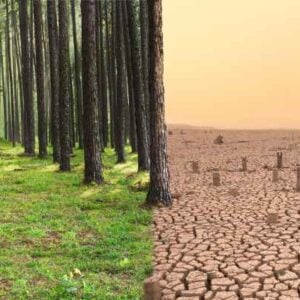
Kenya’s exceptional biodiversity, spanning forests, rangelands, wetlands and marine ecosystems, is one of the country’s most valuable assets, yet it is under increasing pressure from a complex mix of human and environmental stressors. Rapid population growth, competing land uses, weakly enforced and unharmonized conservation laws, over-exploitation of natural resources, unsustainable recreational activities and accelerating deforestation are steadily degrading ecosystems and the services they provide. Climate change is intensifying these challenges by exacerbating environmental degradation, undermining livelihoods and increasing risks to Kenya’s socio-economic development and ecological resilience. In this context, nature-based solutions (NbS) are emerging as a practical and integrated pathway to address biodiversity loss, climate change and environmental pollution while strengthening human well-being.
Globally, NbS are increasingly recognized as central to achieving the Sustainable Development Goals and addressing interconnected challenges such as food and water insecurity, disaster risk and public health threats. However, as NbS gain traction, attention is shifting from simply scaling interventions to ensuring they are well designed, coordinated and effective. Poorly planned or inadequately monitored NbS initiatives risk delivering limited benefits or even causing unintended harm to ecosystems and communities. This has highlighted the need for clear standards, strong coordination mechanisms and robust monitoring and evaluation systems to ensure NbS deliver meaningful and lasting outcomes.
Nature-based solutions now feature prominently in global climate and development strategies. Around two-thirds of countries that are party to the Paris Agreement have included NbS in their Nationally Determined Contributions (NDCs), with many using them primarily as adaptation measures and others integrating them for mitigation. Kenya is firmly aligned with this global shift. The country’s updated NDC commits to reducing greenhouse gas emissions by 32 percent by 2030 compared to a business-as-usual scenario, supported by ambitious NbS targets such as restoring 5.1 million hectares of degraded land, increasing forest cover to 10 percent and strengthening protection of critical ecosystems including water towers, wetlands and coastal habitats. These commitments are reinforced by national policy instruments such as the Kenya National Biodiversity Strategy and Action Plan (2019–2030) and the National Adaptation Plan (2015–2030), which emphasize ecosystem restoration, biodiversity conservation and equitable sharing of ecosystem benefits in line with global frameworks like the Kunming-Montreal Global Biodiversity Framework.
Despite these strong policy foundations, Kenya has faced a critical gap in implementation: the absence of a harmonized national system with clear indicators and metrics to monitor and evaluate NbS interventions, particularly in agricultural and productive landscapes where most investments occur. This gap limits the country’s ability to generate credible evidence, inform policy improvements, meet national and international reporting obligations and mobilize climate and nature finance at scale. Addressing this challenge requires a comprehensive NbS monitoring and evaluation framework that integrates environmental, social and economic dimensions and is applicable across diverse, climate-vulnerable landscapes.
In response, the Ministry of Agriculture and Livestock Development, through its Climate Change Unit, in collaboration with the Alliance of Bioversity International and CIAT under the CGIAR Climate Action Science Program, and with support from the Initiative for Climate Action Transparency and the UNEP Copenhagen Climate Centre, has been co-developing a national NbS monitoring and evaluation framework. The framework aims to strengthen Kenya’s ability to track and report NbS impacts, support climate reporting and NDC updates, and generate evidence to guide policies that enhance agricultural productivity, ecosystem resilience and climate adaptation and mitigation. Its development has followed an inclusive and participatory process, engaging county governments, community-based organizations, NGOs, research institutions, academia and private-sector actors through inception workshops and consultations.
The Chyulu Hills landscape was selected as the pilot site to test the framework. Spanning Makueni, Kajiado and Taita Taveta counties, the Chyulu Hills are one of Kenya’s most important dryland water catchments, supplying key springs and contributing over 30 percent of Mombasa’s water. Anchored by Chyulu Hills National Park and ecologically connected to Amboseli and Tsavo National Parks, the area supports significant wildlife populations, including elephants and black rhinos, while sustaining agro-pastoralist communities that depend on grazing land, forests and water resources. At the same time, the landscape faces mounting pressures from land degradation, forest loss, soil erosion, invasive species, agricultural expansion and illegal logging and charcoal production. This combination of high ecological value and accelerating degradation made the Chyulu Hills an ideal setting for piloting NbS monitoring tools.
The pilot aimed to test whether the proposed indicators and methods were practical, measurable and relevant in a complex, multi-use landscape. It built on existing initiatives such as the Chyulu Hills REDD+ Project and the TWENDE climate adaptation project, allowing assessment of the framework across different ecological and socio-economic contexts. Implementation focused on selected wards in Kajiado South and Makueni counties, with data collection carried out in close collaboration with county officials, local administrators and community leaders to ensure access, coordination and meaningful community engagement.
A structured data collection process was followed, beginning with comprehensive training for enumerators to ensure consistency and data quality. Household surveys captured information on socio-economic characteristics, land and crop management, livestock systems, water and pasture management, engagement in nature-based enterprises and perceived climate and ecosystem impacts. Focus group discussions explored community-level practices, awareness and adoption of NbS, climate risks and governance arrangements, while key informant interviews with government agencies, NGOs, research institutions and community organizations provided insights into drivers of degradation, restoration efforts, institutional roles and enforcement challenges.
Findings from the pilot revealed that NbS are already deeply embedded in local livelihood systems through practices such as soil and water conservation, agroforestry, pasture management and ecosystem-based enterprises like beekeeping and tree nurseries. Communities clearly recognize the link between healthy ecosystems and their livelihoods, particularly in relation to water availability and grazing resources. However, many NbS activities remain fragmented, small-scale and poorly documented, underscoring the need for a harmonized framework to systematically track adoption, performance and impact.
Ecological findings confirmed widespread pressure on land and natural resources, especially during dry seasons, validating the framework’s emphasis on indicators related to land condition, vegetation cover, soil and water conservation and ecosystem services. Socio-economic analysis showed that NbS contribute to livelihoods and income diversification, but returns are often modest and vulnerable to climate shocks, highlighting the importance of tracking resilience, food security and benefit-sharing, particularly for women and youth. Governance-related findings emphasized the critical role of community institutions, county governments and local leadership in enabling successful NbS implementation, while also revealing ongoing challenges related to enforcement, coordination and resource-use conflicts.
Overall, piloting the NbS monitoring and evaluation framework in the Chyulu Hills demonstrated its capacity to capture the interconnected ecological, social, economic and governance dimensions of nature-based solutions in a practical and usable way. The exercise highlighted the persistent gap between widespread NbS implementation and systematic impact measurement, a gap the framework is designed to bridge by linking local action to national and international accountability processes, including NDC and biennial transparency reporting. With lessons from the pilot now informing further refinement, Kenya is well positioned to move from fragmented NbS efforts toward a coherent, nationally anchored system for tracking, learning and scaling impact.