A new World Bank report, Waste Management in the Middle East and North Africa, reveals that the MENA region generates more waste per person than the global average, causing an estimated US$7.2 billion in environmental damage each year. The region produces over 155 million tons of waste annually, a figure projected to double by 2050… [Read More]
Ethiopia: KOICA Strengthens WFP Efforts to Combat Child Malnutrition
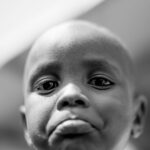
The United Nations World Food Programme (WFP) has received a USD 5.5 million contribution from the Korea International Cooperation Agency (KOICA) to prevent malnutrition among pregnant and breastfeeding women and young children in Ethiopia. The funding aims to improve access to nutritious foods, strengthen local food systems, and build community resilience, supporting the government’s efforts… [Read More]
Georgia: ADB Teams Up With TBC Bank to Expand MSME Financing
The Asian Development Bank (ADB) has approved a GEL 270 million (approximately $100 million) loan to JSC TBC Bank in Georgia to expand access to affordable financing for micro, small, and medium-sized enterprises (MSMEs). Up to 70% of the loan will directly support MSMEs, with at least 20% earmarked for women-owned or led businesses and… [Read More]
UN Aid Agencies Warn Gaza Reconstruction Should Not Distract From Massive Needs
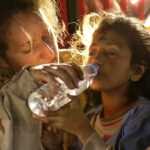
Juliette Touma, Director of Communications at UNOPS, emphasized the urgent need to ease congestion at Gaza’s crossing points and reopen critical supply routes like the Jordan corridor. While the 3 October ceasefire has provided some relief, she stressed that people continue to face daily threats to their lives and cannot wait for a formal reconstruction… [Read More]
UN Urges Young People to Be Actively Engaged in Transforming Education
Despite global progress in education, stark inequalities persist, particularly in the poorest countries where 36 per cent of children and youth are out of school compared to just 3 per cent in the richest nations. Ahead of the International Day of Education, which this year highlights “The power of youth in co-creating education,” UN News… [Read More]
Kenyan Innovator Turns Climate Tech Into a Lifeline for Farmers Battling Drought
Maryanne Gichanga, a Kenyan agricultural entrepreneur and participant in a UN-supported initiative, is helping farmers confront the growing pressures of climate change through innovation. In a country where agriculture employs up to 75 per cent of the population, shifting weather patterns, recurring droughts and the loss of productive land are threatening livelihoods and food security,… [Read More]
South Sudan: UN and Rights Experts Warn of Risk of Mass Violence in Jonglei

The UN Mission in South Sudan (UNMISS) has expressed grave concern over reports that a senior military leader is urging troops to carry out violence against civilians, warning that such rhetoric has already contributed to the displacement of more than 180,000 people. UN officials condemned calls for attacks on civilians as abhorrent and urged an… [Read More]
Law of the Jungle’ Replacing Rule of Law, UN Secretary-General Warns

UN Secretary-General António Guterres delivered a stark warning to the Security Council during a high-level open debate convened by Somalia, which holds the Council’s presidency for January. His remarks came at a moment of growing global instability, as conflicts multiply, tensions rise, and confidence in international institutions erodes, even as the United Nations marks 80… [Read More]
Women and Girls Caught Between Fear and Survival as Violence Intensifies in Northern Syria

Now eight months pregnant and sheltering in a makeshift camp, Fatima says her greatest fear is not the freezing cold but what might happen if she goes into labour without access to medical care. As a displaced mother of three, she describes displacement as more than the loss of a home, noting that women are… [Read More]
Gaza Ceasefire Is Making a Difference, Yet the Crisis for Children Continues
Two senior officials from UNICEF and the World Food Programme (WFP) say the ceasefire in Gaza has led to meaningful humanitarian improvements, but conditions remain extremely dangerous for children. Speaking to journalists in New York after a week-long visit to Gaza and the occupied West Bank, they stressed that while aid delivery has increased significantly,… [Read More]
UN Human Rights Chief Warns: Standing Up for Shared Humanity Is a Daily Responsibility
Tuesday’s solemn commemoration marked 81 years since the liberation of the Auschwitz-Birkenau concentration and extermination camp by Allied forces, a site where more than one million people were murdered during the Holocaust. The remembrance served as a powerful moment to honour the victims and reflect on the enduring legacy of one of history’s darkest chapters… [Read More]
Strengthening Health Systems: EU Supports Capacity-Building Workshop

From 29–30 January, WHO/Europe will host a two-day capacity-building workshop under the EU-funded Technical Support Instrument (TSI) 2025 flagship project, “EU Health Hub – Investing in Resilient Health Systems.” The initiative supports countries in strategically strengthening their health systems using European funding, with financial backing from the EU’s Technical Assistance and Information Exchange (TAIEX), a… [Read More]
How Elections Redefine Social Contracts Amid Crises
As 2026 begins, Asia and the Pacific are entering a significant electoral season, with hundreds of millions of citizens set to vote. This period represents a “year of opportunity” for governance renewal, allowing countries to either confirm existing leadership or embrace new directions. Elections in countries such as Bangladesh and Nepal illustrate a renewal of… [Read More]
Over $758,000 in Community Impact Grants Distributed by Local Foundation
The Community Foundation of Frederick County has awarded over $758,000 through its Impact Grant program to support projects that improve life in Frederick County. In 2026, more than 55 organizations received funding for initiatives spanning arts, historic preservation, agriculture, health and human services, education, cultural understanding, animal welfare, scholarships, elder care, youth programs, and civic… [Read More]
Why Menstrual Health and Sanitation Markets Are Key to the Climate Economy

Across the globe, menstrual health and sanitation markets are already being reshaped by climate shocks, resource pressures, and environmental degradation. These markets are deeply connected to climate resilience, economic stability, and social equity. Building inclusive, climate-resilient systems is critical not only for environmental goals but also for ensuring equitable access to sanitation and menstrual health… [Read More]
£7.91 Million Investment in Rural Areas Announced by Minister Muir

DAERA Minister Andrew Muir has announced that over the past year, more than £7.91 million in grants has been awarded to over 2,350 rural community organisations and businesses across Northern Ireland. These funds were distributed through the Department’s Rural Micro Capital Grant Scheme and Rural Business Development Grant Scheme to support local initiatives, strengthen rural… [Read More]
New Grants Support 2SLGBTQIA+ Initiatives and Community Programs
The Province of Nova Scotia has launched the 2SLGBTQIA+ Community Impact Grant program to support community-based organizations serving 2SLGBTQIA+ residents. The initiative aims to strengthen the capacity, stability, and long-term impact of these organizations, helping them better serve underrepresented and underserved communities, including those in rural areas. This funding program is part of the Province’s… [Read More]
US Withdrawal from WHO Sparks $260 Million Funding Crisis
The United States has formally completed its withdrawal from the World Health Organization (WHO), a year after former President Donald Trump ordered the exit. This move ends all US participation in the UN health agency but leaves behind an unpaid debt of approximately $260 million. The US Department of Health and Human Services confirmed that… [Read More]
Accelerating Vaccine Innovation: Gavi Announces Strategic Collaborations
Gavi, the Vaccine Alliance, has announced a series of new partnerships with global businesses, brands, and philanthropic organizations to accelerate vaccine innovation and expand access to primary healthcare in underserved communities. The announcement, made at Davos on 22 January 2026, emphasizes the continued relevance of Gavi’s public-private partnership model, which helps countries scale proven health… [Read More]
NGOs Say EU Anti-Racism Strategy Falls Short on Key Issues
The European Union has unveiled its Anti-Racism Strategy for 2026–2030, aiming to continue efforts initiated after the 2020 George Floyd murder and subsequent Black Lives Matter protests. The plan includes reviewing and reporting on the implementation of anti-discrimination laws across all 27 EU member states, launching an EU-wide awareness campaign on equality, and doubling the… [Read More]
LUSH Malaysia Launches Program to Empower Local NGOs
LUSH Malaysia has launched a refreshed approach to advocacy and giving, starting in late March 2026, linking product innovation directly with NGOs to drive measurable impact in conservation, community empowerment, and environmental justice. The initiative marks a shift from awareness campaigns to action-oriented projects that deliver tangible outcomes. The announcement was made at the LUSH… [Read More]
Ethiopia Mine Pollution: Protecting Children and Ensuring Accountability

Residents near the Lega Dembi gold mine in Ethiopia’s Oromia region have long reported severe health impacts, particularly among children. Reports include children born with chronic health conditions, miscarriages, and stillbirths. Multiple studies have detected dangerously high levels of toxic chemicals, including cadmium, mercury, lead, and arsenic, in the country’s largest gold mine, raising serious… [Read More]
Global Health Financing Slashed: What It Means for Millions

In 2025, major donor nations significantly reduced funding for the Global Fund to Fight AIDS, Tuberculosis, and Malaria, jeopardizing the right to health for millions worldwide. So far, only US$11.85 billion has been pledged for 2026–2028, far short of the US$18 billion urgently needed. All but one of the top 10 donors cut their contributions,… [Read More]


