
In today’s digital-first world, analytics-driven marketing has become a critical component for business success. Organizations are increasingly leveraging data to refine customer segmentation, predict trends, and drive engagement, turning insights into actionable strategies. This approach enables marketers to make informed decisions, optimize campaigns, and achieve measurable business outcomes, highlighting the importance of transforming raw data… [Read More]
Real Results: Case Studies on Effective Diversity and Inclusion Initiatives

In today’s business environment, diversity and inclusion (D&I) have become essential for fostering both employee satisfaction and organizational success. Inclusive workplaces are shown to enhance decision-making, innovation, and profitability, making D&I programs not just a moral imperative but a strategic one. This blog examines real-world case studies to illustrate how organizations can successfully implement D&I… [Read More]
From Local to Global: How Small Businesses Succeed with Crowdfunding Platforms

In today’s dynamic business environment, small businesses face both challenges and opportunities when seeking funding and growth. Crowdfunding has emerged as a transformative financing method, allowing entrepreneurs to raise capital directly from a broad audience rather than relying solely on traditional investors. In 2021 alone, global crowdfunding platforms raised over $20 billion, underscoring their importance… [Read More]
Women Leading the Way: Case Studies of Female Entrepreneurs in Male-Dominated Fields
In today’s evolving business landscape, women are breaking through barriers in industries traditionally dominated by men. “Breaking Barriers: Case Studies of Female Entrepreneurs in Male-Dominated Industries” highlights the remarkable achievements of women who have navigated these challenges and thrived. The blog provides insights and inspiration for aspiring female entrepreneurs, current business leaders, and allies supporting… [Read More]
Saudi Arabia Commits $39 Million to Global Fund’s Eighth Replenishment

The Kingdom of Saudi Arabia, through the Saudi Fund for Development (SFD), has pledged US$39 million to the Eighth Replenishment of the Global Fund to Fight AIDS, Tuberculosis and Malaria, reaffirming its long-standing commitment to global health and resilient health systems. The agreement was formalized by H.E. Sultan Abdulrahman Al-Marshad, CEO of the SFD, and… [Read More]
Global Fund Raises Record $11.4 Billion, Including $4.6B from United States

The United States pledged $4.6 billion to the Global Fund during its eighth Replenishment Summit in Johannesburg, marking a reduction from its previous $6 billion pledge but signaling continued engagement in multilateral global health efforts. Overall, the Global Fund has raised $11.4 billion of its $18 billion target for the next three years, although several… [Read More]
South Sudan Emergency: Millions Face Hunger and Displacement

South Sudan, the world’s youngest nation since its independence in 2011, has faced a series of crises that continue to undermine stability. A brutal civil war from 2013 to 2018 killed hundreds of thousands, displaced millions, and devastated the economy. Today, political tensions are rising, violence persists in parts of the country, and repeated climate… [Read More]
$102 Million Climate Initiative Launched by IFAD, Viet Nam, and GCF for Forest Protection and Rural Livelihoods

The Socialist Republic of Viet Nam, the International Fund for Agricultural Development (IFAD), and the Green Climate Fund (GCF) have launched the US$102.5 million RECAF project to address rising greenhouse gas emissions and safeguard critical forest ecosystems in coffee-producing regions of the Central Highlands and South Central Coast. The initiative targets areas where rural livelihoods… [Read More]
AfDB and AFD Strengthen Cooperation in Energy, Jobs & Agriculture as Cofinancing Approaches €2.4bn

The African Development Bank Group (AfDB) and Agence Française de Développement (AFD) recently held high-level discussions in Abidjan on 23 January to enhance joint investment and align more closely with Africa’s development priorities. Senior leaders focused on high-impact sectors such as energy, jobs and skills, entrepreneurship, water, and agriculture, while emphasizing the acceleration of delivery… [Read More]
Remote Work Success: Unique Collaboration Strategies from Top Companies During COVID-19

The COVID-19 pandemic dramatically reshaped the global workforce, forcing organizations to adapt quickly to remote work environments. This shift presented both challenges and opportunities, requiring companies to rethink collaboration methods to maintain productivity, engagement, and team cohesion. By examining case studies of businesses that successfully navigated this transition, leaders, HR professionals, and team managers can… [Read More]
Social Media Strategies: Nonprofit Fundraising Success Stories and Case Studies

In today’s digital era, social media has become a transformative tool for nonprofits, offering unprecedented opportunities to engage audiences and drive fundraising outcomes. By leveraging creative strategies, organizations can connect with donors, amplify their causes, and build strong, loyal communities online. This exploration of innovative case studies provides valuable lessons for nonprofit leaders, fundraising professionals,… [Read More]
Startup Marketing Case Studies: Creative Strategies That Set Companies Apart

In today’s competitive business environment, startups must leverage creativity and innovation to survive and grow. Innovative marketing strategies are crucial for gaining visibility, attracting customers, and building a strong brand. By examining real-world case studies, entrepreneurs, marketers, and business students can gain practical insights, inspiration, and strategies that can be adapted to their own ventures…. [Read More]
EIB Grants €50M to Naftogaz to Ensure Ukraine’s Energy Resilience This Winter

The European Investment Bank (EIB) has provided €50 million in urgent winter financing to Ukraine’s state-owned energy company, Naftogaz, to strengthen the country’s energy resilience amid ongoing attacks on critical infrastructure. This funding aims to support the import of natural gas, ensuring households, essential services, and businesses maintain electricity and heating during severe winter conditions…. [Read More]
EIB Group Boosts Latvia with Historic €381 Million Investment in 2025

In 2025, the European Investment Bank (EIB) Group increased its financing for Latvia to a record €381 million, marking a significant step in the country’s green transition, infrastructure modernization, and support for households and businesses. The year also saw the opening of the EIB Group’s first office in Riga, strengthening partnerships with government authorities, financial… [Read More]
EIB Group Boosts Lithuania Funding to €577M for Major 2025 Infrastructure Projects

In 2025, the European Investment Bank (EIB) Group significantly increased its financing in Lithuania, rising 29% to €577 million, with a strong focus on security, defence, renewable energy, and water infrastructure. This growth reflects Lithuania’s strategic priorities, supporting the country’s resilience, infrastructure, and economic development while mobilising total investments of €1.4 billion, equivalent to 1.7%… [Read More]
South-West Flood Prevention Efforts Receive $15 Million Funding Increase

Disaster resilience in south-west Queensland is set to receive a major upgrade, with the Australian and Queensland Governments committing $15.47 million to fund critical flood protection projects in the region. The funding aims to strengthen flood mitigation for vulnerable townships, review local flood monitoring assets, and upgrade six floodways in Quilpie Shire, helping communities better… [Read More]
Assistance for Schools and Families Affected by Recent Weather Events

The Government is providing targeted support to schools, kura, and families in Northland and Gisborne to minimise disruptions caused by recent severe weather, Education Minister Erica Stanford said. Authorities are prioritising access to essential services, including transport, school lunches, safe learning spaces, and the assessment and repair of any damages to school facilities. Severe weather… [Read More]
Evidence-Based Planning Boosts Thailand’s Just Transition Strategy

Thailand is taking a significant step toward aligning climate ambition with inclusive economic growth and decent work through the introduction of the Just Transition Assessment Model (JTAM). On 26 January 2026, senior policymakers, researchers, social partners, and development partners convened in Bangkok to discuss the application of JTAM-Thailand, highlighting its role in supporting evidence-based policymaking…. [Read More]
Local Plan Inspector Positions Now Accepting Applications

The Planning Inspectorate is inviting applications from chartered professionals in the built environment and related fields to join as local plan inspectors, with submissions open until 22 February 2026. This recruitment drive is one of the largest in recent years and comes at a pivotal moment for planning in England, as local plans play a… [Read More]
€1,000 Grants Awarded to Community Employment Scheme Sponsors, Says Minister Calleary

The Minister for Social Protection, Dara Calleary TD, has announced that an additional grant of €1,000 will be made available to all Community Employment (CE) sponsor organisations to support materials costs. This funding aims to assist organisations in covering essential expenses required for the effective operation of CE projects. Community Employment is a programme designed… [Read More]
Over €1.6 Million Allocated to Promote Irish Arts Worldwide, Says Minister O’Donovan

Minister for Culture, Communications and Sport, Patrick O’Donovan TD, has announced over €1.6 million in funding to support the global promotion of Irish arts through Culture Ireland’s Regular Grants Programme. This funding represents the highest single grant round in the organisation’s history and demonstrates the Government’s commitment to enabling Irish artists and cultural organisations to… [Read More]
FAO Supports Belarusian Agriculture Sustainability Through Geographical Indications
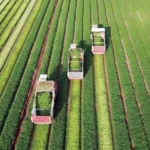
Agriculture plays a central role in Belarus, shaping food security, nutrition, and rural livelihoods. The country’s agrifood products are deeply tied to cultural traditions, preserving genetic diversity while incorporating modern technologies to enhance quality and value. As Belarus becomes increasingly integrated into the global economy, there is a growing need to improve rural development and… [Read More]
Oil Markets Rally Strongly in 2026 with Bullish Options Amid Iran Tensions

Oil markets are experiencing a sustained bullish trend as traders increasingly bet on rising prices amid mounting geopolitical tensions in the Middle East. The global Brent benchmark has exhibited a call skew—a premium for bullish call options—for 14 consecutive sessions, while U.S. crude has followed for 13 days, marking the longest streaks since late 2024…. [Read More]


