
In today’s environmentally conscious marketplace, sustainability has become a critical driver of brand engagement rather than a complementary value. As consumers increasingly expect transparency and responsible practices, brands that integrate sustainability into their core strategies are better positioned to build trust, foster emotional connections, and strengthen long-term loyalty while contributing positively to environmental and social… [Read More]
Digital Marketing for Non-Profits: Strategies to Boost Awareness, & Engagement

In today’s digital-first environment, non-profit organizations face both constraints and opportunities as they work to raise awareness and secure funding. Limited budgets and staff capacity make it essential for non-profits to rely on smart, efficient digital marketing strategies to connect with supporters. Digital tools allow organizations to expand their reach, tell their stories effectively, and… [Read More]
Millions Could Die as Global Aid Collapses, New Lancet Research Report Finds

A new peer-reviewed study published in The Lancet Global Health by the Barcelona Institute for Global Health (ISGlobal) warns that sharp reductions in global aid could result in an estimated 22.6 million additional deaths by 2030 across 93 low- and middle-income countries, including 5.4 million children under the age of five. Supported by The Rockefeller… [Read More]
WTO Chairs Programme Receives Funding Boost from Austria
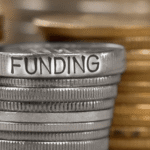
Austria has contributed funding of EUR 200,000 (approximately CHF 187,000) for 2026 to the WTO Chairs Programme, the World Trade Organization’s flagship technical assistance initiative aimed at strengthening academic capacity in developing and least-developed country economies. The contribution supports the programme’s mission of building long-term trade policy expertise through sustained engagement with higher education institutions…. [Read More]
WTO Fish Fund Seeks Proposals to Advance Fisheries Subsidy Agreement Implementation
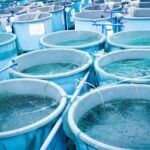
The WTO Fish Fund has launched its second Call for Proposals as of 2 February, inviting eligible developing and least-developed country (LDC) WTO members that have ratified the Agreement on Fisheries Subsidies to apply for financial support to advance implementation of the Agreement. Proposals must be submitted through the official application portal by 24 April…. [Read More]
Journalists Invited to Apply for Media Accreditation for WTO MC14 in Cameroon

Members of the media who wish to cover the World Trade Organization’s 14th Ministerial Conference (WTO MC14) must apply for accreditation by 26 February 2026 at midnight (Central European Time). The conference will be held in Yaoundé, Cameroon, from 26 to 29 March 2026 and will bring together trade ministers and senior officials from WTO… [Read More]
WTO 2026 Workshop to Strengthen Government Procurement Policy and Trade Governance

Government officials from WTO members and observer countries eligible for WTO technical assistance are invited to apply for the 2026 Advanced Global Workshop on the WTO Agreement on Government Procurement (GPA) 2012. The workshop will take place from 20 to 24 April 2026 in Geneva, Switzerland, and applications must be submitted by 13 February 2026…. [Read More]
CPI Study Highlights Women-Led Climate Finance in Nepal

Women-led enterprises play a vital role in supporting climate-resilient livelihoods and local economies in Nepal, yet they continue to face significant challenges in accessing both climate and commercial finance. To address these gaps, Forest Action Nepal and the South Asia Institute of Advanced Studies, with support from the Climate Policy Initiative, convened a multi-stakeholder dialogue… [Read More]
Allianz Launches $1 Billion Emerging Markets Climate Fund with Anchor Backing from BII

British International Investment (BII), the UK’s development finance institution and impact investor, has announced its role as an anchor investor in the Allianz Credit Emerging Markets fund (ACE), a new landmark blended finance initiative targeting a final size of $1 billion. The fund is designed to support Paris Agreement goals by mobilising private capital for… [Read More]
BII, Alexforbes Drive Renewable Energy Innovation with R1 Billion Revego Investment

British International Investment (BII) and Alexforbes Investments have jointly committed R1 billion to the Revego Africa Energy Fund, with each institution investing R500 million. This landmark investment represents a significant step in developing South Africa’s secondary market for renewable energy assets, an area seen as critical for unlocking capital and supporting the country’s long-term energy… [Read More]
Vodacom Foundations Pledge R6 Million for Flood Relief in Mozambique and South Africa
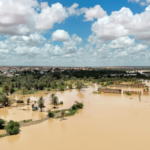
Vodacom Foundations have committed R6 million to support flood-relief efforts in Mozambique and South Africa following severe flooding that has displaced thousands of people and caused extensive damage to homes and infrastructure. The initiative is being implemented in collaboration with government agencies and humanitarian organisations and is part of Vodacom Group’s broader response to the… [Read More]
€13B EIB Group Investment Supports France’s Climate Goals

In 2025, the European Investment Bank Group provided a record €13 billion in long-term financing to France, making it the largest beneficiary of EIB Group support for the second consecutive year. Of this total, €10.6 billion was delivered by the European Investment Bank and €2.4 billion by the European Investment Fund, reflecting strong backing for… [Read More]
EIB Backs Energy-Efficient Social Infrastructure with €200 Million Loan to Hemsö

The European Investment Bank has signed a €200 million long-term loan with Hemsö Fastigheter to support the development and renovation of energy-efficient social infrastructure across Sweden, Finland and Germany. The financing targets public-use buildings that are essential to communities, responding to growing demand for modern facilities and addressing years of underinvestment in public infrastructure. The… [Read More]
€3.5 Billion EIB Financing Positions Greece Among Top EU Beneficiaries in 2025

In 2025, the European Investment Bank (EIB) Group provided Greece with a record €3.5 billion in new financing, marking a 59 percent increase compared to the previous year. This significant rise reflects strengthened support for climate action, water infrastructure, business development and strategic raw materials, positioning Greece among the top beneficiaries of EIB Group funding… [Read More]
Why Cities Are Now at the Heart of the Global Water Crisis

The global water crisis is increasingly concentrated in cities, as mounting evidence shows that major urban centres around the world are facing severe water stress. Data highlighted in recent reporting indicate that many of the world’s largest cities are withdrawing water at rates that approach or exceed available supplies, placing intense pressure on already strained… [Read More]
IFC Invests $150 Million in Otokoç Otomotiv to Boost Electric Mobility and Jobs in Türkiye

The International Finance Corporation has announced its first investment in Otokoç Otomotiv Ticaret ve Sanayi A.Ş., a leading automotive retail and car rental company in Türkiye, to support the transition toward cleaner and more resource-efficient transportation. The financing marks an important step in expanding the availability of hybrid and electric vehicles across the country while… [Read More]
Nigeria Issues ₦501 Billion Power Sector Bond as AFC Supports Landmark Electricity Reforms

Africa Finance Corporation (AFC) has acted as Co-Financial Adviser on the successful issuance of the first tranche of bonds under Nigeria’s Presidential Power Sector Financial Reforms Programme, marking a major milestone in efforts to stabilize and reform the country’s electricity sector. The issuance, valued at ₦501 billion, forms part of a broader ₦4 trillion Power… [Read More]
African Development Fund Plans Historic $1 Billion Market Borrowing Amid Donor Funding Decline

The African Development Fund (ADF), the concessional lending arm of the African Development Bank Group, is preparing to undertake its first-ever market borrowing of around $1 billion. This marks a significant shift for the fund, which has traditionally depended on donor contributions and loan repayments to finance long-term, low-interest support for Africa’s poorest countries. The… [Read More]
Somalia on the Brink: Children Face Catastrophic Hunger as Drought, Funding Cuts Deepen Crisis

Children in Somalia are facing a catastrophic hunger crisis after four consecutive failed rainy seasons have devastated crops and livestock, leaving families with almost no food reserves. According to Save the Children, the coming months are critical to prevent avoidable child deaths as drought conditions intensify during the harsh dry season between January and March…. [Read More]
New $9.3 Million Initiative Strengthens Climate Resilience and Water Security in Kabul
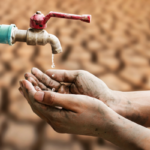
A new community-based initiative has been launched to address acute water scarcity and climate-related risks in Kabul, aiming to strengthen resilience for around 150,000 people in Afghanistan’s capital. Afghanistan is among the countries most vulnerable to climate change, and Kabul province faces severe water stress driven by groundwater depletion, prolonged droughts, and increasing flood risks,… [Read More]
UNDP–ADB Partnership 2026 Boosts Inclusive Recovery in Kyrgyz Republic

The partnership between the United Nations Development Programme and the Asian Development Bank continues to play a strategic role in supporting the Government of the Kyrgyz Republic in advancing inclusive economic recovery, climate action, gender equality, and evidence-based policymaking. Anchored in a global Memorandum of Understanding, the collaboration provides a coordinated framework for joint action… [Read More]
Uzbekistan Launches GIS-Based Disaster Risk System

Uzbekistan has launched an innovative GIS-based system designed to strengthen disaster risk reduction by improving real-time monitoring, forecasting, and emergency response capabilities. The system automates the collection and analysis of data on territorial conditions and emerging hazards, enabling scenario modelling through a unified digital mapping and information platform that supports faster and more informed decision-making…. [Read More]
Peace Forest Initiative Pilot Launched in Kyrgyz Republic

The Peace Forest Initiative (PFI) Pilot Project has been officially launched in the Kyrgyz Republic with an inception workshop held in Bishkek on 30 January 2026. The initiative aims to strengthen climate resilience and social cohesion through nature-based solutions, addressing the interconnected challenges of land degradation, climate change, and community vulnerability. Implemented under the UNCCD… [Read More]


