
From 4 to 5 February 2026, the Pan American Health Organization/World Health Organization (PAHO/WHO) Representative for Barbados and Eastern Caribbean countries, Dr. Amalia Del Riego, visited Dominica, accompanied by Dr. Prabhjot Singh, Advisor for Health Surveillance, Disease Prevention and Control. The visit aimed to strengthen national health priorities through strategic collaboration with the Ministry of… [Read More]
Eastern Busway Receives Funding to Complete Final Stretch

The final stretch of the Eastern Busway in Botany is set to begin construction, following the confirmation of $101 million in funding from the NZ Transport Agency (NZTA) and Auckland Council. This marks the completion of the $1.4 billion Eastern Busway project, a key component of Auckland’s rapid transit network designed to provide faster and… [Read More]
New ILO Child Labour Observatory Aims to Strengthen Global Action Against Child Labour
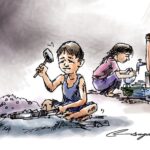
GENEVA, 10 February 2026 – The International Labour Organization (ILO) has launched the Child Labour Observatory (CLO), a centralized global platform compiling country-level information on child labour across all 187 ILO Member States. Established following the Durban Call to Action on the Elimination of Child Labour, the CLO serves as a one-stop hub for data,… [Read More]
UNICEF and WHO Warn Measles Threat Persists Despite 75% Case Drop

Copenhagen and Geneva, 11 February 2026 – Measles cases across Europe and Central Asia fell significantly in 2025 compared to 2024, according to preliminary data from 53 countries in the WHO European Region. A total of 33,998 measles cases were reported in 2025, representing nearly a 75% decrease from the 127,412 cases recorded in 2024…. [Read More]
Empowering Women Scientists for Water and Climate Solutions
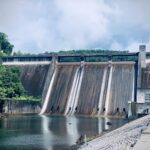
Meron Teferi Taye grew up in Ethiopia in a family where education, for both girls and boys, was considered the foundation for a meaningful life. Surrounded by role models in medicine and engineering, and inspired by her father’s work in renewable energy and water supply, she developed an early curiosity in science. Observing firsthand how… [Read More]
AI in Education Video Project – Call for Proposals

UNESCO Institute for Information Technologies in Education (UNESCO IITE) and Shanghai Open University (SOU) have been jointly implementing the project “Promoting ICT Capacity Building and Open Education in the Era of Artificial Intelligence and Digital Technologies” since 2021. The project has achieved significant outcomes in research and practice, and both institutions aim to further expand… [Read More]
Netherlands Contributes €100 Million to Ukraine’s Energy Support Efforts

On 9 February, the Netherlands announced an additional €35 million contribution to the Ukraine Energy Support Fund, bringing its total support through the Fund to €100 million. The Fund, administered by the Energy Community Secretariat and co-chaired by the European Commission, channels international assistance to maintain and restore Ukraine’s energy infrastructure during the ongoing crisis…. [Read More]
€404.3M EU Research Funding Boosts Postdoctoral Careers via MSCA

The European Commission is awarding €404.3 million to postdoctoral researchers through its 2025 Marie Skłodowska-Curie Actions (MSCA) Postdoctoral Fellowships. This initiative will empower 1,610 researchers, selected from 17,066 international applicants, to develop their own research projects while receiving high-quality training, expert supervision, and international mobility opportunities at academic and non-academic institutions. MSCA Postdoctoral Fellowships are… [Read More]
Japan Provides $3.8 Million to Support UNESCO Programs in Ukraine
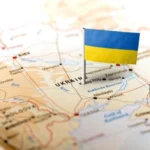
UNESCO has received a new US$3.8 million contribution from Japan to support Ukraine’s recovery in culture, education, and communication and information, as the war in Ukraine approaches its fifth year. This funding will allow UNESCO to scale up its actions on the ground, demonstrating Japan’s continued role as a key partner in supporting the Ukrainian… [Read More]
BIODEV2030 Backs Ethiopia’s Nature-Positive Pathway
On 7 February 2026, Bishoftu, Ethiopia, hosted the fourth national stakeholder workshop under the BIODEV2030 project. The event brought together senior officials from key government bodies, including the Ethiopia Biodiversity Institute, Ethiopian Wildlife Authority, Ministry of Agriculture, Ministry of Finance, Ministry of Planning, and Environment Protection Authority, alongside the national CBD Focal Point and a… [Read More]
Bank of America Gives $500K to FIND Food Bank

Bank of America has awarded a $500,000 grant to FIND Regional Food Bank to support the completion of its capital campaign for a new 40,000 square-foot warehouse on its Food Security Campus in Indio, California. As the largest food bank and distribution center in the region, FIND’s new facility provides nearly three times the space… [Read More]
“$200K Donation Boosts FIND Regional Food Bank

In La Quinta, California, the FIND Regional Food Bank received a significant boost in its fight against food insecurity with a $200,000 donation presented on Thursday. The funds were raised by members of the Hideaway Golf Club during their annual campaign to support local food banks. This contribution will enable the FIND Regional Food Bank… [Read More]
Maryland Invests $6.5 Million in Recreation, Parks, and Land Conservation for Ten Counties
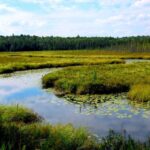
The Maryland Board of Public Works has approved $6.5 million in grants from the Department of Natural Resources to support recreation and land conservation projects across ten counties, including Allegany, Anne Arundel, Charles, Frederick, Garrett, Harford, Howard, Queen Anne’s, Talbot, and Washington. These grants will fund local governments and land trusts to enhance public access… [Read More]
$100K Awarded by National Park Service to Maryland’s AgriTrails Initiative
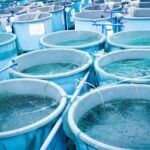
The Maryland Department of Agriculture and the Maryland Department of Natural Resources have been awarded a $100,000 grant from the National Park Service Chesapeake Gateways to support AgriTrails, a program highlighting Maryland’s agricultural and natural resources. The initiative aims to connect agriculture and aquaculture businesses with outdoor recreation opportunities on public lands and State Parks,… [Read More]
Blackbanded Sunfish Conservation Advances with New Federal Funding
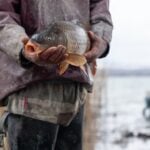
On a crisp September morning, staff from the Maryland Department of Natural Resources (DNR) and the U.S. Fish and Wildlife Service gathered at a Wildlife Management Area to witness a historic conservation event. Small, yellow-green fish with dark stripes, blackbanded sunfish, were carefully released from five-gallon tanks into a pond, marking the first time captive-bred… [Read More]
€11 Million in Funding Now Open for Quantum and Semiconductor Technology Research
The KIC call, titled “Heterogeneous development solutions for semiconductors & scaling of quantum technologies,” is now open for applications. NWO and Holland High Tech are inviting researchers to form consortia and jointly submit research proposals focused on advancing quantum and semiconductor technologies. Quantum and semiconductor technologies are recognized as critical areas within the Dutch central… [Read More]
Grants Open to Support Immersive Technology Adoption in SMEs and Public Institutions

The National Growth Fund has launched the CIIIC Kern call, offering EUR 5 million to support applied research projects of 1.5 to 2 years focused on immersive experiences (IX), where digital and physical elements combine to create rich, sensory interactions. The funding is intended for research conducted collaboratively by research organisations with at least two… [Read More]
Council Agrees on €90 Billion Funding Plan to Support Ukraine’s Recovery
The Council of the European Union has agreed on the legal framework to implement a €90 billion support loan for Ukraine for 2026–2027, aiming to address the country’s urgent financing needs as the war with Russia continues. The Council is seeking a swift agreement with the European Parliament to enable the first disbursement early in… [Read More]
Eco Wave Power Secures Equipment Financing Deal to Scale Wave Energy

Eco Wave Power Global AB, a leader in onshore wave energy technology, has signed a Letter of Intent (LOI) with UK-based Wavefront Asset Management to explore structured equipment financing and leasing solutions for its global wave energy projects. The collaboration aims to provide flexible financing options for customers, supporting Eco Wave Power’s transition from pilot… [Read More]
NSW Government Increases Funding to $12.8M for Animal Welfare Enforcement
The Minns Labor Government has announced that the Royal Society for the Prevention of Cruelty to Animals (RSPCA) NSW and Animal Welfare League (AWL) NSW will receive $12.8 million to strengthen enforcement and compliance activities, aimed at better protecting cats, dogs, livestock, and other animals across the state. This investment builds on $25.3 million provided… [Read More]
$13M+ Funding Eases Education Expenses for Students in Social Housing
xThe NSW Government’s Youth Development Scholarship program is now accepting applications, offering $1,000 grants to 1,500 high school and tertiary students living in social housing to help cover education-related expenses. The program, now in its tenth year, demonstrates the Minns Labor Government’s commitment to supporting the academic and career aspirations of young people in public,… [Read More]
Ukraine Innovation Boost: UNIDO Signs Grants with 47 Japanese Firms

Vienna, Austria, 6 February 2026 – The United Nations Industrial Development Organization (UNIDO) has signed grant agreements with 47 Japanese companies to conduct feasibility studies testing their innovative technologies and business models in Ukraine. This initiative is part of UNIDO’s Green Industrial Recovery Project, which aims to support Ukraine’s post-war industrial recovery through technology transfer… [Read More]
Promoting Sustainable Coffee Growth: Generali Partners with UNIDO in Africa
Generali and the United Nations Industrial Development Organization (UNIDO) have signed a joint declaration under the ACT Programme (Advancing Climate-Resilience and Transformation in African Coffee) to promote sustainable coffee production in Africa. The partnership aims to strengthen international cooperation, improve socio-economic conditions for coffee producers, enhance climate resilience, and support local value addition in key… [Read More]


