
Ministers responsible for the digital economy from West and Central African countries met in Cotonou, Benin, where they reaffirmed their collective commitment to accelerate digital transformation and the responsible development of Artificial Intelligence. They emphasized that digital progress must improve people’s lives by creating jobs, strengthening community resilience, and enhancing economic competitiveness. While acknowledging progress… [Read More]
Driving Inclusive Growth and Jobs Through Digital Transformation

Western and Central African countries have reaffirmed their commitment to accelerating digital transformation by 2030, aiming to expand broadband access, strengthen artificial intelligence capabilities, generate digital jobs, and build a more integrated regional digital market. This commitment was formalized in the Cotonou Declaration, adopted during a regional summit held in Benin on November 17–18, 2025…. [Read More]
Colombia’s Multipurpose Cadaster Expansion Backed by World Bank Funding

The World Bank has approved a new loan to support the expansion of Colombia’s Multipurpose Cadaster, a key instrument for modernizing land administration. By updating cadastral information nationwide, the initiative aims to strengthen land tenure security, improve local government finances, and enhance public investment. Citizens and municipalities will benefit from better access to cadastral services,… [Read More]
Global Hunger Deepens: WFP Plans to Feed 110 Million of the World’s Hungriest in 2026
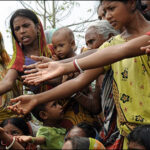
The United Nations World Food Programme (WFP) has warned that the global hunger crisis is intensifying, with far too few resources available to meet growing needs. In its 2026 Global Outlook, WFP projects that 318 million people will face crisis levels of hunger or worse next year—more than double the number recorded in 2019. Despite… [Read More]
Republic of Korea Delivers Emergency Food Aid to 800,000 People in Uganda
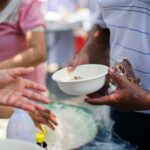
The United Nations World Food Programme (WFP) has received over 2,500 metric tons of rice worth USD 2.9 million from the Republic of Korea to support 600,000 refugees across thirteen settlements and 200,000 schoolchildren in Uganda’s food-insecure Karamoja region. The handover took place at WFP’s logistics hub in Gulu, marking a significant boost at a… [Read More]
Asian Development Bank Strengthens Indonesia’s Clean Energy Shift
The Asian Development Bank (ADB) has approved a $470 million results-based loan to Indonesia’s state electricity company, PLN, to accelerate the country’s transition to clean and renewable energy. The program, known as the Accelerating Indonesia’s Clean Energy Transition Program—Phase 1, aims to support Indonesia’s shift toward low-carbon growth and help the nation strengthen its long-term… [Read More]
New ADB Initiative Boosts Disaster Preparedness in Kyrgyz Republic and Tajikistan

The Asian Development Bank (ADB) has approved a $56.4 million program aimed at strengthening the disaster response capabilities of the Kyrgyz Republic and Tajikistan. Both countries face high exposure to natural hazards such as earthquakes and floods but lack sufficient fiscal capacity and risk transfer tools to manage disasters effectively. The new program is designed… [Read More]
AfDB Welcomes Algeria’s Major Development Push as Bilateral Partnership Deepens

The African Development Bank (AfDB) has been formally designated as Algeria’s international partner as the country reopens to external financing, marking a significant advancement in their longstanding collaboration. During his visit to Algeria, AfDB President Dr. Sidi Ould Tah thanked President Abdelmadjid Tebboune for the decision, noting that it represents an important strategic milestone for… [Read More]
Moldova Shifts From Aid to Growth to Secure Agricultural Future
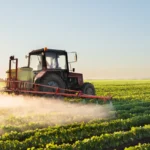
The Food and Agriculture Organization of the United Nations (FAO) has launched the second phase of the Programme on Resilient and Inclusive Markets in the Republic of Moldova, aimed at strengthening both competitiveness and climate resilience among smallholder farmers. Implemented jointly by FAO and UNDP with support from Switzerland, the project focuses on helping farmers… [Read More]
FAO: One Health Boosts Public Health via Better Water Management
FAO emphasized that challenges related to water, sanitation and health are complex, but resilient WASH systems combined with the One Health approach provide a strong foundation for protecting public health. This message was delivered during the Seventh Meeting of the Parties to the Protocol on Water and Health in Budapest, marking the twentieth anniversary of… [Read More]
Ukraine Opens New Duplicate Centre to Protect National Plant Genetic Resources

The Food and Agriculture Organization of the United Nations, with financial support from the European Union and in partnership with several international genetic resource institutions, has officially opened the Duplicate Centre for Plant Genetic Resources of Ukraine. The new facility has been handed over to the National Academy of Agrarian Sciences and represents the second… [Read More]
EU Awards Funding to 70 Projects, Including Two Major Initiatives in Portugal

The European Commission has selected 70 projects for funding to support the decarbonisation of transport across the European Union, with two of these projects located in Portugal. The selected initiatives aim to strengthen EU industrial competitiveness by expanding infrastructure for recharging and refuelling various modes of transport, including road, maritime, and air networks. More than… [Read More]
EU Commits €600M to Alternative Fuel Projects to Drive Zero-Emission Transport

The EU is awarding more than €600 million to 70 projects aimed at electrifying and decarbonising Europe’s transport network. These initiatives will expand alternative fuel infrastructure across 24 countries, including electric recharging stations, hydrogen refuelling stations, electricity supply systems, and ammonia and methanol bunkering facilities for maritime transport. A major focus is the widespread installation… [Read More]
Brazil Expands Community-Led Amazon Conservation Efforts Across 60 Million Acres

The government of Brazil, along with a wide coalition of partners, has launched ARPA Comunidades (ARPA Communities), a major new initiative aimed at strengthening community-led conservation across the Brazilian Amazon. Over the next 15 years, the program will support more than 130,000 people and help reduce deforestation pressure in 60 sustainable-use protected areas covering 58.6… [Read More]
Brazil Partners with Local Communities to Conserve 60 Million Acres of the Amazon

The Government of Brazil, local communities, and a wide coalition of partners have launched the ARPA Comunidades initiative, marking a new phase in Brazil’s long-term commitment to conserving the Amazon. This new effort builds on the success of the original Amazon Region Protected Areas (ARPA) program, which became the largest tropical forest conservation initiative in… [Read More]
Myanmar Communities Pioneer New Methods to Safeguard Sacred Karst Caves

Myanmar is home to the second largest karst landscape in Southeast Asia, covering more than 80,000 square kilometres. These limestone formations host unique species found nowhere else and play an essential role in regulating freshwater systems. Despite their ecological importance, karst ecosystems are increasingly threatened by mining, logging, deforestation, and unplanned religious construction inside caves…. [Read More]
Switzerland Provides CHF 5.2M to Restore Forest Landscapes Across Africa and South America

Switzerland announced a major investment of CHF 5.2 million into the Forest Landscape Restoration (FLR) Hub during COP30 in Belém, Brazil. The funding aims to scale forest and landscape restoration efforts in Africa and enhance knowledge exchange across South America. Implemented by IUCN in partnership with WWF and WRI, the FLR Hub will significantly expand… [Read More]
Czech Republic Donates Over €10,000 to Strengthen OPCW Programs in Africa

The Czech Republic has made a voluntary contribution of more than €10,000 to support assistance and protection initiatives under the OPCW’s Africa Programme. The funding was formalised during a signing ceremony in October 2025 between the Czech Ambassador to the OPCW, René Miko, and OPCW Director-General Fernando Arias at the organisation’s headquarters in The Hague…. [Read More]
Africa’s Public Data Infrastructure: Key to Unlocking the AI Future

Public data—from census information to administrative records—is crucial for addressing major challenges such as food security, climate change, and economic development. In Africa, where the population is young and rapidly growing, this data will be central to shaping an AI-enabled future. As the continent has previously leapfrogged technological barriers, it now has the opportunity to… [Read More]
Bangladesh Hasina Verdict: Why This Decision Matters for Victims

The International Crimes Tribunal in Dhaka has issued verdicts against former Bangladeshi Prime Minister Sheikh Hasina and the former Home Minister for crimes against humanity committed during last year’s protest crackdown. This marks a significant moment for victims seeking justice for the serious human rights violations that occurred during that period. Since releasing its fact-finding… [Read More]
The Truth About International Development Volunteering: Not Voluntourism, and Here’s Why
The recent Bond blog by Hayley Still raises valid concerns about voluntourism, but it also blurs the lines between voluntourism and international volunteering in development. This distinction is crucial, especially now, because these two practices have different histories, motivations, and impacts. While voluntourism has expanded into a large commercial industry that prioritises the experience of… [Read More]
Infosys Introduces AI-First GCC Framework to Power Next-Gen Innovation Centers

Infosys announced the launch of its new AI-First GCC Model, a specialized offering designed to accelerate the creation and transformation of Global Capability Centers (GCCs) into AI-powered innovation hubs. The new model aims to help enterprises position their GCCs as strategic assets that enhance innovation, agility, and competitiveness in an AI-driven world. The offering builds… [Read More]
Cervical Cancer Vaccination: Over 1 Million Lives Saved in Low-Income Countries
A major global effort led by Gavi, the Vaccine Alliance, alongside lower-income countries, has successfully expanded access to the HPV vaccine and reached its target ahead of schedule. This achievement has helped protect an estimated 86 million girls in the world’s highest-risk countries from cervical cancer and is projected to prevent around 1.4 million future… [Read More]


