
The UN World Food Programme (WFP) has highlighted a growing global hunger crisis, reporting that an estimated 318 million people now face crisis levels of hunger or worse, with hundreds of thousands already experiencing famine-like conditions. Funding shortfalls are forcing the WFP to cut rations and scale back assistance even as needs surge. With less… [Read More]
Ontario Commits Funding to Protect and Support Rural Communities

The Ontario government has launched the second intake of the Rural Ontario Development Program, committing $20 million to support rural communities by strengthening local economies, building infrastructure, and keeping workers employed. The program is open to rural municipalities, businesses, Indigenous groups, and not-for-profit organizations, and the announcement was made at the 2026 Rural Ontario Municipal… [Read More]
$2.5M PacifiCan Funding Supports Kelowna’s Manufacturing Growth

PacifiCan has announced a $2.5 million investment in Kelowna-based MAKR Group, a manufacturer of steel components, playground equipment, and water management systems. MAKR supplies splash pads and park installations globally, and this funding will support the implementation of an innovative Industrial Internet of Things (IIoT) system. The IIoT system will connect smart manufacturing machines to… [Read More]
UK Space Industry Boosted as Westcott Space Hub Launches with Job Creation Plans

The Westcott Space Hub has officially opened in Buckinghamshire, marking a major boost for the UK space sector. The £20 million facility, supported by £5.8 million from the UK Space Agency and £15 million in private sector match funding, spans 62,000 square feet and provides state-of-the-art infrastructure for space businesses. It aims to support innovation,… [Read More]
Digital Inclusion in Guatemala: How ‘My First Digital Steps’ Transforms Lives

In Guatemala, digital transformation achieves meaningful results when people are able to use technology in ways that improve their daily lives. For many communities, this goes beyond merely having access to devices—it requires the skills, confidence, and support necessary to navigate an increasingly digital world. “My First Digital Steps” is designed around this people-centred approach,… [Read More]
Libya: IOM Responds to Migrants Following Discovery of Mass Grave and Secret Detention Sites
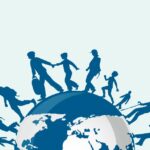
The International Organization for Migration (IOM) has deployed emergency teams to Eastern Libya to assist dozens of migrants recently freed from appalling detention conditions. These cases highlight the severe risks faced by migrants along migration routes, where criminal networks exploit vulnerable populations. IOM Chief of Mission in Libya, Nicoletta Giordano, emphasized that the abuses uncovered… [Read More]
World Economic Forum: IOM Explores How Migration Drives Business and Economic Growth

At the World Economic Forum’s Annual Meeting 2026 in Davos, themed “A Spirit of Dialogue,” the Director General of the International Organization for Migration, Amy Pope, joined global leaders to discuss pressing challenges including international cooperation, economic growth, responsible innovation, investment in people, and sustainable prosperity. IOM’s participation emphasized how well-managed migration can transform mobility… [Read More]
Gaza Ceasefire at 100 Days: WFP Expands Food Aid Operations

One hundred days into the ceasefire, the World Food Programme has significantly expanded its life-saving operations across the Gaza Strip, now reaching more than one million people each month. These efforts have helped push back the immediate risk of famine, but the situation remains extremely fragile. Continued access through all border crossings, the steady flow… [Read More]
European Union Backs WFP as Hunger Risks Deepen for Millions in Somalia
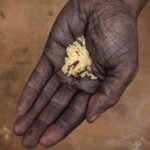
The World Food Programme has received a EUR 6.5 million contribution from the European Union to support lifesaving humanitarian assistance for crisis-affected people in Somalia, alongside continued operations of the United Nations Humanitarian Air Service across the country. The funding comes at a critical time as food insecurity and malnutrition continue to rise, placing millions… [Read More]
Lebanon’s Food Insecurity Still Fragile as Country Enters the New Year, Analysis Finds
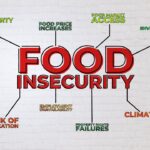
As Lebanon enters the new year, food insecurity remains widespread and fragile despite signs of modest easing under current conditions. A new Integrated Food Security Phase Classification analysis covering November 2025 to July 2026 shows that around 874,000 people, representing about 17 percent of the population analysed, are facing crisis or emergency levels of acute… [Read More]
India’s Lifestyle Shift Against Plastic Pollution: Lessons for Ghana’s Blue Economy
Across the world, the blue economy is under increasing pressure as marine pollution, climate change, and unsustainable consumption degrade ocean ecosystems that support food systems, employment, and coastal livelihoods. Plastic waste has become one of the most visible and damaging threats, clogging waterways, harming marine life, and undermining fisheries across developing regions. Experts warn that… [Read More]
Why Resilient Infrastructure Matters: Lessons from India for Ghana’s Development Future

An ongoing familiarisation visit by journalists from Africa and the Pacific to India has highlighted a critical development challenge for many developing countries: the need to build infrastructure that can withstand climate shocks, disasters, and rapid urbanisation while supporting long-term growth. The discussions underscored how infrastructure resilience has become central to sustainable development as countries… [Read More]
Media Resilience in Prolonged Conflict: Seven Key Lessons Learned

The lessons on media resilience draw on extensive research conducted by a cross-functional group of experts from media, government, civil society, and academia, grounded in Ukraine’s lived experience of operating under conditions of full-scale war. Supported by International Media Support through the REACH programme, the research moves beyond individual success stories to identify recurring patterns… [Read More]
Preventing Extremism Through Community-Based Learning: Four Key Lessons from Southeast European Youth Peacebuilders
Bosnia and Herzegovina, more than three decades after the 1992–1995 war, continues to grapple with the legacies of division embedded in its education system and public memory. Ethnically segregated schools, competing historical narratives, and unresolved interpretations of the past remain common across the country and much of Southeast Europe. These divisions surface repeatedly in debates… [Read More]
Lessons from Snowstorms: The Urgent Need for More Resilient Waste Management Systems

The recent snowstorms in Sweden exposed how vulnerable traditional, vehicle-dependent waste collection systems are during extreme weather. When roads are blocked, snowbanks pile up, and trucks cannot access residential areas, waste collection quickly breaks down. This leads to overflowing bins, delayed collections, additional costs from emergency rounds and overtime, and frustration for residents who are… [Read More]
Learning Across Borders: Insights from International Higher Education Development Projects

International development projects involving Finnish higher education institutions operate in a complex transnational environment. While funding typically comes from Finland or other Northern sources, project activities are largely implemented in the Global South. This arrangement requires continuous cross-continental communication, effective knowledge sharing, and close collaboration among diverse partners. Since these projects aim to improve institutional… [Read More]
Youth-Led Research on SRHR: Lessons From Malawi and Zambia

The achievement of the Sustainable Development Goals depends on the meaningful participation of young people in decisions that shape their lives. Yet despite the fact that more than half of Africa’s population is made up of young people aged 15 to 35, their voices remain largely absent from decision-making spaces. Youth-led research, where young people… [Read More]
Swartland Municipality to Develop 10 MW Solar PV Plant With Long-Term 20-Year PPA
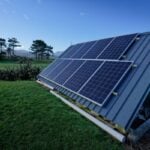
The Swartland Municipality in South Africa’s Western Cape is advancing plans to develop a 10 MW solar photovoltaic project as part of its transition toward renewable energy. The municipality intends to sign a 20-year Power Purchase Agreement with a NERSA-registered independent power producer to generate clean electricity, marking a long-term commitment to sustainable power generation… [Read More]
CCM Suriname Builds Institutional Capacity to Improve National Health Program Delivery

The CCM Suriname Secretariat has stepped up efforts to strengthen the Country Coordinating Mechanism, a national multi-stakeholder platform responsible for overseeing the implementation of Global Fund grants in the country. Bringing together representatives from government, civil society, the private sector, multilateral organizations, and affected communities, the CCM works to ensure that health programs are inclusive,… [Read More]
Uzbekistan’s Transport Sector: Breaking Barriers to Women’s Employment and Gender Equality

For many years, women’s participation in Uzbekistan’s transport sector was restricted by legislation that prohibited them from driving passenger vehicles with more than 14 seats and freight vehicles exceeding 2.5 tons. These legal barriers effectively excluded women from working as bus and heavy truck drivers, reinforcing gender imbalances in a sector traditionally dominated by men… [Read More]
BNHS and NMCG Launch Ganga Basin Project to Protect the Endangered Indian Skimmer

The Bombay Natural History Society (BNHS), in collaboration with the National Mission for Clean Ganga (NMCG), has launched a new conservation initiative in Dehradun aimed at protecting the endangered Indian Skimmer in the Ganga Basin. The project was recently inaugurated by Union Minister for Jal Shakti, C R Patil, marking an important step toward safeguarding… [Read More]
Preparing a Public Workforce for AI: Skills, Training, and Transformation

Public administrations across OECD countries are major employers, yet many are under strain from staff shortages, heavy workloads and fiscal constraints. At the same time, they are responsible for large volumes of administrative and support tasks such as document processing, claims management and citizen information services. Artificial intelligence offers significant potential to support and accelerate… [Read More]
Tanzania’s Gen Z Protests Explained: Youth Anger, Economic Struggles and a New Politics of Care

When Tanzania’s young people took to the streets following the disputed October 29, 2025 elections, many observers were taken by surprise. Long viewed as a country of political stability where dissent was tightly controlled, Tanzania had rarely seen large-scale youth-led protests. Yet for a generation grappling with unemployment, rising living costs and shrinking civic space,… [Read More]


