
Israel’s Ministry of Energy and Infrastructure has awarded $4.2 million in grants to 18 innovative projects aimed at advancing the country’s energy sector. The funding targets initiatives across electricity, renewable energy, energy storage, alternative fuels, and advanced infrastructure technologies, supporting both early-stage research and demonstration-ready solutions under local market conditions. The grants are allocated through… [Read More]
Case Study Highlights Nature-Based Solutions for Effective Climate Resilience

IUCN and its Commission on Ecosystem Management (CEM), in collaboration with the IUCN Regional Office for Mexico, Central America, and the Caribbean (ORMACC), have published a case study highlighting the application of the IUCN Global Standard for Nature-based Solutions (NbS) in Guatemala’s Resilient Highlands project. Available in English and Spanish, the publication demonstrates how a… [Read More]
Conservation in Jordan Strengthens Cultural Heritage and Protected Lands

A promising conservation initiative in Jordan, the Taziz project, is combining forest landscape restoration, livelihood enhancement, and protected area expansion to protect both biodiversity and the UNESCO World Heritage Site of Petra. Implemented by IUCN’s Regional Office for West Asia (ROWA) in partnership with the Petra Development and Tourism Region Authority (PDTRA) and Jordan’s Ministry… [Read More]
Driving Diversification: United Solar’s Polysilicon Plant Supported by IFC in Oman

IFC, in partnership with the Oman Investment Authority (OIA), the OPEC Fund, and several regional banks, has announced a major investment to support United Solar Polysilicon (FZC) SPC in establishing the Middle East’s largest polysilicon manufacturing facility in Oman’s Sohar Freezone. The greenfield plant, with a total investment of $1.6 billion, will produce up to… [Read More]
How Digital Finance is Transforming Rural Communities Across Europe

In rural Kosovo, many residents face significant challenges accessing traditional banking services, often having to travel long distances for routine transactions. For artisans and smallholders like Hazbije Berisha, the nearest bank branch can be nearly 20 kilometers away, making everyday financial tasks costly and time-consuming. This accessibility issue has historically limited the economic participation of… [Read More]
Rising Hate Politics in South Asia: Leaders Shift Focus from Real Issues

Recent incidents of extreme violence across South Asia, including the killing of a Hindu man in Bangladesh over a false blasphemy claim, assaults on minority groups in India, and the death of a Dalit man in Nepal due to wrongful accusations, highlight a deepening crisis in rule of law and human rights in the region…. [Read More]
Trump’s Second Term: One Year On, Human Rights Erosion Raises Alarm in the USA

Amnesty International has raised serious concerns on the one-year mark of President Trump’s return to office, highlighting a growing wave of authoritarian practices that are severely eroding human rights in the United States. In its new report, *Ringing the Alarm Bells: Rising Authoritarian Practices and Erosion of Human Rights in the United States*, the organization… [Read More]
Collaborative Conservation: Protecting Black-necked Cranes and Endangered Migratory Birds

The Black-necked Crane, the only crane species to inhabit high-altitude wetlands year-round, serves as a key indicator of ecological health and climate resilience on the Qinghai–Tibet Plateau, one of the world’s most sensitive ecosystems. Strengthened by the UNDP-GEF Flyway Conservation Network Project since 2022, the Black-necked Crane Conservation Network has become a transboundary platform connecting… [Read More]
UNDP Kuwait Explores Sovereign Thematic Bonds and Sukuks in Introductory Workshop
On 19 January 2026, the United Nations Development Programme (UNDP) in Kuwait organized an introductory session on sovereign thematic bonds and sukuks. The event brought together representatives from national economic and financial institutions, including government agencies, commercial banks, and Islamic financial organizations, to foster a shared understanding of these financing instruments and their relevance to… [Read More]
Germany Invests €500 Million to Boost Flood Resilience and Climate Readiness
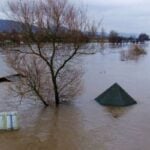
The European Investment Bank (EIB) is providing €500 million in long-term promotional loans to support climate adaptation and flood protection projects in Germany’s Emscher-Lippe region. The funding will benefit the Emschergenossenschaft and Lippeverband (EGLV), two regional water management associations, enabling them to implement vital infrastructure projects, including river restoration, dyke rehabilitation, pumping station upgrades, and… [Read More]
Heriot-Watt University Introduces Prestigious Global Scholarship Initiative

Heriot-Watt University has announced the launch of the Hoogenboom Scholarship Programme, a new international initiative designed to support women from Sub-Saharan Africa in pursuing postgraduate studies over the next five years. The programme offers fully funded scholarships to women whose education has the potential to create lasting impact within their communities and professional sectors. It… [Read More]
Sustainable AI in Focus: UNESCO Leads Discussions at Adopt AI Summit

UNESCO spotlighted the environmental and ethical implications of Artificial Intelligence at the Adopt AI Summit on 26 November 2025, emphasizing the need for stronger international collaboration to ensure AI contributes to climate action rather than exacerbating environmental harm. The organization convened a high-level panel titled “Greening AI and Greening with AI: From Climate Footprint to… [Read More]
Green AI in Africa: Shaping Policies for Sustainable Technology Development

UNESCO and the World Bank convened senior ICT policymakers, regulators, and industry leaders from across Africa to explore strategies for sustainable and resource-efficient AI development. The meeting, held on 11 November in Conakry, Guinea, aimed to highlight the environmental impacts of AI and encourage the integration of sustainability considerations into national AI strategies. Participants examined… [Read More]
Shaping Africa’s Future: Trade, Jobs, and Economic Resilience

The International Labour Organization (ILO) is hosting a hybrid conference titled Trade and Labour in Uncertain Times – Shaping Africa’s Future in the Global Economy, focusing on Africa’s evolving role in global trade. The event will examine how geopolitical shifts, sustainability requirements, and changing regulatory frameworks are reshaping global value chains, creating both opportunities and… [Read More]
Africa’s ICT Experts Advance Data Governance at Transform Africa 2026
ICT policymakers and industry leaders from 23 African countries convened at the 7th Transform Africa Summit in Conakry, Guinea, on 12 November 2025, to advance practical data governance solutions and launch the French edition of UNESCO’s Data Governance Toolkit. The workshop brought together over 50 senior ICT policymakers, regulators, and industry representatives, focusing on bridging… [Read More]
Boosting Female Entrepreneurship: NSW Government Grants $500K to Local Groups

Two local organisations in New South Wales have been awarded $250,000 each through the Supporting Women in Business Grants program 2025/26, aimed at helping over 90 women enhance their skills, confidence, and capacity to achieve their business goals. The funding was granted to Unkya Local Aboriginal Land Council and The Social Outcomes Lab, supporting initiatives… [Read More]
Call for Innovators: Water Discovery Challenge Returns to Boost Water Solutions

The Water Discovery Challenge is returning with £7.5 million in funding to accelerate the development and adoption of innovative solutions for the water sector in England and Wales. Managed by Ofwat’s Water Innovation Fund, the competition is designed to attract ideas from outside the water industry, encouraging fresh thinking from sectors such as energy, transport,… [Read More]
A Seat at the Table: FAO Supports Women’s Leadership in Rural Bosnia

Many rural women in Bosnia and Herzegovina begin their day before dawn, balancing long hours on the farm with household chores, childcare, and community responsibilities. They are often the first to feel the effects of droughts, floods, or post-conflict rebuilding, managing family plots, livestock, and local economies, yet remain excluded from decision-making spaces and have… [Read More]
Assessing Food Safety: FAO Publishes New Guidance on Methane-Reducing Chemicals in Animals

The world faces the dual challenge of increasing food production while reducing greenhouse gas emissions from agriculture. One emerging solution involves the use of environmental inhibitors (EIs), substances designed to lower methane emissions from cows and other livestock, and to reduce nitrogen losses from fertilizers in crop production. These technologies have the potential to mitigate… [Read More]
New Global Agreement on Marine Biodiversity Gains FAO Support

The Food and Agriculture Organization of the United Nations (FAO) has welcomed the entry into force of the Agreement under the United Nations Convention on the Law of the Sea on the Conservation and Sustainable Use of Marine Biological Diversity of Areas beyond National Jurisdiction (BBNJ Agreement). This binding global treaty, effective from 17 January… [Read More]
Yemen Emergency: Rising Child Deaths Signal Worsening Crisis

Julien Harneis, UN Resident and Humanitarian Coordinator in Yemen, issued a stark warning that children in the country are dying and that conditions are expected to worsen, with mortality and morbidity likely to rise significantly in the coming year. His alert follows recent clashes in eastern governorates, where forces affiliated with the Southern Transitional Council… [Read More]
ICC Prosecutor Tells UN: Sudan Violence Repeats Across Towns

The International Criminal Court (ICC) has raised serious concerns about the escalating violence in Sudan, particularly in the Darfur region, where civilians are facing organized and widespread atrocities. ICC Deputy Prosecutor Nazhat Shameem Khan described the situation as “darkening even further,” with mass executions, arbitrary detentions, rape, and the use of collective torture as tools… [Read More]
Global Trend Ignored: Death Penalty Usage Surges Last Year

The United Nations continues to advocate for the universal abolition of the death penalty, emphasizing that the right to life is protected under the International Covenant on Civil and Political Rights, ratified by 175 countries. For states that retain capital punishment, it should only be applied in exceptional cases for the “most serious crimes.” Despite… [Read More]


