Sustainable marketing has become an essential strategy for brands aiming to connect with eco-conscious consumers. As awareness of environmental issues rises, more individuals prioritize sustainability in their purchasing decisions, creating a significant opportunity for businesses to meet demand while standing out from competitors. With experience in SEO and marketing strategy, it is clear that effectively… [Read More]
cat
IUCN and CBD Aid Countries in Achieving Biodiversity Target 3

The International Union for Conservation of Nature (IUCN) and the Secretariat of the Convention on Biological Diversity (CBD) are supporting five countries in Central Asia—Armenia, Azerbaijan, Belarus, Kazakhstan, Kyrgyzstan, Tajikistan, Turkmenistan, Uzbekistan—and the Russian Federation to strengthen national efforts toward Target 3 of the Kunming–Montreal Global Biodiversity Framework. This target aims to conserve at least… [Read More]
Changing Social Norms to Empower Women Leaders in Malawi

In Malawi, women’s representation in politics has historically been low, with only 23 percent of parliamentary seats held by women following the 2019 elections, and even lower representation at the local level. The northern region was particularly underrepresented, with just four out of 33 parliamentarians being women. To address these disparities ahead of the 2025… [Read More]
IFAD Opens New Office in Salvador and Boosts Rural Development in Brazil
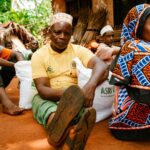
The International Fund for Agricultural Development (IFAD) has officially opened a new office in Salvador, the capital of the State of Bahia, marking a significant step in its longstanding partnership with Brazil and its northeastern states. This expansion reflects IFAD’s commitment to rural development after three decades of collaboration, investment, and joint initiatives in the… [Read More]
CATAL1.5T Climate Actions: Building Resilience Across West Africa & Latin America
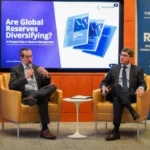
The future of climate action is being shaped not in the polished halls of global summits, but in local communities and innovation hubs across the world. In cities like Dakar and Mexico City, young innovators and entrepreneurs are turning the abstract threat of climate change into tangible solutions. The CATAL1.5T Climathons, launched in 2023, have… [Read More]
Arab States’ Rural Investments Key to Long-Term Food Security

Alvario Lario, President of the International Fund for Agricultural Development (IFAD), emphasized the importance of investing in rural economies to achieve food security and economic growth during a keynote speech at the World Governments Summit 2026, organized by the Arab Authority for Agricultural Investment and Development (AAAID). He highlighted that food systems in the Arab… [Read More]
Dutch Coalition Agreement: Our Call to Lead in Sexual Health

Soa Aids Nederland has welcomed the Dutch coalition agreement presented on January 30 by D66, VVD, and CDA, highlighting the increased investments in international cooperation and the government’s stronger focus on prevention in healthcare. The organisation stresses that this is an important opportunity for the Netherlands to reclaim its leadership role in sexual health, both… [Read More]
Māori Organisations Lead Affordable Housing Initiatives

One year after the Government’s $200 million investment to accelerate affordable rental housing for whānau Māori, significant progress is being made, with hundreds of homes moving from planning into construction. Associate Housing Minister Tama Potaka reported that 463 homes have been approved across 11 Māori-led housing projects, with 392 homes now contracted for delivery and… [Read More]
Armenia Implements ILO Violence and Harassment Convention

In Yerevan on 30 January 2026, representatives from the Armenian government, employers’ and workers’ organizations, civil society, and international partners gathered for a Policy Dialogue on the ILO Violence and Harassment Convention, 2019 (No. 190). The event, organized jointly by the ILO and UN Women in partnership with Armenia’s Ministry of Labour and Social Affairs,… [Read More]
Kazakhstan Boosts Social Dialogue and Labour Rights
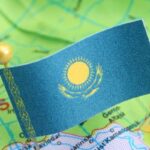
The International Labour Organization (ILO) organized a high-level tripartite round table in Astana, Kazakhstan, to advance social dialogue, promote freedom of association, and strengthen mechanisms for resolving labour disputes. This event was held within the framework of Kazakhstan’s Roadmap for the Promotion of Decent Work, which outlines commitments to enhance labour relations, social dialogue, and… [Read More]
Boosting Safety for Thailand’s Agricultural Workers
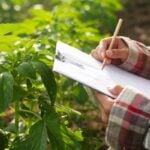
Employers, workers, and provincial partners in Thailand are collaborating to improve access to the Worker’s Compensation Fund (WCF) and enhance workplace safety in the country’s agriculture sector. A workshop held in Chonburi on 4 February 2026, organized by the International Labour Organization (ILO) and the Employers’ Confederation of Thailand (ECOT), aimed to strengthen understanding of… [Read More]
EBRD Boosts Private Sector and Green Finance in SEMED

In 2025, the European Bank for Reconstruction and Development (EBRD) invested a record €2.8 billion across 65 projects in seven economies in the southern and eastern Mediterranean (SEMED) region, including Egypt, Iraq, Jordan, Lebanon, Morocco, Tunisia, and the West Bank and Gaza. This marked an increase from €2.4 billion in 2024, with 70 per cent of the… [Read More]
Kazakhstan Strengthens Dispute Resolution via Social Dialogue
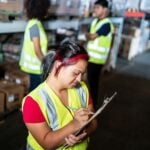
The International Labour Organization (ILO) organized a high-level tripartite round table in Astana to advance social dialogue, promote freedom of association, and strengthen mechanisms for resolving labour disputes in Kazakhstan. The event was held within the framework of the Roadmap for the Promotion of Decent Work in the Republic of Kazakhstan, which outlines commitments to… [Read More]
ILO & EU Support Women Migrant Workers in Malaysia
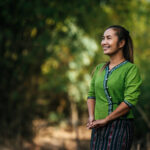
Women migrant workers in Malaysia’s electronics sector are gaining confidence, building networks, and improving their ability to advocate for their rights at work through the PROTECT project – Protecting the Rights of Migrant Workers, implemented by the International Labour Organization (ILO) with funding from the European Union (EU). Malaysia, a global hub for electronics manufacturing,… [Read More]
EBRD Provides Record Funding for Southern & Eastern Mediterranean

In 2025, the European Bank for Reconstruction and Development (EBRD) invested a record €2.8 billion across 65 projects in seven economies in the southern and eastern Mediterranean (SEMED) region, including Egypt, Iraq, Jordan, Lebanon, Morocco, Tunisia, and the West Bank and Gaza. This marked an increase from €2.4 billion in 2024, with 70 per cent of the… [Read More]
Take Action Now: Congress Urges Support for Ukrainian Communities
Ukrainian communities are currently facing an extremely difficult situation due to ongoing attacks by the Russian Federation, compounded by a severe energy crisis. Urgent technical assistance from international partners could help protect civilians from the devastating consequences of these attacks. In coordination with the Permanent Representation of Ukraine to the Council of Europe and in… [Read More]
Camvert Commits CFA22 Million to Youth Self-Employment Projects in Campo
Camvert and local stakeholders in Campo held a two-day evaluation workshop in Kribi at the end of January 2026 to assess progress on social commitments linked to the oil palm agro-industrial project launched in 2021. The meeting brought together administrative authorities, community representatives and local elites to review the 2025 action plan and validate the… [Read More]
Council of Europe Calls for Stronger Civic Space to Safeguard European Democracy
Civil society plays a central role in shaping Europe’s democratic future and is essential to the success of the New Democratic Pact for Europe, Council of Europe Secretary General Alain Berset said at the opening of an international conference in Strasbourg on 2 February 2026. Addressing participants, he emphasized that democracy depends not only on… [Read More]
UK Allocates £16m for Research, Education, Health and Culture

More than £16 million has been awarded to over 100 organisations across the United Kingdom in the latest funding round announced in January 2026. The capital funding supports a wide range of projects with a primary focus on research, education, health, disability services, and cultural infrastructure, reaching communities from Scotland and Wales to Northern Ireland… [Read More]
SNSF Revises Project Funding Rules Amid Budget Pressures
The Swiss National Science Foundation has announced adjustments to its project funding scheme in response to a sharp rise in grant applications and increasingly constrained financial resources. The revised measures aim to preserve fair access to funding for researchers while safeguarding the quality of evaluations. These changes will apply to all proposals submitted by the… [Read More]
DFG Pushes Support for Diversified Cropping to Strengthen Agriculture
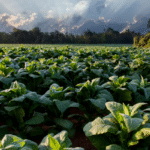
The German Research Foundation’s Permanent Senate Commission on the Transformation of Agricultural and Food Systems has called for stronger political support to promote diversified cropping systems as a foundation for more sustainable and crisis-resilient agriculture. In its first official position paper, the Commission highlights the urgent need for long-term research programmes and adapted policy frameworks… [Read More]
WHO Launches $1 Billion 2026 Appeal to Deliver Health Care in Global Crises

The World Health Organization has launched its 2026 global emergency appeal to ensure that millions of people living in humanitarian crises and conflict settings can access essential health care. Building on its 2025 response, WHO and its partners supported 30 million people through emergency funding, delivering life-saving vaccinations to millions of children, enabling tens of… [Read More]
UNDP Advances Regional Development and Youth Empowerment Across Kyrgyzstan
The United Nations Development Programme, working in partnership with national and local self-government authorities, has been advancing regional development, improving the investment climate, and expanding meaningful youth participation in the Kyrgyz Republic. In 2025, UNDP-supported initiatives contributed to the establishment and strengthening of sustainable mechanisms across investment planning, youth infrastructure, entrepreneurship, the creative economy, trade… [Read More]


