
LILONGWE, February 24, 2026 — Malawi’s economy faces persistent challenges after years of high inflation, widening fiscal and external deficits, and declining exports, according to the World Bank Group’s latest Malawi Economic Monitor (MEM), Getting Reforms Right. With 270,000 young people entering the labor market annually but only around 40,000 formal jobs created, generating employment… [Read More]
cat
Timor-Leste Uses Data-Driven Census to Boost Social Protection and Reduce Child Stunting
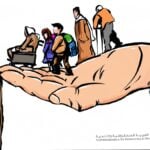
The Government of Timor-Leste, in collaboration with the United Nations World Food Programme (WFP), the Ministry of Social Solidarity and Inclusion (MSSI), and the National Institute of Statistics of Timor-Leste (INETL), has launched a major data-driven initiative to modernize the country’s social protection system and improve maternal and child nutrition outcomes. In 2026, INETL will… [Read More]
SME Success Stories Worldwide: Insights Nepal Can Adopt (II)
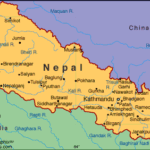
This second part of the analysis highlights additional global best practices that Nepal can adopt to strengthen its SME ecosystem. While Part I focused on financing and regulation, this section emphasizes digital infrastructure, public procurement, human capital, innovation, inclusion, and systemic measurement as key pillars for SME growth. Countries like the USA, Canada, Germany, Australia,… [Read More]
Small Grants, Big Lessons: Sustainability in Global Health

Philanthropy has long faced the challenge of ensuring that investments create lasting change rather than short-term results. This issue has become especially urgent in global health, where funding pressures and deep cuts make it critical for donors to support programs that local governments can sustain independently. Ensuring long-term impact requires strategies that promote local ownership… [Read More]
Lessons from Three Megadiverse Countries on Biodiversity Protection
GIZ is supporting eight partner countries in strengthening their capacity to implement national biodiversity targets, including Brazil, the Democratic Republic of the Congo (DR Congo), and Indonesia, which together host 60% of the world’s tropical forest ecosystems. These forests are critical for addressing biodiversity loss and climate change. To promote cooperation, the project organized study… [Read More]
RAIN Challenge Insights: Driving Innovation for Climate Resilience
Over the past three years, the Resilient Agriculture Innovations for Nature (RAIN) Challenge, in partnership with the Shockwave Foundation and Munich Re Foundation, has supported East African innovators in transforming early-stage, nature-positive agricultural ideas into scalable, investment-ready solutions. The initiative focuses on seed-level innovations that strengthen agricultural systems and advance climate resilience in local communities,… [Read More]
$10 Million Fund to Advance AI Designed By and For People

The MacArthur Foundation has announced $10 million in aligned grantmaking to support Humanity AI, a national initiative dedicated to building a human-centered future in which artificial intelligence (AI) is designed by and for people. Humanity AI brings together a coalition of funders across the arts, labor, democracy, education, and security sectors, aiming to drive more… [Read More]
Albania and UK Exchange Best Practices on Constituency Engagement

Listening and responding to constituency needs is a fundamental part of representative democracy and a core responsibility of any Member of Parliament (MP). A recent mentoring session brought together UK parliamentarians and first-time Albanian MPs to explore effective ways for representatives to connect with and respond to their constituencies. The exchange focused on strategies to… [Read More]
Why Strong Education Systems Drive Life Skills Development
In 2024, UNHCR, the UN Refugee Agency, and the Vodafone Foundation launched a Life Skills course under the Instant Network Schools programme to support displaced students’ learning. A recent evaluation of the course highlighted a key insight: life skills do not develop in isolation but emerge and are sustained through strong, structured, and inclusive education… [Read More]
Georgia Advances Aquaculture with National Fish Traceability Integration
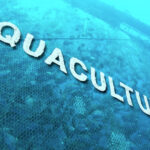
Until now, most fish farms in Georgia have relied on paper notebooks to record information on feedings, health treatments, and production. This labor-intensive approach has limited disease prevention, slowed decision-making, and made traceability difficult. To address these challenges, Georgia is preparing to integrate its aquaculture sector into the National Animal Identification and Traceability System (NAITS)… [Read More]
FAO Assists Tuvalu in Launching First National Crops and Livestock Census
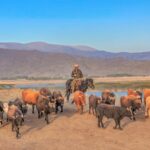
In Funafuti, Tuvalu, the Food and Agriculture Organization of the United Nations (FAO) is supporting the country’s first National Crops and Livestock Census by providing technical and methodological assistance in collaboration with the Ministry of Natural Resources Development, the Central Statistics Division, and the Pacific Community (SPC). A training program has been launched to equip… [Read More]
Climate-Smart Equipment Strengthens Dryland Farming and Restores Landscapes
In Harare, Zimbabwe, the Government commissioned a new tranche of small-scale agricultural equipment to support climate-smart agriculture, sustainable land management, and rural livelihoods in dryland areas under the Drylands Sustainable Landscapes Impact Programme (DSL-IP). Funded by the Global Environment Facility (GEF-7) and supported by the Food and Agriculture Organization of the United Nations (FAO), the… [Read More]
Miombo Woodland Restoration in Zimbabwe Boosted by FAO Training
In Mudzi and Rushinga districts of Zimbabwe, the Food and Agriculture Organization of the United Nations (FAO), in collaboration with the Forestry Commission and the Ministry of Local Government and Public Works, concluded a week-long series of capacity-building workshops aimed at empowering traditional leaders to drive sustainable management and restoration of Miombo woodlands. The workshops,… [Read More]
Deaf Farmers in Egypt Boost Yields Through Adapted Field Schools
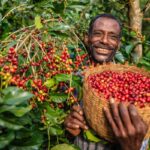
In the Kharga Oasis, a crescent of green in Egypt’s western desert, fifteen farmers gather under the shade of date palms, communicating entirely through sign language. This is the “Sound of Silence” Farmer Field School, funded by the Global Environment Facility, where deaf and speech-impaired farmers have turned communication barriers into collective strength, becoming among… [Read More]
WHO and Solomon Islands Collaborate on Health Security Initiatives
In a world increasingly threatened by climate change, zoonotic diseases, and natural or man-made disasters, the Solomon Islands is taking significant steps to strengthen its health security through collaboration with the World Health Organization (WHO). The country works under the International Health Regulations (IHR 2005), which provide a legal framework for managing public health risks… [Read More]
Samoa Launches One Health Pandemic Preparedness and Response Project
The Government of Samoa, in partnership with the World Bank, FAO, and WHO, officially launched the One Health Pandemic Preparedness and Response project, supported by a US$4.8 million grant from the Pandemic Fund. The initiative adopts a One Health approach, recognizing the interconnectedness of human, animal, and environmental health, and aims to strengthen Samoa’s capacity… [Read More]
Life-Saving Childhood Cancer Medicines Arrive in Jordan
On 22 February 2026, Jordan marked a major milestone in childhood cancer care with the first delivery of life-saving medicines through the Global Platform for Access to Childhood Cancer Medicines, becoming the first country in the Eastern Mediterranean Region to implement the initiative. Co-founded by WHO and St. Jude Children’s Research Hospital, the Global Platform… [Read More]
Closing Immunity Gaps in Enugu Through Independent Child Health Monitors

In Enugu State, families, health workers, and young volunteers are collaborating to protect children from measles, rubella, HPV, and other vaccine-preventable diseases through the 2025–2026 Measles-Rubella (MR) Vaccination Campaign. The campaign aims to reach over 2.1 million children across all 17 local government areas and is led by the Government of Nigeria through the National… [Read More]
Reaching Nomadic Communities: Measles-Rubella Vaccination in Osun State

In Abaa Modakeke, a remote nomadic settlement in Osun State, families have long lived beyond the reach of basic health services, leaving children vulnerable to measles and rubella. Many parents avoided nearby health facilities due to fear of rejection or uncertainty about available services, resulting in children missing routine immunizations. During the 2025–2026 Measles-Rubella (MR)… [Read More]
Strengthening Ethiopia’s Health Workforce for Universal Health Coverage

The Federal Ministry of Health of Ethiopia, in partnership with the Ministry of Education and with technical support from WHO, has launched a series of High-Level Multisectoral Dialogues to align national priorities, investments, and policies for health workforce development, supported by funding from the UK Department for Health and Social Care. The first dialogue, themed… [Read More]
WHO, Novo Nordisk Foundation Join Forces to Advance Health Training in Kenya

Kenya has made significant strides in health workforce production over the past decade, doubling the number of nurses, doctors, and other health professionals. However, the Health Labour Market Analysis highlights persistent and emerging gaps, projecting that more than 114,000 additional health professionals across 31 roles will be needed by 2031 to meet population health demands…. [Read More]
Libya Achieves WHO Validation for Trachoma Elimination

The World Health Organization (WHO) has officially validated that Libya has eliminated trachoma as a public health problem, marking a major public health milestone in the Eastern Mediterranean Region. This achievement protects future generations from preventable blindness and demonstrates that neglected tropical diseases can be overcome even amid complex humanitarian and migration challenges. With this… [Read More]
Pregnancy Becomes More Dangerous Amid Conflict and Instability

Nearly two-thirds of maternal deaths worldwide occur in countries affected by conflict or fragility, where the risk of dying from maternal causes is about five times higher per pregnancy compared with women in stable countries. In 2023, an estimated 160,000 women died from preventable maternal causes in fragile and conflict-affected settings, accounting for six in… [Read More]


