UNESCO has expressed deep concern over the rising use of internet shutdowns by governments to manage political crises, condemning any actions that prevent citizens from accessing information through online tools. The organization emphasizes that the internet is essential for citizens to exercise their democratic rights, particularly during times of crisis, and calls on governments to… [Read More]
cat
US Funding Cuts Push Malawi’s Healthcare System to the Brink

Malawi is facing a catastrophic collapse of healthcare services one year after the US government cut foreign aid in January 2025, reversing a decade of progress against HIV/AIDS. The funding reductions have led to severe cuts in HIV treatment programs, an increase in unplanned pregnancies, and a resurgence of stigma and discrimination against vulnerable populations…. [Read More]
FY 2027 Budget: $73.7 Million Allocated by Governor Moore for Local Economic Growth

Governor Wes Moore has proposed a $73.7 million allocation in the Fiscal Year 2027 budget to fund 252 projects through six state revitalization programs administered by the Maryland Department of Housing and Community Development. These investments target county and municipal governments, community development organizations, and other local partners to support projects that advance revitalization goals… [Read More]
Unpacking Financial Challenges and Supporting Women Entrepreneurs in Nepal
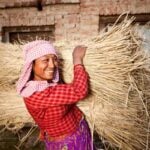
The Climate Policy Initiative (CPI), in partnership with ForestAction Nepal (FA-N) and the Southasia Institute of Advanced Studies (SIAS), conducted a primary study examining the socio-economic and financial challenges faced by women-led enterprises (WLEs) in Nepal, particularly their limited access to finance. The objective of the related event is to present the study’s key findings,… [Read More]
People of Yemen Face Severe Hunger, IRC Sounds Alarm

The people of Yemen are facing a severe and escalating hunger crisis, warns the International Rescue Committee (IRC), as ongoing conflict, insecurity, and drastic reductions in humanitarian funding compound the situation. Yemen now bears the highest global burden of IPC Phase 4 food insecurity, with over 148,000 people entering crisis or worse levels of food… [Read More]
Airbel Ventures: IRC’s New Impact Fund Driving Humanitarian Breakthroughs

The International Rescue Committee (IRC) has launched Airbel Ventures, a humanitarian impact investing fund designed to accelerate the introduction and scaling of breakthrough technologies in crisis-affected communities. The fund targets innovations with the potential to transform humanitarian response, from digital infrastructure for frontline health systems to climate-resilient agriculture. Many high-potential startups face barriers entering humanitarian… [Read More]
Overcoming Global Health Threats Through Genuine Partnerships

Recent cuts to official development assistance (ODA) from the UK, US, and several European countries—including the Netherlands, Belgium, and France—have sent shockwaves through the global health and development sector. These reductions have disrupted the international aid architecture, leaving affected countries with little time to develop sustainable financing alternatives. While such cuts pose immediate challenges for… [Read More]
Locally Led Action Between Vision and Responsibility: The Path Forward
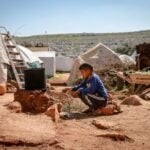
Humanitarian discussions increasingly highlight the importance of locally led action, yet despite years of dialogue under initiatives like the Grand Bargain, definitions of “localisation” remain fluid, and progress often lags behind commitments. The gap between rhetoric and reality continues, raising questions about how to meaningfully advance locally led approaches within the broader Humanitarian Reset. Locally… [Read More]
FAO Partners with Belgium and France to Scale Up Emergency Agricultural Assistance in Gaza
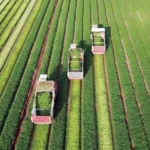
The Food and Agriculture Organization of the United Nations has secured new partnerships with Belgium and France to expand emergency agricultural assistance in the Gaza Strip, aiming to support 1,000 farming households ahead of the upcoming growing season. Through this initiative, FAO seeks to help farmers restore food production capacity and improve local access to… [Read More]
Senegal Improves Maternal Care with WHO-Recommended Childbirth Models

Senegal has made remarkable progress in maternal health over the past decade, reducing its maternal mortality rate by more than half. However, despite these gains, many women continued to experience childbirth as a distressing and isolating process, often marked by fear, limited communication and a lack of emotional support within health facilities. Experiences like that… [Read More]
UN Denounces Demolition of UNRWA Headquarters in East Jerusalem
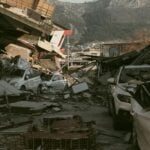
The demolition of the UNRWA headquarters in East Jerusalem has drawn strong condemnation from senior United Nations officials, who describe the act as an unprecedented attack on the UN and a serious breach of international law. UNRWA Commissioner-General Philippe Lazzarini stated that the demolition represents a new level of open and deliberate defiance of international… [Read More]
Floods in Mozambique Heighten Health and Nutrition Risks, Say UN Agencies
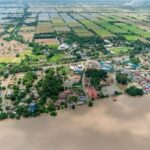
Severe flooding in Mozambique has affected more than half a million people following heavy rains in the first weeks of the new year, according to the UN Office for the Coordination of Humanitarian Affairs (OCHA). The situation continues to worsen as floodwaters persist and dams keep releasing water to prevent structural failure, causing the number… [Read More]
Corruption Fuels Human Trafficking at Every Step of the Crime

A new report from the UN Office on Drugs and Crime (UNODC) finds that large-scale human trafficking cannot function without corruption by border guards, public officials, and other authorities who enable the crime in exchange for money, sexual favours, or under coercion. The report highlights cases in which officials directly facilitated trafficking operations, illustrating how… [Read More]
Global Water Bankruptcy: World Faces Escalating Water Crisis
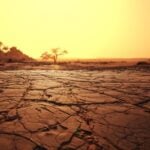
For decades, warnings about a “global water crisis” suggested a temporary disruption followed by recovery. New evidence, however, indicates that many regions are now facing persistent water shortages in which water systems can no longer realistically return to historical conditions. According to the United Nations University Institute for Water, Environment and Health, the idea of… [Read More]
$20 Million Investment by Canada and Ontario Supports Local Farmers and Agribusinesses

The governments of Canada and Ontario are investing up to $20 million through the new Market Diversification and Trade Resiliency Initiative to help farmers, food processors, and agribusinesses increase sales of Ontario-grown products in domestic and international markets. The initiative is designed to boost competitiveness, support business expansion, and protect Ontario’s agribusiness sector amid global… [Read More]
$1.5 Million in Federal Support Aims to Tackle Workplace Sexual Harassment in BC

Workers in British Columbia will continue to have access to free legal advice and education to help address workplace sexual harassment, supported by $1.5 million in federal funding. The funding supports the Sexual Harassment Advice, Response and Prevention for Workplaces (SHARP Workplaces) project, delivered by the Community Legal Assistance Society, which provides legal support to… [Read More]
Fiji Advances Marine Stewardship with New Dive and Research Conservation Hub
Fiji has marked a significant milestone in marine conservation and sustainable ocean development with the official opening of the Beqa Adventure Divers (BAD) Dive, Research, and Conservation Compound in Pacific Harbour. The facility integrates sustainable tourism, scientific research, and conservation, enhancing Fiji’s ability to protect marine ecosystems while supporting livelihoods that depend on healthy oceans…. [Read More]
Lao PDR Sets Direction for National Social Protection Strategy with ILO Support

The International Labour Organization (ILO) is supporting the Government of the Lao People’s Democratic Republic (Lao PDR) as it develops a new National Social Protection Strategy (NSPS) for 2026–2030, aimed at reducing poverty and inequality. The ILO conducted the final, end-term review of the NSPS 2021–2025 through the “Accelerating universal social protection for achieving the… [Read More]
Why Frontier Markets Haven’t Delivered on Promised Potential Since 2010
A new World Bank study finds that frontier market economies—a group of mostly middle-income countries considered potential future economic leaders—have largely underperformed in recent decades. Investment growth per person in these economies during the 2020s has been less than half the rate seen in the 2010s, although some top-performing frontier markets provide lessons for the… [Read More]
New EU and WFP-Funded Humanitarian Hub in Madagascar Enhances Disaster Preparedness
The United Nations World Food Programme (WFP) and the European Union (EU) have officially handed over Madagascar’s first humanitarian hub to the government, located in the eastern city of Manakara. The hub aims to strengthen the country’s emergency preparedness and response, particularly for the cyclone-prone eastern and southern coasts. It will allow essential supplies like… [Read More]
Turning Land-Use Risk into Business Value: Lessons from Brazil’s Agroforestry Sector
For many companies with agricultural supply chains, land use occupies an uneasy space in sustainability strategies. It is often framed as a reputational risk, a compliance requirement, or a distant emissions issue rather than a core business concern. Over time, this has resulted in a proliferation of pilots, pledges, and projects that rarely address the… [Read More]
What Works and What Doesn’t: Lessons from Ethiopia’s Integrated Safety Net Programme in Amhara
The Government of Ethiopia, with support from development partners, has been implementing a range of social protection programmes to reduce poverty and strengthen the economic resilience of poor and vulnerable populations, particularly in rural areas where nearly three-quarters of the population reside. Two of the country’s flagship interventions are the Productive Safety Net Program (PSNP)… [Read More]
$4.2M in Israeli Grants Fuel Next-Generation Energy Startup Growth

Israel’s Ministry of Energy and Infrastructure has awarded $4.2 million in grants to 18 innovative projects aimed at advancing the country’s energy sector. The funding targets initiatives across electricity, renewable energy, energy storage, alternative fuels, and advanced infrastructure technologies, supporting both early-stage research and demonstration-ready solutions under local market conditions. The grants are allocated through… [Read More]


