This year, nearly 1,000 migrants and refugees have died attempting to cross into Europe, highlighting ongoing dangers in the Central Mediterranean. A recent tragedy saw over 80 people go missing when a boat capsized after leaving Tajoura, Libya, while another incident on 1 April left 19 dead near Lampedusa, Italy. Amy Pope, head of the International Organization for Migration (IOM), called for stronger measures to combat human trafficking and for expanded safe and regular migration pathways to prevent such deadly journeys. Italy has recorded approximately 6,200 arrivals so far in 2026, a decline from 9,400 during the same period in 2025.
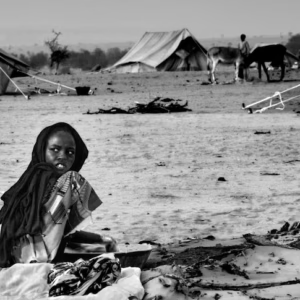
In Afghanistan, over 94,000 people have been displaced since late February due to renewed military clashes with Pakistan. Cross-border shelling, airstrikes, and armed conflict have caused civilian casualties and damaged essential infrastructure, including 25 health facilities and 41 schools across six provinces, disrupting health, nutrition, and education services. Humanitarian partners continue delivering emergency aid, including food, medical supplies, and shelter, despite ongoing insecurity.
Recent widespread rainfall in Afghanistan has improved soil moisture and supported rainfed crops, providing some relief to the country’s 17.4 million people in urgent need of food assistance. However, heavy precipitation in certain areas has caused destructive flooding, emphasizing the need for improved water management to protect homes, crops, and livestock, according to FAO official Richard Trenchard.
Globally, a high-level “One Health” Summit convened world leaders, scientists, and environmental experts to address the interlinked health of humans, animals, and the environment. The initiative responds to rising zoonotic disease risks, noting that 60% of emerging infectious diseases originate from animals, with over 30 new human pathogens identified in the last three decades. The summit promotes collaboration across human medicine, veterinary science, and environmental policy to prevent future pandemics.
Significant funding commitments were announced, including a €700 million pledge by the European Commission to the Global Fund, with €46.5 million earmarked to strengthen African health security and the One Health workforce. The World Health Organization, alongside FAO and UNEP, will oversee efforts to enhance surveillance, manage antimicrobial resistance, and secure food systems, emphasizing that such investments are essential for global health and resilience.