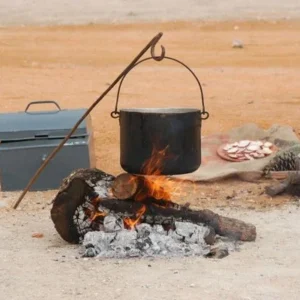
Lack of access to clean cooking remains a major global development challenge, with around 2.1 billion people still relying on traditional cooking fuels. Of these, about 900 million live in Sub-Saharan Africa. This dependence has serious health and social consequences, especially for women and children, who are disproportionately exposed to harmful household air pollution linked to disease, premature deaths, and child mortality.
A range of cleaner and more sustainable cooking alternatives already exists, including improved biomass cookstoves, pellets, biogas, ethanol, and electric cooking solutions. Many of these options, particularly those based on renewable energy, can improve health outcomes while also offering environmental benefits, better fuel efficiency, and lower long-term costs. However, adoption remains limited because the households that need these solutions most are often low-income and unable to afford the upfront costs.
To close the global clean cooking access gap by 2030, annual investment of roughly USD 8 billion is needed. Yet only a small share of that funding has been mobilized so far. During discussions held ahead of the International Renewable Energy Agency’s 16th Assembly, governments and stakeholders stressed that accelerating progress will require significantly stronger financial support and more effective strategies to channel investment into the sector.
IRENA emphasized that both domestic and international financing will be essential. While grants and concessional loans from external partners remain critical, governments were encouraged to also expand domestic spending on clean cooking. The message was that scaling solutions will depend on a balanced approach that combines local public investment with continued international development finance.
Even where funding opportunities exist, many intended recipients struggle to access or absorb them. Key barriers include a shortage of bankable projects, high interest rates, strict lending conditions, and limited institutional or business capacity. This creates a situation where capital may be available in theory but is not reaching clean cooking enterprises or households in practice. As a result, there is a growing need for financial instruments such as guarantees that can reduce lending risks and make finance more affordable.
Another major obstacle is the lack of reliable and transparent investment data. Investors need clearer information about where funds are going, what projects are being supported, and what outcomes are being achieved. Better data can improve investor confidence, strengthen accountability, and help mobilize more capital for the clean cooking sector.
To address this gap, IRENA has released new research on clean cooking investments made by Global South governments between 2022 and 2024, based on surveys from 100 of the countries with the largest access deficits and supplemented by OECD analysis. The report calls for a more coherent and coordinated way of tracking international clean cooking finance so that governments, donors, and investors can better understand current funding flows and remaining gaps.
A separate IRENA report focused on Tanzania shows how detailed country- and project-level investment data can support better decision-making. The report maps companies and organizations involved in clean cooking, identifies their funding sources, and highlights both financing and capacity gaps. It concludes that more targeted support is needed to strengthen the business capabilities of clean cooking companies, while also expanding local manufacturing, servicing, and maintenance ecosystems.
At the same time, IRENA argues that scaling up clean cooking should not ignore the role of transitional fuels such as charcoal, particularly in Sub-Saharan Africa where around 157 million people still rely on it as their primary cooking fuel. Excluding charcoal entirely from energy planning could harm livelihoods and create policies that do not reflect on-the-ground realities. Instead, the agency recommends a pragmatic approach that addresses charcoal use strategically within the broader clean energy transition.
Another IRENA report highlights the need for innovation and investment to modernize charcoal production and use. It introduces the concept of a more sustainable “new form of charcoal,” which differs from traditional charcoal in how it is produced, harvested, processed, transported, and used. The report also stresses that successful transition policies should support alternative livelihoods for charcoal producers, helping ensure that sustainability efforts are inclusive and socially viable.
This pragmatic view was reinforced through a workshop in Kenya involving IRENA, research institutions, stakeholders, and representatives from several African countries. The resulting communiqué emphasized that including charcoal in clean cooking discussions is not about endorsing harmful or illegal practices, but about recognizing current realities and improving regulation, sustainability, and transition planning. Overall, the message is that scaling clean cooking will require affordable finance, stronger data, targeted business support, and realistic policies that balance clean energy goals with local economic and social conditions.