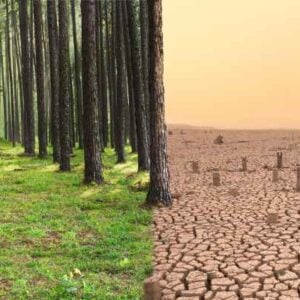
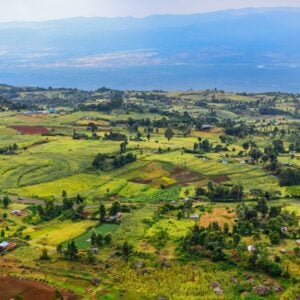
The 2025 Adaptation Gap Report: Running on Empty warns that developing countries will require US$310–365 billion annually by 2035 to adapt to climate change. Despite this urgent need, international public adaptation finance fell from US$28 billion in 2022 to US$26 billion in 2023, highlighting a growing gap. African countries must explore alternative approaches, with social innovation increasingly seen as a promising pathway to advance climate action outcomes.
Southern Africa is currently experiencing two extreme, simultaneous climate events. Since late December 2025, unusually heavy rainfall linked to La Niña has caused widespread flooding across Mozambique, Zimbabwe, South Africa, and Eswatini, destroying infrastructure, farmland, and public services while worsening food insecurity. Meanwhile, parts of South Africa are facing severe drought conditions, with towns along the southern coastline approaching a ‘Day Zero’ scenario, threatening water supply, households, and key economic sectors.
Globally, extreme weather is rising as a major risk. According to the World Economic Forum’s Global Risks Perception Survey, extreme weather ranks third in perceived global threats and is projected to become the top risk over the next decade. Other long-term environmental risks, including biodiversity loss, ecosystem collapse, and critical changes to Earth systems, are closely linked to climate change. Declining global cooperation and reduced funding for climate action underscore the urgent need for stronger, coordinated responses.
Social innovation offers new pathways for climate adaptation by creating processes, products, and organizational models that deliver more effective and equitable solutions to complex social and environmental challenges. Social enterprises, as defined by the Schwab Foundation’s Aligned for Impact initiative, are organizations that combine social or environmental goals with income-generating activities, reinvesting profits to advance their missions. Applying social innovation to climate adaptation can reveal solutions that conventional approaches might overlook.
In Sierra Leone, the Wanwod Development Organization implements a community-led agricultural initiative in Sanda Magbolontor chiefdom, combining polyclonal cashew farming with a Farmers’ Business School to train local farmers, especially women, in climate-resilient farming and enterprise skills. In Zambia, COMACO Ltd integrates wildlife conservation with smallholder farming, promoting conservation-friendly practices, reducing deforestation, and improving soil health while strengthening community resilience to climate shocks.
Kenya’s Sidai Africa demonstrates the importance of last-mile service delivery, providing smallholder farmers with access to quality inputs, veterinary services, diagnostics, and advisory support through franchised outlets and hubs. This integrated approach equips farmers to manage climate risks, improve productivity, and adopt sustainable practices. Social enterprises like these fill service gaps in regions often overlooked by conventional markets and empower communities to develop locally led adaptation solutions.
Despite their potential, investment in social innovation for climate adaptation remains limited. Private investors often perceive adaptation projects as high-risk due to their novelty and lack of long-term track records. Yet, evidence shows substantial returns: the World Resources Institute estimates that every dollar invested in climate adaptation can generate up to $10.50 in economic, social, and environmental benefits. Scaling up adaptation finance requires addressing policy, regulatory, and market barriers, improving access to data, and strengthening supply-chain resilience.
Social innovation thus represents a critical mechanism for building climate resilience in Africa, enabling locally led solutions that strengthen communities’ capacity to anticipate, prepare for, and respond to climate impacts while delivering significant long-term benefits.