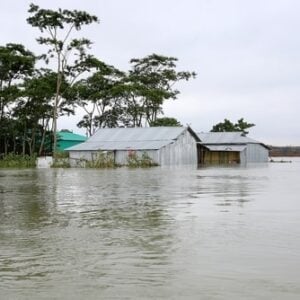
Cyclone Gezani struck eastern Madagascar on 10 February 2026 with winds exceeding 200 km/h, marking the second cyclone to hit the country within two weeks. The storm has affected over 270,000 people, displaced more than 16,000 individuals, and left at least 6,000 children without homes. In the hardest-hit Atsinanana region, particularly in Toamasina, damaged and destroyed housing has forced families into overcrowded shelters, exposing children to risks such as family separation, violence, exploitation, and psychological trauma.
The cyclone has also severely disrupted essential services for children, including access to safe water, healthcare, protection, and schooling. Widespread power outages have compromised the water supply, raising the risk of waterborne diseases, while both university hospitals and 21 health centres suffered damage, including interruptions to vaccine cold chains, restricting access to life-saving care.
Education has been significantly impacted, with 35 schools damaged, 563 classrooms losing roofs, and 218 completely destroyed. This has left thousands of children without a safe learning environment. Emergency efforts are underway to establish temporary learning spaces for up to 14,000 students and provide support for families to access child protection services.
The Government of Madagascar, through the National Bureau for Risk and Disaster Management, is leading the response with support from humanitarian partners, including UNICEF. Emergency assistance delivered so far includes water purification supplies for 2,400 people, WASH kits for 178 households, 2,000 mosquito nets for 1,000 households, emergency health kits for 60,000 people, and support to keep hospitals operational. Public awareness campaigns on hygiene, nutrition, and child protection are also being carried out, along with access to a toll-free hotline for families.
Cyclone Gezani comes as Madagascar is still recovering from Cyclone Fytia earlier in February and an ongoing Mpox outbreak in the northwest, putting additional strain on national response capacity and essential services. Initial response efforts were enabled by nearly US$900,000 from the Central Emergency Response Fund, allowing early action even before the cyclone made landfall.
As humanitarian needs remain high, UNICEF is appealing for US$8.4 million to scale up life-saving assistance and support early recovery for children and their communities, ensuring that essential services, protection measures, and educational opportunities are restored and strengthened in the coming weeks.