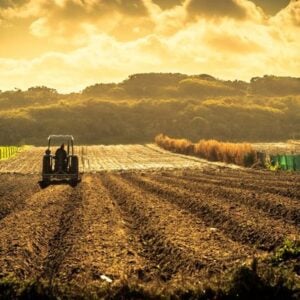
The Food and Agriculture Organization of the United Nations (FAO) has launched a free online learning course aimed at improving understanding and application of land consolidation and land banking, two key land policy instruments that support sustainable and efficient farming. The course was introduced during a webinar in Budapest and developed by the FAO Regional Office for Europe and Central Asia and the FAO eLearning Academy, in collaboration with universities and land consolidation agencies across the region.
The programme is designed to support country-level project implementation while also training future land consolidation professionals. By strengthening technical and administrative capacity, the course aims to address challenges faced by farmers working with fragmented land holdings, which often lead to higher production costs and increased environmental impacts. Land consolidation enables farmers to collaboratively redesign farm layouts, while land banking allows public authorities to redistribute agricultural land to help expand small family farms.
FAO emphasizes that a major challenge in land consolidation lies in bridging the gap between academic training and real-world project requirements. Professionals are often trained in isolated disciplines, whereas effective land consolidation requires integrated expertise across legal, technical, valuation and agricultural fields. The new course responds to this need by offering a practice-oriented learning pathway that brings together these competencies in a single framework.
Drawing on experiences from Europe and Central Asia, the course explores relevant policy, legal and institutional frameworks and provides detailed guidance on implementation approaches, methodologies, guiding principles and safeguards. Real-world case examples are used to connect theory with practice, helping participants translate knowledge into action.
The launch webinar featured insights from countries with hands-on experience in land consolidation and land banking, including Finland, North Macedonia, Slovenia and Ukraine. Overall, the initiative reflects FAO’s ongoing support to countries in the region to strengthen sustainable land governance, improve farm efficiency and promote long-term agricultural resilience through targeted capacity development.