In 2025, the European Bank for Reconstruction and Development (EBRD) invested nearly US$2 billion (€1.72 billion) across 120 projects in Central Asia and Mongolia, marking one of the Bank’s strongest operational results in the region in over a decade. Uzbekistan remained the largest recipient of EBRD funding for the sixth consecutive year, receiving over US$1 billion (€880 million), followed by Kazakhstan with almost US$440 million (€378 million), Mongolia with US$218 million (€188 million), the Kyrgyz Republic with US$212 million (€183 million), and Tajikistan with US$100 million (€88 million).
Approximately one-third of EBRD funds were directed to sustainable infrastructure projects, while another third supported local banks for on-lending to small and medium-sized enterprises (SMEs), women and youth entrepreneurs, and climate resilience initiatives. Around 15 percent of loans went to private companies in manufacturing and services, stimulating foreign direct investment. In total, 68 percent of loans supported private entrepreneurial initiatives, with 53 percent directed toward green economy projects.
Renewable energy projects received significant investment, including a US$142 million (€121 million) package in Uzbekistan to develop the region’s largest combined solar photovoltaic and battery energy storage system in partnership with ACWA Power. Another US$195.5 million (€168.5 million) financed a 300 MW solar plant and 75 MWh BESS facility in Kashkadarya, developed by Masdar. In Tajikistan, the Qairokkum hydropower plant completed a major upgrade, increasing capacity from 126 MW to 174 MW and supplying reliable electricity to 500,000 residents in the Sughd province.
Sustainable infrastructure projects included a US$250 million (€240 million) sovereign loan in Uzbekistan to modernize 110 irrigation pumping stations, reducing energy use and CO₂ emissions. In Kazakhstan, a €45 million EBRD-EU package improved cargo handling at the port of Aktau, while in Tajikistan €38 million from the EBRD and US$86.7 million from the Asian Development Bank upgraded the Dangara-Guliston road. The Kyrgyz Republic received a €62 million loan for a new transmission line and €61.8 million for irrigation and water infrastructure improvements. Mongolia will build a specialized cardiovascular hospital in Ulaanbaatar with a US$34.9 million (€33.5 million) EBRD loan.
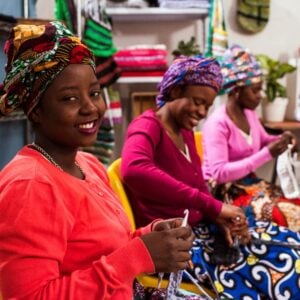
Support for SMEs and the financial sector was a major focus. In Mongolia, 74 percent of EBRD investment flowed through partner banks, including a US$147 million (€135 million) loan to XacBank under the Youth in Business programme and US$20 million (€16.8 million) to Khan Bank for agribusiness. In Uzbekistan, partner bank transactions generated nearly 39 percent of EBRD business, with US$125 million (€108 million) supporting SMEs and green investments. Kazakhstan saw loans totaling US$92 million (€85.5 million) for women and youth entrepreneurs, while more than 4,600 SMEs across the region benefited from advice, training, and mentoring services.
The EBRD also launched its first regional Star Venture programme in Central Asia to accelerate high-potential startups, signed 31 risk-sharing transactions across 26 companies, and marked the 10th anniversary of its Women in Business programme, which has supported over 100,000 women entrepreneurs with US$365 million (€305 million) in financing and assisted 17,000 women with advisory services. As the largest institutional investor in Central Asia, the EBRD has financed 1,250 projects totaling more than €21 billion, strengthening sustainable development, private sector growth, and green investments across the region.