Following renewed clashes between Syrian authorities and the Kurdish-led Syrian Democratic Forces (SDF) in north-east Syria, control over certain detention facilities and camps holding people suspected of Islamic State (IS) affiliation has shifted to the Syrian authorities. Kristine Beckerle, Deputy Regional Director for the Middle East and North Africa at Amnesty International, emphasized that these authorities, in coordination with the Autonomous Administration of North and East Syria (AANES), must carry out a human-rights-compliant screening process. This includes identifying individuals for investigation and prosecution for international or serious domestic crimes, determining who can be repatriated to face justice in their countries of origin, and who should be released, with all proceedings meeting international fair trial standards and avoiding the death penalty.
Beckerle also called on Syrian authorities and AANES to urgently secure and preserve evidence of crimes under international law committed by IS. This includes safeguarding sites of atrocities, mass graves, and documents within detention facilities. Preserving this evidence is essential for establishing the fate of disappeared Syrians and for prosecuting perpetrators of war crimes and crimes against humanity.
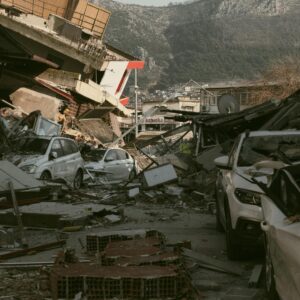
Amnesty International highlighted the severe humanitarian impact of repeated rounds of fighting, urging all parties to adhere to international humanitarian law and ensure civilians are not further harmed by political or military escalations.
The context of the crisis stems from ongoing instability following the fall of Bashar al-Assad’s former government in December 2024, after which the SDF continued to control much of north-east Syria. In late 2025 and early 2026, clashes in Aleppo resulted in at least 20 civilian casualties. Attempts at political agreements, including President Ahmed al-Sharaa’s Decree No. 13 of 2026 and a deal with SDF commander Mazloum Abdi covering governance, border crossings, security integration, and control of IS-related detention sites, collapsed, leading to renewed hostilities, infrastructure damage, and the displacement of approximately 11,000 people to Qamishli in al-Hassakeh governorate.
By 20 January 2026, the Syrian authorities had assumed control of some detention facilities and al-Hol camp, while AANES retained control over other sites. Tens of thousands remain detained in north-east Syria, including Syrians, Iraqis, and other foreign nationals, encompassing both IS perpetrators and victims, such as survivors of trafficking, Yezidi individuals, and members of other minority communities abducted by IS. Amnesty International has repeatedly called for urgent solutions to this humanitarian and legal crisis, emphasizing the need for accountability, protection of human rights, and adherence to international law.