Mauritius and Seychelles, as Small Island Developing States, face distinct yet interconnected challenges in transitioning to renewable energy and advancing circular economy models. Mauritius must address limited land and natural resources, heavy dependence on imported fossil fuels, fragmented policies, capacity gaps, and the need for large-scale infrastructure investment to meet its clean energy ambitions. Seychelles, meanwhile, struggles with mounting waste generation—driven in part by tourism—limited waste management facilities, and insufficient capacity for reducing, reusing, and recycling materials. For both countries, tailored sustainability strategies supported by strong partnerships are essential to achieving long-term resilience.
Despite contributing minimally to global greenhouse gas emissions, both island states are disproportionately affected by climate change impacts such as sea-level rise, extreme weather, and ecosystem degradation. Transitioning to renewable energy and circular economy systems is therefore critical not only for mitigation but also for safeguarding livelihoods, infrastructure, and economic stability. While both governments have set ambitious climate and sustainability targets through their Nationally Determined Contributions, progress has been constrained by regulatory fragmentation, limited access to affordable finance, skills shortages, and persistent gender inequalities in emerging green and blue economy sectors.
Recognizing these challenges, six United Nations agencies joined forces in 2022 under the Joint SDG Fund to support Mauritius and Seychelles through an integrated, multi-agency approach. The collaboration focused on strengthening policy and regulatory frameworks, developing innovative financing mechanisms, enhancing institutional and human capacity, promoting gender-responsive strategies, and mobilizing private sector investment. These efforts aligned with national development priorities and the UN Sustainable Development Cooperation Frameworks, ensuring strong government ownership and coherence with broader development goals.
In Mauritius, UN support centered on advancing ocean renewable energy, particularly offshore wind, as a pathway to diversify the energy mix and reduce reliance on fossil fuels. Technical studies, policy guidance, capacity building, and financing strategies helped identify viable offshore wind sites and investment structures, while also highlighting the importance of inclusive workforce development. Gender-responsive policies, targeted training, and youth engagement initiatives were introduced to ensure broader participation in the renewable energy transition and to create sustainable green jobs.
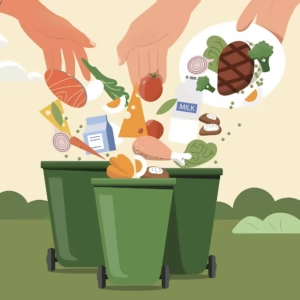
In Seychelles, the focus was on transforming waste management challenges into economic opportunities through a circular economy approach. UN agencies supported the development of a national circular economy roadmap and action plan, accompanied by financing strategies and tools such as the SDG Investor Map. These initiatives aimed to reduce landfill dependence, cut pollution, stimulate private investment, and create new jobs in recycling, sustainable production, and green entrepreneurship, with particular emphasis on empowering women, youth, and persons with disabilities.
Across both countries, innovative financing instruments—including blended finance, challenge funds, diaspora investment mechanisms, and public-private partnerships—played a critical role in unlocking capital for sustainable development. Capacity development initiatives, bootcamps, and entrepreneurship support strengthened local skills, improved access to finance, and fostered innovation in the green and blue economies. Data-driven decision-making and business information platforms further enhanced policy design and investment readiness.
Overall, the joint UN-supported approach demonstrates how coordinated policy reform, inclusive capacity building, and diversified financing can help Small Island Developing States turn climate and resource challenges into opportunities for resilience and growth. The experiences of Mauritius and Seychelles offer a replicable model for other SIDS, underscoring the value of multilateral cooperation, private sector engagement, and people-centered development in advancing sustainable energy, circular economy practices, and long-term economic resilience.