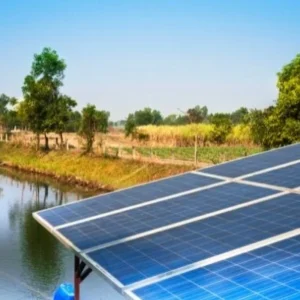
The Africa Minigrids Program (AMP), led by UNDP with support from RMI and the African Development Bank, has launched a strategic partnership with the African Forum for Utility Regulators (AFUR) to strengthen regulatory frameworks for solar minigrids in nine African countries. The collaboration aims to enhance the capacity of regulators and policymakers to expand sustainable energy access, particularly in underserved communities where electricity coverage remains critically low.
The first capacity-building workshop, held in Antananarivo, Madagascar, in November 2025, brought together representatives from Burkina Faso, Comoros, Djibouti, Eswatini, Ethiopia, Madagascar, Malawi, Mauritania, and Somalia. Nineteen participants from public institutions and private operators received training on designing effective, transparent, and inclusive regulatory frameworks. Key stakeholders included the Ministry of Energy and Hydrocarbons, the Electricity Regulatory Authority (ARELEC), and the Rural Electrification Development Agency (ADER). Madagascar’s electricity access remains below 39% nationally and under 20% in rural areas, underscoring the urgent need for distributed renewable energy (DRE) solutions such as solar minigrids.
Solar minigrids offer a practical pathway to electrifying remote communities, but challenges remain, including high tariffs that are often two to three times higher than national grid rates. These affordability issues, if unaddressed, risk undermining the long-term sustainability of projects. Strengthened regulatory frameworks are therefore critical to protect consumers, attract private investment, and ensure financial viability while maintaining accessibility for households and small businesses.
During the workshop, participants gained practical experience with AFUR’s Minigrid Tariff Tool and Model Regulation Tool, enabling them to design tariff methodologies that balance affordability with commercial sustainability. The AMP Community of Practice provides ongoing peer learning and knowledge exchange, allowing lessons from each country to inform improvements across the region.
AFUR and UNDP emphasized the importance of regulatory capacity and regional cooperation for scaling minigrids sustainably. Madagascar illustrates that technology alone is insufficient; predictable, transparent, and investment-ready regulatory frameworks are essential to address local affordability challenges and attract private sector participation. Structured capacity-building and peer learning help countries harmonize approaches, avoid fragmented policies, and accelerate regulatory convergence.
The Madagascar workshop demonstrated how regional collaboration strengthens national outcomes by equipping regulators with tools, harmonized methodologies, and comparative insights. The initiative aims to address complex energy barriers in Madagascar, including heavy reliance on biomass, gender and economic disparities, climate vulnerabilities, widespread poverty, and limited digital connectivity. By improving licensing, subsidies, and tariff-setting processes, the partnership seeks to unlock minigrids’ potential to serve an estimated 1.9 million people across the target countries by 2030.
Supported by generous contributions from the governments of Denmark and Luxembourg through UNDP’s Funding Windows, the partnership aligns with UNDP’s broader mandate to reduce inequalities, promote gender equality, and build resilience. By strengthening regulatory systems and coordinating regional action, the initiative fosters sustainable, affordable, and inclusive energy access across Africa.