• Skip to primary navigation
  • Skip to main content
  • Skip to primary sidebar

fundsforNGOs News

Grants and Resources for Sustainability

  • Subscribe for Free
  • Premium Support
  • Premium Login
  • Premium Sign up
  • Home
  • Funds for NGOs
    • Agriculture, Food and Nutrition
    • Animals and Wildlife
    • Arts and Culture
    • Children
    • Civil Society
    • Community Development
    • COVID
    • Democracy and Good Governance
    • Disability
    • Economic Development
    • Education
    • Employment and Labour
    • Environmental Conservation and Climate Change
    • Family Support
    • Healthcare
    • HIV and AIDS
    • Housing and Shelter
    • Humanitarian Relief
    • Human Rights
    • Human Service
    • Information Technology
    • LGBTQ
    • Livelihood Development
    • Media and Development
    • Narcotics, Drugs and Crime
    • Old Age Care
    • Peace and Conflict Resolution
    • Poverty Alleviation
    • Refugees, Migration and Asylum Seekers
    • Science and Technology
    • Sports and Development
    • Sustainable Development
    • Water, Sanitation and Hygiene (WASH)
    • Women and Gender
  • Funds for Companies
    • Accounts and Finance
    • Agriculture, Food and Nutrition
    • Artificial Intelligence
    • Education
    • Energy
    • Environment and Climate Change
    • Healthcare
    • Innovation
    • Manufacturing
    • Media
    • Research Activities
    • Startups and Early-Stage
    • Sustainable Development
    • Technology
    • Travel and Tourism
    • Women
    • Youth
  • Funds for Individuals
    • All Individuals
    • Artists
    • Disabled Persons
    • LGBTQ Persons
    • PhD Holders
    • Researchers
    • Scientists
    • Students
    • Women
    • Writers
    • Youths
  • Funds in Your Country
    • Funds in Australia
    • Funds in Bangladesh
    • Funds in Belgium
    • Funds in Canada
    • Funds in Switzerland
    • Funds in Cameroon
    • Funds in Germany
    • Funds in the United Kingdom
    • Funds in Ghana
    • Funds in India
    • Funds in Kenya
    • Funds in Lebanon
    • Funds in Malawi
    • Funds in Nigeria
    • Funds in the Netherlands
    • Funds in Tanzania
    • Funds in Uganda
    • Funds in the United States
    • Funds within the United States
      • Funds for US Nonprofits
      • Funds for US Individuals
      • Funds for US Businesses
      • Funds for US Institutions
    • Funds in South Africa
    • Funds in Zambia
    • Funds in Zimbabwe
  • Proposal Writing
    • How to write a Proposal
    • Sample Proposals
      • Agriculture
      • Business & Entrepreneurship
      • Children
      • Climate Change & Diversity
      • Community Development
      • Democracy and Good Governance
      • Disability
      • Disaster & Humanitarian Relief
      • Environment
      • Education
      • Healthcare
      • Housing & Shelter
      • Human Rights
      • Information Technology
      • Livelihood Development
      • Narcotics, Drugs & Crime
      • Nutrition & Food Security
      • Poverty Alleviation
      • Sustainable Develoment
      • Refugee & Asylum Seekers
      • Rural Development
      • Water, Sanitation and Hygiene (WASH)
      • Women and Gender
  • News
    • Q&A
  • Premium
    • Premium Log-in
    • Premium Webinars
    • Premium Support
  • Contact
    • Submit Your Grant
    • About us
    • FAQ
    • NGOs.AI
You are here: Home / cat / Global Report Reveals Slow Progress on Secure Land Tenure

Global Report Reveals Slow Progress on Secure Land Tenure

Dated: February 27, 2026

A new global report highlights that despite progress in land tenure and governance over the past two decades, only 35 percent of the world’s land has formally documented ownership, tenure, or use rights. Approximately 1.1 billion adults—nearly one in four—believe they could lose some or all rights to their land or housing within the next five years, a figure that has risen in recent years. The report, produced by the FAO, International Land Coalition, and CIRAD, underscores that secure tenure is essential for responsible land governance, enabling sustainable investment, peace, and confidence in land use decisions. Although international and national policies have advanced tenure security, the pace of implementation on the ground remains slow, highlighting the need for stronger political commitment and inclusive frameworks.

Tenure insecurity disproportionately affects women and young people, undermining food security, climate action, and biodiversity protection. Secure land rights, the report emphasizes, are foundational to sustainable development and the achievement of multiple global goals. This comprehensive stocktake draws on two decades of guidance, including the Voluntary Guidelines on the Responsible Governance of Tenure, and links land rights to climate resilience, biodiversity, gender equality, and rural transformation. Evidence-based mapping and analysis aim to strengthen public policies, both nationally and internationally.

Globally, states hold legal ownership over more than 64 percent of land, though much of this includes customary land with undocumented rights. Private ownership accounts for slightly over a quarter of all land, while roughly 10 percent of the world’s land has an unknown tenure status. Agricultural land, covering about 37 percent of global land area, is concentrated among a small number of large landholders: the top 10 percent control 89 percent of all agricultural land.

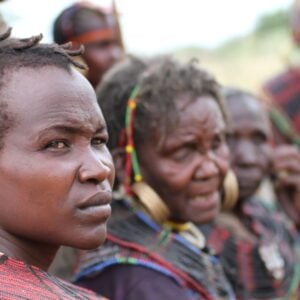
Land tenure systems vary widely across regions. In sub-Saharan Africa, 73 percent of land is held under customary tenure, yet only 1 percent is formally recognized. Eastern and South-Eastern Asia is dominated by state-owned land, while North America, Latin America, and Europe have higher proportions of private ownership. Indigenous Peoples and other customary landholders occupy 42 percent of the world’s land, but only 8 percent have clearly recognized ownership, leaving significant portions of carbon stores and intact forests legally vulnerable. Gender disparities are pronounced, with men more likely than women to hold secure land rights in almost all countries.

The report highlights the imbalance in land distribution: the world’s largest farms of over 1,000 hectares manage more than half of all farmland, whereas 85 percent of farmers cultivate less than two hectares, controlling just 9 percent of agricultural land. While reporting on land-related Sustainable Development Goals remains limited, there is a recent increase in national reporting efforts.

Customary lands, which cover a large portion of the world, play a critical role in biodiversity conservation and climate mitigation. About 77 percent of these lands, totaling 4.2 billion hectares, have been mapped, with significant portions in North America, Europe, Africa, Asia, Latin America, and Oceania. These areas store an estimated 45 gigatons of irrecoverable carbon, equivalent to 37 percent of the global total. Customary lands face growing pressures from urban expansion, industrial agriculture, resource extraction, and even climate-related initiatives like renewable energy and conservation projects, particularly where land lacks formal recognition or protection. Preliminary analysis indicates that substantial portions of intact forests, carbon hotspots, and key biodiversity areas on customary lands remain unrecognized by governments, posing risks to both climate and biodiversity goals.

The report also notes emerging global pressures on land due to large-scale acquisitions driven by climate commitments, such as national net-zero pledges requiring land-based carbon removals. These demands could involve nearly 1.2 billion hectares, roughly the size of all global cropland, highlighting the urgent need for secure, inclusive, and sustainable land governance.
Related Posts

  • Over a Billion People at Risk of Losing Land and Homes by 2031
  • Climate-Smart Equipment Strengthens Dryland Farming and Restores Landscapes
  • Israel Faces Global Criticism Over West Bank Annexation Measures
  • Financing Climate-Resilient Infrastructure in Kosovo
  • Africa Receives €3 Billion+ Investment from EIB Global in 2025

Primary Sidebar

Latest News

EIB Provides €22.5 Million for Sustainable Fibreboard Production in Germany

European Cooperation Gains Global Reach Through EIB and JEFIC

Two people sign an insurance contract at a desk, with car keys placed nearby on the table.

UNDP and Dhaka University Partner to Build Skilled Inclusive Insurance Professionals

Midwives Play Critical Role in Reducing Maternal Deaths Worldwide

IFC Supports Jobs and Financial Inclusion in Peru

Rows of tall sugarcane plants with green leaves in a field.

FAO and UN Women Promote Climate-Smart Agriculture in Kosovo

ADB, ACWA Fund $116M Uzbekistan Wind Power Project

Maryland Launches $300 Million Affordable Housing Investment Plan for 2026

ADB: Global Value Chains Drive Uneven Growth in Asia-Pacific

WHO Introduces Genomics Costing Tool 2.0 for Stronger Public Health Systems

Three white letter blocks arranged on a pale surface spell 'WHO' (W, H, O).

WHO Supports Ireland in Building a More Inclusive Assistive Technology System

Fresh sugarcane stalks arranged on a wooden surface, with several cut ends and green leaves.

Climate-Smart Sugarcane Farming Gains Momentum in South Africa

EBRD Raises Stake to 18.4% in Sarytogan Graphite Limited

Polish Food Processing Sector Boosted by €13.5 Million EBRD Loan to LeciForce

Landmark Conservation Reform Bill to Boost Economy and Nature

Rows of tall sugarcane plants with green leaves in a field.

Modern Orchard Innovation Boosts Local Agriculture in Montenegro

Hooded figure at a workstation with multiple monitors displaying code in a dark data center, suggesting a hacking scene.

NZ Imposes Sanctions on Russian Cyber Actors

Pink torn paper strip with the word 'CORRUPTION' on a dark, torn-paper background.

EBRD Strengthens Compliance Measures with New Corruption Settlements

New Zealand Boosts Cycling Infrastructure Nationwide

New Efforts Aim to Create Safer Environments for Children

Protections Strengthened to Prevent Abuse in International Adoptions

Costa Rica Communities Transform Food Systems for Nutrition

Zambia Opens New Chapter for Child Protection and Support

Gabon Invests $1.38B to Industrialize Poultry Sector

WFP Expands Nutrition and Emergency Support in Bhutan

Aerial view of a historic Middle Eastern city at sunset, featuring a domed mosque and a tall minaret among sandstone buildings.

UNESCO Strengthens Cultural Emergency Response in Middle East

Colorful letters spelling EDUCATION on a dark desk surrounded by school supplies like a keyboard, notebook, clips, and markers.

UNESCO Supports Tanzania’s Digital Education Transformation

£1.3 Million in Charitable Grants Distributed by Smiths Foundation

IRC Partners with Weiss Foundation on Malnutrition Treatment

Foundations Award $2.6M for Research-Practice Partnerships

Grundfos Jubilee Foundation Expands Funding Support

Zambia’s Revenue Push May Hurt Digital ID Adoption

Hand with index finger pointing at digital flip panels spelling FUNDING on a dark background.

Gulbenkian Prize Winners Share Impact of €1M Funding

Green directional road sign reading 'FUNDING' with a right-pointing arrow against a blue sky backdrop, suggesting funding to the right.

Naturbeads Secures €4.1M EU Funding for Microplastic Alternative

UNESCO Sites Provide Lifeline for Global Biodiversity

Gold-toned scientific apparatus suspended in a metal frame inside a modern laboratory.

One in Three Researchers Lack Access to Quantum Facilities

Zambia Commissions Malombe Irrigation Under Climate Fund Project

Tech-Driven Approach to Electoral Violence Prevention in Honduras

Torn green paper revealing the word Citizenship in red on white background.

Government Introduces Test for Citizenship Grant Reforms

Northland Youth to Receive Improved Crisis Support

Funds for NGOs
Funds for Companies
Funds for Media
Funds for Individuals
Sample Proposals

Contact us
Submit a Grant
Advertise, Guest Posting & Backlinks
Fight Fraud against NGOs
About us

Terms of Use
Third-Party Links & Ads
Disclaimers
Copyright Policy
General
Privacy Policy

Premium Sign in
Premium Sign up
Premium Customer Support
Premium Terms of Service

©FUNDSFORNGOS LLC.   fundsforngos.org, fundsforngos.ai, and fundsforngospremium.com domains and their subdomains are the property of FUNDSFORNGOS, LLC 1018, 1060 Broadway, Albany, New York, NY 12204, United States.   Unless otherwise specified, this website is not affiliated with the abovementioned organizations. The material provided here is solely for informational purposes and without any warranty. Visitors are advised to use it at their discretion. Read the full disclaimer here. Privacy Policy. Cookie Policy.