In Brazil’s Amazonas state, the revival of the pirarucu fish has become a powerful symbol of how Indigenous knowledge and science can work together to restore nature and protect livelihoods. The Paumari people, who live along the Purus River and call themselves “the people of the water,” once faced a devastating crisis when the pirarucu—an essential source of food and income—nearly disappeared from their waters.
As dusk settles over the river and the heat still clings to the air, the sound of a pirarucu surfacing to breathe is once again heard. For the Paumari, this deep, ancestral sound marks the return of life. Just over a decade ago, the situation was bleak. By 2009, the pirarucu population had fallen to only 266 adult fish, threatening not just the ecosystem but the very survival of the community. Fisherman Chico Paumari remembers arriving at lakes emptied of fish and wondering how families would feed their children. Nature, he says, was asking for help.
For many years, academic research and traditional Indigenous knowledge existed side by side without truly connecting. Scientists brought data and forms, while Indigenous communities relied on observation, intuition and generations of lived experience. The turning point came when both sides chose to work together. With support from OPAN (Operação Amazônia Nativa), one of Brazil’s oldest Indigenous organizations, a bridge was built between these two worlds.
This collaboration led to a community-based management system that combined scientific monitoring with ancestral practices. The Paumari began carrying out annual fish censuses, protecting their territory through surveillance, and allowing fishing only under strict rules that limit harvesting to no more than 30 per cent of adult fish. Today, the pirarucu population in the region has rebounded to more than 10,000 adult individuals. The approach is neither purely scientific nor purely traditional, but a shared social technology rooted in respect for nature’s limits.
According to Felipe Rossoni, a biologist with OPAN who has worked alongside the Paumari since 2009, Indigenous fishers understand the river in ways no textbook can teach. They know how fish respond to the moon, the mud and the flow of water. The role of scientists, he explains, has been to help organize this knowledge so it can align with state regulations without losing its essence. Beyond restoring fish stocks, the process has strengthened community governance, enabled infrastructure development, created a community fund and restored pride to people who long felt ignored.
This local success reflects a wider shift taking place in Brazil, where Indigenous knowledge is increasingly being recognized in national decision-making. The creation of the Ministry of Indigenous Peoples in 2023 marked an important step in this direction. Eloy Terena, an Indigenous lawyer and the ministry’s executive secretary, says the challenge lies in translating village knowledge and natural rhythms into administrative and legal systems that shape environmental permits, land boundaries and climate policies.
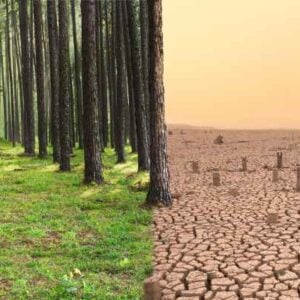
While resistance remains—particularly from sectors that see Indigenous land demarcation as a barrier to economic growth—research consistently highlights the effectiveness of Indigenous land management. Studies by the Amazon Environmental Research Institute (IPAM) show that Indigenous territories are far more successful in preventing deforestation than private lands. Over the past 30 years, Indigenous lands in Brazil have lost just 1.2 per cent of their original vegetation, compared to nearly 20 per cent on private lands.
Climate data reinforces this picture. In the Xingu Indigenous territory, average temperatures are about two degrees lower than in surrounding agricultural areas, and evapotranspiration levels are higher, helping sustain the so-called “flying rivers” that carry moisture across the continent. These invisible rivers play a critical role in irrigating farmland far beyond the Amazon. As IPAM researcher Paula Guarido puts it, where there is Indigenous land, there is standing forest—the last green frontier.
During the COP30 climate conference held in Belém in November 2025, Indigenous voices were firmly established as essential to any credible climate strategy. The restored lakes of the Purus River, satellite images of intact forests and global climate commitments are all part of the same story. Experts increasingly agree that defending Indigenous territories is inseparable from ensuring global climate stability.
As night falls and the sounds of the rainforest shift, the Amazon continues its quiet work, sending moisture southward to sustain ecosystems and agriculture alike. Yet the role of Indigenous peoples in maintaining this balance is often overlooked. The lesson from the Paumari and other water peoples is clear and urgent: protecting Indigenous territories is not an act of charity or cultural preservation alone—it is a strategy for planetary survival.
Dinamam Tuxá, coordinator of the Articulation of Indigenous Peoples of Brazil (APIB), sums up this message simply. Humanity already has the knowledge needed to prevent environmental collapse, he says. The real question is whether the world is ready to learn from the Earth and those who have lived in balance with it for generations.