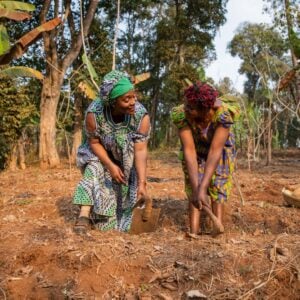
World Food Day 2025 brought together people and communities across Europe and Central Asia to promote a sustainable, safe and climate-resilient future where everyone has access to nutritious food. Marked annually on 16 October, the celebration coincided this year with a major milestone: the eightieth anniversary of the founding of the Food and Agriculture Organization of the United Nations in 1945. The anniversary highlighted eight decades of work to eradicate hunger, support farmers and rural workers, strengthen agrifood systems and uphold the right to food as a fundamental human right.
Under the theme “Hand in Hand for Better Foods and a Better Future,” World Food Day 2025 emphasized the importance of collaboration and collective action to transform agrifood systems. Across the region, FAO offices and partners mobilized governments, youth, farmers, civil society and the media to showcase leadership, solidarity and innovation, reflecting a shared commitment to building resilient food systems and supporting rural communities from the Western Balkans to Central Asia.
Environmental action featured prominently in the celebrations, with many countries using the occasion to give back to nature. Initiatives included shoreline clean-ups, symbolic tree-planting ceremonies and urban reforestation efforts, linking food security with environmental stewardship. These activities underscored the role of healthy ecosystems in sustaining agriculture and livelihoods while commemorating FAO’s eight decades of service.
Education and youth engagement were central to World Food Day activities, with children and young people across the region learning about healthy diets, food safety, sustainability and biodiversity. Schools hosted educational programmes, creative workshops and pilot initiatives aimed at improving nutrition and reducing food loss and waste. At the same time, youth achievements were celebrated, including the recognition of young farmers whose innovation and leadership are helping drive inclusive and resilient agrifood systems.
Food culture and agricultural heritage were also highlighted, with events showcasing local traditions, culinary diversity and farming knowledge. Festivals, exhibitions and symposia celebrated farmers, producers and rural communities, emphasizing the cultural importance of food alongside its role in nutrition and economic development. These activities reinforced the link between tradition, sustainability and modern agrifood system transformation.
Knowledge sharing and stakeholder engagement formed another pillar of the celebrations. Conferences, lectures, panel discussions and university events brought together experts, policymakers, producers, women’s groups, academics and students to discuss challenges and opportunities in food systems, food safety, seed systems, rural development and resilience. Special attention was given to the role of women in agriculture and rural economies, highlighting their leadership and contributions.
Visibility and public outreach played a key role in marking the anniversary, with nationwide campaigns, exhibitions, cultural events and symbolic actions drawing attention to FAO’s mission and impact. From illuminated landmarks and public art to stamps, billboards and travelling photo exhibitions, countries across the region ensured that FAO’s work and its message reached wide audiences.
Together, the FAO80 anniversary and World Food Day 2025 demonstrated the depth and diversity of partnerships across Europe and Central Asia and the collective resolve to transform agrifood systems. As FAO looks toward its next 80 years, the celebrations conveyed a shared message of solidarity, creativity and cooperation, showing how communities working hand in hand can build better food systems and a more sustainable future for all.