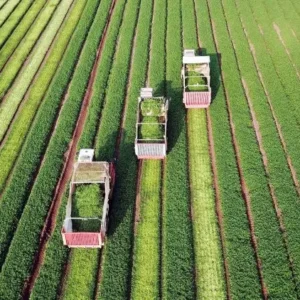
At the Transitioning to Organic Farming Conference held at the Eastern Nebraska Research, Extension, and Education Center in Ithaca, Nebraska, experienced farmers shared insights on the benefits and challenges of organic agriculture. Tom Schwarz, a fifth-generation farmer from southern Nebraska, emphasized how organic farming has allowed his family to reinvest in their own future rather than in chemical inputs. Since transitioning to organic in 1988, the Schwarz Family Farm has produced a variety of crops including corn, soybeans, wheat, field peas, alfalfa, oats, and cover crops, highlighting both the economic and generational advantages of sustainable farming practices.
The panelists all come from long-standing farming families, managing hundreds to thousands of acres, and many had gradually transitioned portions of their operations to certified organic production. For them, organic farming is not only a pathway to profitability but also a means of preserving family legacies and ensuring safer, more sustainable operations for the next generation. This perspective reflects a broader trend among farmers who view organic practices as a strategy for resilience and long-term farm viability.
Organic farming, however, presents notable challenges. Tom Schwarz pointed out that it is management-intensive, requires meticulous recordkeeping, and presents persistent weed pressures. The shift to organic demands flexibility, creative problem-solving, and constant adaptation to changing field conditions. Matt Adams, who farms 600 acres in Seward, Nebraska, discussed similar difficulties, particularly in preparing machinery and cultivation setups for large-scale organic grain production. His experience converting former Conservation Reserve Program land to organic crops revealed low initial yields and high weed pressure, underscoring the practical obstacles new organic farmers face during transition.
Panelists emphasized the value of community and peer learning as essential resources for overcoming challenges. Barry Young of Young Family Farm highlighted the importance of collaborating with other organic and regenerative farmers, sharing knowledge on polyculture planting, weed control, and sourcing inputs. Despite the scarcity of local expertise in organic methods, persistent inquiry and engagement with experienced peers allowed him to navigate key obstacles and successfully implement inter-species planting strategies.
Overall, the conference illustrated that transitioning to organic farming in Nebraska requires patience, preparation, and community support. Farmers benefit from shared knowledge, practical mentorship, and a willingness to experiment, while the rewards include sustainable practices, enhanced profitability, and strengthened family farm legacies.