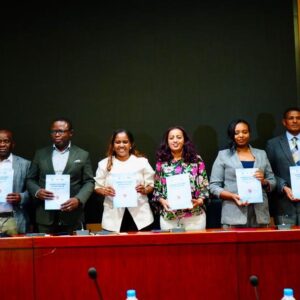
Ethiopia marked World Antimicrobial Resistance Awareness Week (WAAW) 2025 with a high-level national event at the Africa CDC Headquarters in Addis Ababa, officially launching the Fourth National Action Plan for the Prevention and Containment of Antimicrobial Resistance (AMR) 2026–2030. The event, held under the global theme “Act Now: Protect Our Present, Secure Our Future,” brought together senior leaders from the Ministry of Health, Ministry of Agriculture, and the Environmental Protection Authority, alongside representatives from WHO, FAO, Africa CDC, UKHSA, and other partners, emphasizing the urgent need for a coordinated One Health approach to tackle AMR.
In her keynote address, Minister of Health HE Dr Mekdes Daba highlighted that AMR is a growing global threat, causing 1.27 million deaths annually and contributing to nearly 5 million deaths worldwide. She warned that, without decisive action, AMR-related mortality could increase by 70% by 2050, with low- and middle-income countries being disproportionately affected.
Reflecting on Ethiopia’s progress under the previous AMR plan, the Minister noted a 59% increase in AMR awareness among healthcare workers, the establishment of 26 AMR sentinel surveillance sites, implementation of antimicrobial stewardship programs in 328 health facilities, and strengthened infection prevention and control nationwide. Remaining challenges include limited diagnostic capacity, shortages of skilled laboratory personnel, and gaps in regulatory enforcement.
The newly launched National Action Plan 4.0 was developed through a comprehensive, evidence-informed process that included an evaluation of the previous plan, review of global best practices, and systematic prioritization using the SMART Choice tool. A financial framework was established using WHO’s AMR costing and budgeting tool. NAP 4.0 is a five-year, fully costed plan designed to strengthen AMR surveillance, laboratory systems, antimicrobial stewardship, infection prevention, community awareness, and One Health coordination.
Partners, including WHO, reaffirmed their commitment to supporting Ethiopia in implementing NAP 4.0, emphasizing sustained collaboration across sectors and pledging technical assistance to strengthen national AMR governance, surveillance, diagnostics, capacity building, and risk communication.
The event concluded with a multisectoral panel discussion highlighting sector-specific roles and opportunities to accelerate the new plan’s implementation. Government leaders and partners expressed a strong commitment to reducing the burden of AMR and safeguarding the effectiveness of life-saving medicines.
The launch of NAP 4.0 marks a major milestone in Ethiopia’s AMR response, ushering in a new phase of coordinated, evidence-based action to protect public health, food security, and the environment, with WHO serving as a committed partner in efforts to “Act Now” for a safer future.