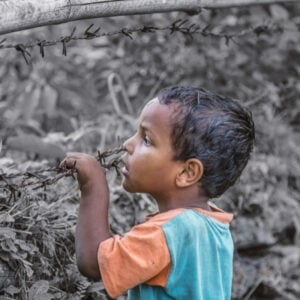
Everyday photos and videos of children, such as those showing them playing, eating, or smiling, can be misused by paedocriminal perpetrators even if no nudity is involved. This includes content created and published by international development actors, including NGOs and UN bodies. While intended to showcase children’s rights, needs, and potential, such imagery can be exploited for sexual purposes, often on both the clearnet and darknet. Even non-nude images are targeted, exchanged, and commented upon in paedocriminal forums, with AI tools increasingly used to sexualize content through so-called deepnude generators. Although exact data are difficult to obtain, research shows that millions of everyday images of children are widely circulated and sexualized, highlighting the scale of the problem.
International development actors need to take this issue seriously because photos and videos of children are central to their work. They help illustrate the impact of humanitarian and development programs, evoke empathy, and encourage donations. However, once such content is misappropriated by paedocriminal perpetrators, it violates fundamental children’s rights, including the right to privacy, protection of their image, mental health, and protection from violence and exploitation. The sexualization of everyday depictions of minors, particularly through AI, poses an increasing risk, especially when the children are easily identifiable.
Addressing this problem requires a shift in how content featuring children is created and published. Direct monitoring of stolen images online is often impractical, so prevention focuses on risk-aware content creation. Save the Children Germany, in collaboration with jugendschutz.net, developed a comprehensive guideline for institutions and organisations. The 36-page publication explains the methods of perpetrators, highlights violated children’s rights, contrasts risky and safer motifs, and provides actionable recommendations. Implementing these guidelines does not require additional resources but demands awareness and careful decision-making when creating or publishing content involving minors.
Reducing the circulation of potentially exploitable images is key to protecting children. When paedocriminals share everyday depictions in forums, it increases their access to further content. By minimizing risky content in circulation, international development actors can limit the material available to perpetrators, thereby enhancing the protection of children’s rights. The guideline serves as a practical starting point for organizations to contribute to safer online representation of minors while continuing their essential work.