The International Organization for Migration (IOM), in coordination with the Government of the Philippines, has mobilized emergency response and early recovery efforts following the impacts of Typhoon Tino (Kalmaegi) and Super Typhoon Uwan (Fung-wong). These storms, with sustained winds up to 185 km/h, struck communities still recovering from a 6.9-magnitude earthquake, displacing nearly 1.8 million people and causing extensive damage to housing, infrastructure, and essential services.
IOM has supported 40 evacuation centres across seven provinces, providing over 1,600 shelter-grade tarpaulins, 1,250 shelter-repair kits, and essential relief items to thousands of affected families. Prior to Uwan’s landfall, modular privacy tents were distributed to ensure evacuees could shelter safely and with dignity. Additional support is underway, including emergency shelters, targeted cash assistance, and clean water and hygiene supplies.
The organization emphasizes the importance of integrated, resilience-focused disaster management. IOM advocates for investments in safer shelters, resilient infrastructure, and locally led disaster planning to reduce repeated displacement and strengthen community systems, particularly in a country facing increasingly frequent extreme weather events.
Preparedness measures have proven lifesaving, notably in Albay, where pre-emptive evacuations protected over 27,000 people. In Bacacay, solar-powered evacuation centres installed through IOM’s community resilience program provided the only electricity in town during the storm, ensuring communication and safe shelter for hundreds of families.
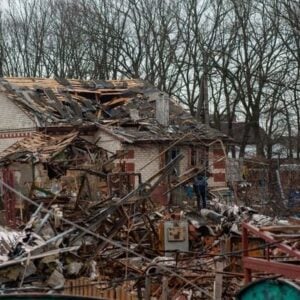
Super Typhoon Uwan is the 21st cyclone to hit the Philippines this year, displacing over 1.8 million people, while Typhoon Tino affected more than 4.3 million individuals and displaced over 382,000. The combined impacts have strained local systems, particularly in Cebu, Negros Occidental, and Negros Oriental, where nearly 190,000 homes were damaged or destroyed, creating heightened protection risks and urgent recovery needs.
Beyond immediate relief, IOM is supporting long-term resilience by helping communities identify households most at risk of displacement, informing climate-resilient interventions. During COP30 in Belém, Brazil, IOM reinforced its call for greater investment in renewable energy, resilient infrastructure, pre-impact planning, and strengthened community-led disaster risk management to help the Philippines better withstand future climate shocks.