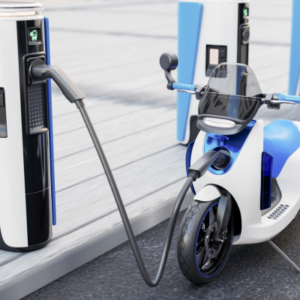
Spiro, an electric motorcycle and battery-swapping company, has identified the Democratic Republic of Congo as one of the African markets it may target in its next phase of growth. The company announced its expansion ambitions alongside a US$215 million fundraising round, saying it plans to accelerate operations across high-growth African markets including the DRC and Ethiopia.
At this stage, Spiro has not confirmed a commercial launch in the DRC. The country has only been mentioned as part of the company’s broader growth strategy, with no announced timeline, pilot city, local partner, or operating model. The new funding is expected to support the expansion of Spiro’s battery-swapping network, manufacturing capacity, technology development, and entry into new African markets.
The funding round includes support from institutional investors, including Impact Fund Denmark, which contributed about US$40 million. Equitane also participated in the transaction, although it did not disclose the size of its investment. The financing gives Spiro additional resources to strengthen its presence in Africa’s electric mobility sector.
Spiro currently operates in Kenya, Rwanda, Uganda, Nigeria, Cameroon, Benin, and Togo. Its industrial footprint includes assembly facilities in Kenya, Rwanda, and Uganda, as well as a battery recycling plant in Nigeria. The company’s business model relies on removable batteries, allowing riders to exchange depleted batteries for fully charged ones at swapping stations instead of waiting for conventional charging.
The DRC could become a relevant market for this model because electricity access and grid reliability remain challenges in several parts of the country. Spiro has also said it is developing battery-swapping stations integrated with solar energy solutions, which could be useful in areas where charging infrastructure is limited. However, successful deployment would depend on charging site availability, battery costs, station network design, and adaptation to local transport patterns.
Kinshasa has already been identified as a city with strong potential for electric motorcycle deployment. A 2024 UNDP feasibility study found that the capital had more than 400,000 motorcycle taxis and projected that about 100 renewable energy-powered charging stations could support a fleet of roughly 500,000 motorcycle taxis by 2050. The study estimated that such a transition could reduce emissions by an average of 700 kilotons of CO2 equivalent by 2050 and generate more than US$1.2 billion in economic benefits.
Early experience with electric motorcycles in the DRC has also shown encouraging results. In October 2025, UNDP distributed electric motorcycles to 15 public institutions in Isiro, the capital of Haut-Uele province. Five months later, the organisation reported positive operational, economic, and environmental outcomes, including a cited case where monthly fuel-related spending dropped from more than 300,000 Congolese francs to between 40,000 and 50,000 francs for one local official.
These early savings suggest potential benefits, but the article notes that such figures cannot be generalised without broader data. Real-world operating costs would depend on usage patterns, maintenance expenses, battery lifespan, charging reliability, and long-term performance under local conditions.
Spiro’s possible interest in the DRC also connects to broader industrial developments in the country. One of its investors, Equitane, is linked to entrepreneur Gagan Gupta, founder of Spiro and chairman of Equitane. Gupta is also associated with Arise, including Arise Integrated Industrial Platforms, which is involved in special economic zones and industrial platform development across Africa.
Arise IIP is already active in the DRC through the Kin-Malebo Special Economic Zone, developed by Congo Industrial Platforms, which is owned 60% by Arise IIP and 40% by the Congolese state. The company has also been cited among partners linked to the future Musompo Special Economic Zone in Kolwezi, which is expected to support activities related to battery precursors, batteries, and potentially electric vehicle assembly.
The DRC has wider ambitions to develop an electric battery value chain based on its strategic mineral resources. A 2023 pre-feasibility study presented by Arise estimated that about US$30 billion in investment would be needed to develop the full value chain. Long-term projections suggested major future revenue potential, although these estimates depend on financing, energy infrastructure, competitiveness, regulation, market access, and the country’s ability to process minerals domestically.
Overall, Spiro’s possible entry into the DRC would take place within a broader context of growing interest in electric mobility, battery production, renewable charging infrastructure, and industrial platforms. While the company has not yet announced concrete deployment plans, its funding round and expansion strategy indicate that the DRC could become an important future market for electric motorcycles and battery-swapping solutions in Africa.