You are here: Home/cat/ StrainX Raises $13 Million to Scale Alternative Protein Manufacturing in India
StrainX Raises $13 Million to Scale Alternative Protein Manufacturing in India
Biotechnology startup StrainX Bioworks has secured $13 million in a funding round aimed at accelerating the production of alternative proteins using advanced synthetic biology and precision fermentation technologies. The round was led by Prime Venture Partners and Leo Capital, with participation from Good Startup, Sparrow Capital, Sun Icon Ventures, Dholakia Ventures, and WindT Angels.
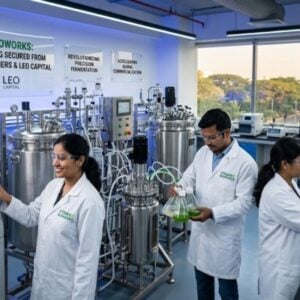
The Bengaluru-based deep-tech company is focusing on building scalable, cost-efficient protein production systems as global demand for sustainable food sources continues to rise. The latest capital infusion will be used to expand manufacturing capacity at its bio-fermentation facility in Bhopal and transition into commercial-scale production.
StrainX operates at the intersection of synthetic biology and precision fermentation, leveraging engineered microorganisms to produce protein alternatives without relying on traditional animal agriculture. This approach is increasingly viewed as a critical solution to global food security challenges, climate concerns, and supply chain constraints in the protein industry.
With India emerging as a significant hub for biotechnology innovation, the country is home to more than 11,000 biotech startups. The broader bioeconomy is projected to grow into a $300 billion market opportunity by 2030, driven by advances in biomanufacturing, agricultural biotechnology, and sustainable food systems.
StrainX’s expansion reflects a broader trend in the alternative protein sector, where startups are moving from research and development toward industrial-scale production. Precision fermentation, in particular, is gaining traction as it enables the production of proteins, enzymes, and other bio-based ingredients with higher efficiency and lower environmental impact compared to conventional livestock farming.
The funding also signals growing investor confidence in India’s deep-tech and biotech ecosystem, especially in areas aligned with climate resilience and sustainable consumption. As StrainX scales its operations, it aims to strengthen domestic manufacturing capabilities while positioning itself within the rapidly expanding global alternative protein market.