The Federal Government of Nigeria and the Global Partnership for Education (GPE) convened a high-level roundtable in Lagos on March 25, 2026, bringing together business and philanthropic leaders in what was described as a landmark effort to deepen collaboration between government and the private sector on education financing and delivery. The event marked an important step in aligning private investment with national education priorities and strengthening partnerships aimed at improving access, foundational learning, and workforce readiness across the country.
Titled “Multiply Possibility in Nigeria: Private Sector Leadership for Education,” the dialogue created a shared platform for government officials, development partners, and leaders from Nigeria’s business and philanthropic communities to explore how private sector expertise and resources can better support education reform. The roundtable underscored a growing recognition that while public financing remains the foundation of a strong education system, private sector engagement can play a critical role in expanding scale, encouraging innovation, and accelerating impact.
A major outcome of the meeting was the launch of a new public-private working group intended to transform how collaboration takes place across Nigeria’s education sector. Co-chaired by the Minister of Education, Dr. Maruf Tunji Alausa, and the Minister of State for Education, Dr. Suwaiba Said Ahmad, the group will include leaders from industry, finance, technology, and philanthropy. Its purpose is to move beyond informal coordination and instead actively drive strategic alignment, unlock financing and partnerships, and reduce fragmentation in education interventions through a more structured and results-oriented framework.
The roundtable also built on Nigeria’s broader push to strengthen domestic financing for education. The government’s planned reform to increase the share of the Consolidated Revenue Fund allocated to the Universal Basic Education Commission from 2 percent to 4 percent would effectively double federal resources for basic education. This proposed increase reflects the administration’s effort to establish a more sustainable funding base for the education sector, while also creating stronger conditions for complementary private investment.
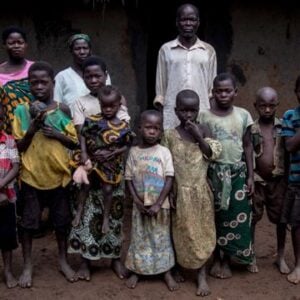
The discussions took place against the backdrop of Nigeria’s significant education challenges. The country has an estimated 14.8 million out-of-school children, while nearly two-thirds of children currently in school are unable to read age-appropriate texts. At the same time, Nigeria’s rapidly growing youth population, the largest in Africa, represents a major opportunity for long-term development if the education system can equip young people with the foundational skills and knowledge needed to succeed. Participants emphasized that addressing these issues requires not only increased funding, but also stronger coordination, better delivery systems, and reforms that connect education outcomes with national development goals.
The event highlighted how private contributions can be aligned with Nigeria’s existing reform agenda, particularly the National Education Sector Reform Initiative and the Education Partnership Compact. It also showcased the role of innovative financing mechanisms in helping expand the reach and effectiveness of education investments. GPE emphasized that private sector actors and philanthropic foundations can contribute more than funding alone, bringing technical expertise, leadership, and practical solutions that can help drive system-wide reform when aligned with government priorities and broader stakeholder collaboration.
Nigeria’s partnership with GPE was also framed within a broader international context. The country is a long-standing GPE partner and will co-host the Multiply Possibility Global Education Summit 2026 alongside Italy and GPE in Rome on June 9, 2026. That summit is expected to bring together heads of state, ministers, international organizations, civil society, philanthropic institutions, and private sector leaders to secure commitments aimed at improving education for 750 million children worldwide. Nigeria’s role in both organizing the Lagos roundtable and co-hosting the upcoming summit was presented as a strong example of national leadership in placing education at the center of development planning.
The roundtable also forms part of GPE’s wider Multiply Possibility campaign, which aims to mobilize US$5 billion for GPE, along with additional domestic financing commitments from more than 90 countries. According to GPE, this investment is expected to catalyze a further US$10 billion in co-financing by 2030, supporting stronger education systems, better learning outcomes, and expanded opportunities for children and youth globally. In Nigeria’s case, the focus is on ensuring that both increased public spending and private investment translate into measurable improvements in student retention, school completion, and learning quality.
Overall, the Lagos roundtable signaled a new phase in Nigeria’s education financing strategy, one that combines stronger domestic public investment with more structured and strategic private sector participation. By launching a dedicated working group and linking national reforms to global education financing efforts, Nigeria and GPE are seeking to create a more coordinated, scalable, and sustainable model for education delivery. The initiative reflects a growing consensus that solving Nigeria’s education crisis will require broad-based partnerships capable of turning financial commitments into tangible improvements for millions of children and young people.