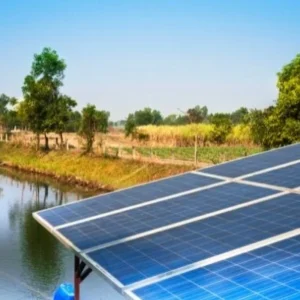
The UK government has announced that “plug-in” solar panels will be available in shops within months, offering households a simpler and more affordable way to reduce their electricity bills. These low-cost systems can be placed on balconies, gardens, or other outdoor spaces and plugged directly into a domestic mains socket, allowing homes to use free solar-generated power without the need for a full installation. The move is part of a wider push to accelerate clean, homegrown energy and reduce the UK’s dependence on volatile fossil fuel markets, especially in light of the ongoing conflict in the Middle East and the resulting energy security concerns.
The government said retailers such as Lidl and Amazon, along with manufacturers including EcoFlow, are working to help bring plug-in solar products to the UK market. This technology is already widely used in parts of Europe, particularly in Germany, where hundreds of thousands of balcony solar systems are added each year. By cutting the amount of electricity households need to draw from the grid, plug-in solar panels could help many families make noticeable savings while also expanding access to renewable energy for renters and people living in flats, who may not be able to install traditional rooftop systems.
Alongside this announcement, the government has introduced new rules under the Future Homes Standard that will ensure the majority of new homes in England are built with solar panels and low-carbon heating systems as standard, with some exceptions such as certain high-rise buildings. These changes are designed to make new homes cheaper to run, more energy efficient, and less exposed to global fuel price shocks. According to the government, these measures could save families up to £830 a year compared with a standard home rated EPC C, while also cutting carbon emissions by at least 75% compared with homes built to 2013 standards.
The Future Homes Standard is being presented as a major shift in housing and energy policy, aimed at making clean energy a built-in feature of future housing rather than an optional upgrade. New homes will be designed to work with low-carbon technologies such as heat pumps, heat networks, and solar power from the outset. The government has also confirmed further technical details for the Home Energy Model, which will eventually become a key method for assessing compliance with the new standard and supporting innovation in efficient new-build housing.
In addition to solar and housing reforms, the government is also launching a new trial that would allow energy suppliers to offer discounted electricity on windy days in areas where excess renewable power is often wasted because the grid cannot carry it all. This is expected to mainly benefit parts of Scotland and the East of England, where wind farms are currently sometimes paid to switch off due to grid constraints. Instead of continuing these “constraint payments,” the government wants to make it more cost-effective to pass this surplus electricity on to households and businesses at reduced prices, particularly during the coming winter.
Overall, the announcements reflect a broader strategy to strengthen the UK’s energy security by expanding renewable energy, electrification, and energy-efficient housing. The government argues that making solar more accessible through both plug-in systems and mandatory new-build standards will help households lower bills, reduce exposure to international energy crises, and support the transition to a cleaner and more resilient energy system. Industry groups, energy companies, and environmental organisations have largely welcomed the measures, describing them as an important step toward a more affordable and sustainable energy future.