• Skip to primary navigation
  • Skip to main content
  • Skip to primary sidebar

fundsforNGOs News

Grants and Resources for Sustainability

  • Subscribe for Free
  • Premium Support
  • Premium Login
  • Premium Sign up
  • Home
  • Funds for NGOs
    • Agriculture, Food and Nutrition
    • Animals and Wildlife
    • Arts and Culture
    • Children
    • Civil Society
    • Community Development
    • COVID
    • Democracy and Good Governance
    • Disability
    • Economic Development
    • Education
    • Employment and Labour
    • Environmental Conservation and Climate Change
    • Family Support
    • Healthcare
    • HIV and AIDS
    • Housing and Shelter
    • Humanitarian Relief
    • Human Rights
    • Human Service
    • Information Technology
    • LGBTQ
    • Livelihood Development
    • Media and Development
    • Narcotics, Drugs and Crime
    • Old Age Care
    • Peace and Conflict Resolution
    • Poverty Alleviation
    • Refugees, Migration and Asylum Seekers
    • Science and Technology
    • Sports and Development
    • Sustainable Development
    • Water, Sanitation and Hygiene (WASH)
    • Women and Gender
  • Funds for Companies
    • Accounts and Finance
    • Agriculture, Food and Nutrition
    • Artificial Intelligence
    • Education
    • Energy
    • Environment and Climate Change
    • Healthcare
    • Innovation
    • Manufacturing
    • Media
    • Research Activities
    • Startups and Early-Stage
    • Sustainable Development
    • Technology
    • Travel and Tourism
    • Women
    • Youth
  • Funds for Individuals
    • All Individuals
    • Artists
    • Disabled Persons
    • LGBTQ Persons
    • PhD Holders
    • Researchers
    • Scientists
    • Students
    • Women
    • Writers
    • Youths
  • Funds in Your Country
    • Funds in Australia
    • Funds in Bangladesh
    • Funds in Belgium
    • Funds in Canada
    • Funds in Switzerland
    • Funds in Cameroon
    • Funds in Germany
    • Funds in the United Kingdom
    • Funds in Ghana
    • Funds in India
    • Funds in Kenya
    • Funds in Lebanon
    • Funds in Malawi
    • Funds in Nigeria
    • Funds in the Netherlands
    • Funds in Tanzania
    • Funds in Uganda
    • Funds in the United States
    • Funds within the United States
      • Funds for US Nonprofits
      • Funds for US Individuals
      • Funds for US Businesses
      • Funds for US Institutions
    • Funds in South Africa
    • Funds in Zambia
    • Funds in Zimbabwe
  • Proposal Writing
    • How to write a Proposal
    • Sample Proposals
      • Agriculture
      • Business & Entrepreneurship
      • Children
      • Climate Change & Diversity
      • Community Development
      • Democracy and Good Governance
      • Disability
      • Disaster & Humanitarian Relief
      • Environment
      • Education
      • Healthcare
      • Housing & Shelter
      • Human Rights
      • Information Technology
      • Livelihood Development
      • Narcotics, Drugs & Crime
      • Nutrition & Food Security
      • Poverty Alleviation
      • Sustainable Develoment
      • Refugee & Asylum Seekers
      • Rural Development
      • Water, Sanitation and Hygiene (WASH)
      • Women and Gender
  • News
    • Q&A
  • Premium
    • Premium Log-in
    • Premium Webinars
    • Premium Support
  • Contact
    • Submit Your Grant
    • About us
    • FAQ
    • NGOs.AI
You are here: Home / cat / Empowering Women in Agrifood Systems: Lessons from Odisha’s Gender-Inclusive Policies

Empowering Women in Agrifood Systems: Lessons from Odisha’s Gender-Inclusive Policies

Dated: March 17, 2026

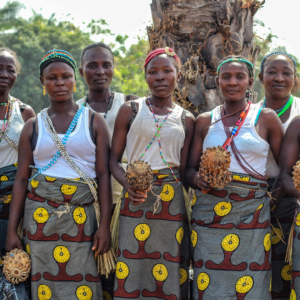
The Indian state of Odisha has emerged as a strong example of how women can be placed at the center of agrifood system transformation. With 85 programs exclusively dedicated to women, 420 gender-sensitive initiatives, and nearly 45% of its state budget incorporating gender-responsive measures, Odisha is actively working toward building an agrifood system that is economically viable, socially inclusive, and environmentally sustainable, with women playing a pivotal and empowering role.

Transforming agrifood systems is a complex process that requires balancing economic growth with social equity and sustainability. Evidence consistently shows that no successful transformation—whether at the national, regional, or global level—has been achieved without the active participation of women. Ignoring gender-related barriers not only limits productivity gains but also weakens structural transformation and equitable development outcomes.

Insights from work conducted with the Gender Responsive Cell (GRC), a policy initiative in Odisha developed with support from International Food Policy Research Institute, highlight how gender considerations can be embedded into agricultural policies, services, and outcomes for women farmers. A key concept emerging from this work is the “gender thoroughfare,” which recognizes the multiple ways gender influences every stage of development—from access to land and labor to productivity and market participation. Despite its critical importance, gender is often overlooked in policy discussions, making it essential to integrate it across all stages of agrifood system transformation.

Different schools of thought on economic development further reinforce the need to incorporate a gender perspective. The structural transformation approach emphasizes shifting resources from low- to high-productivity sectors, but such transitions cannot occur smoothly if gender inequalities persist. Another perspective focuses on strengthening institutions and human capital to drive growth, yet often fails to adequately address gender disparities in planning and implementation. A third approach highlights the role of agrifood systems, particularly the transformation of agricultural value chains, where women frequently contribute significantly, including in leadership roles within food manufacturing and processing sectors.

The importance of gender in development is not a new concept. The Women in Development (WID) movement of the 1970s challenged traditional economic models by recognizing that development impacts men and women differently. This evolved into the Gender and Development (GAD) approach in the 1980s, which focused on addressing systemic inequalities rooted in social structures rather than simply reallocating resources. By the 1990s, the Gender, Environment, and Development (GED) framework further acknowledged that environmental challenges and climate impacts are also shaped by gender, often disproportionately affecting women.

Odisha’s policy landscape offers valuable lessons in translating these ideas into practice. While barriers such as limited land ownership continue to restrict women’s access to subsidies and benefits, the state’s strong network of self-help groups (SHGs) has played a crucial intermediary role. These groups enable women to pool resources, access credit at low interest rates, rent machinery, and participate more actively in markets. By functioning collectively, SHGs help women overcome social norms that often limit mobility and economic participation.

Several flagship initiatives demonstrate Odisha’s commitment to gender-responsive development. The Odisha Millets program promotes traditional crops, improves nutrition, and supports climate-resilient practices while integrating women into value chains through SHGs and farmer-producer organizations. Similarly, the Mushroom Mission and Floriculture Mission focus on building sustainable livelihoods for women through export-quality production, with thousands of SHG members being trained in mushroom cultivation over a five-year period.

The Drone Didi scheme introduces advanced agricultural technology by providing drones to women’s groups, enabling them to diversify income sources and improve farming practices. Meanwhile, the Odisha Integrated Irrigation Project for Climate Resilient Agriculture prioritizes women, small and marginal farmers, and socially disadvantaged groups by supporting activities such as hybrid vegetable cultivation, vermicomposting, greenhouse development, and processing infrastructure. These initiatives collectively aim to strengthen women’s participation across the entire agrifood value chain.

Despite these significant efforts, self-help groups alone cannot address all challenges related to women’s empowerment. Structural reforms, particularly those related to land rights and ownership, remain essential for long-term change. Additionally, vulnerable groups such as elderly or economically disadvantaged women may still face barriers to participating in SHGs or repaying group loans. This underscores the continued role of government in ensuring inclusive policies, addressing social barriers, improving implementation, and collecting gender-disaggregated data to ensure that development benefits reach all women effectively.

Related Posts

  • Women’s Leadership and Politics: Essential Statistics and Insights
  • How Mexico is Linking Gender Equality With Climate Action
  • Supporting Women Judges: ADB and UNDP Launch Asia-Pacific Initiative
  • Women's Rights in Africa: Bridging Commitment and Reality
  • CSOs Lead Solutions to Tech-Facilitated Gender-Based Violence

Primary Sidebar

Latest News

NGOs Warn Lebanon on Brink of Humanitarian Crisis Amid Escalation and Mass Displacement

Syria Crisis After 15 Years: Humanitarian Needs Remain Critical Despite Political Change

Czech Government Moves to Tighten NGO Law Amid Transparency Debate and Opposition Criticism

Uganda Freezes NGO Bank Accounts as FIA Investigates Funding Sources and Financial Irregularities

NGO Empowers 60 Lagos Residents with Vocational Skills to Boost Livelihoods and Prevent Child Labour

Olkeriai River Crisis: How Sand Harvesting Is Drying Water Sources and Disrupting Maasai Life in Kenya

10 Key Lessons from Early Warning Systems Innovators Driving Anticipatory Action for Climate Disasters

Tajikistan Needs $1 Billion Annually to Meet Climate Goals and Boost Resilience

Solar Power Transforms Maternal Care and Immunisation in Rural Uganda Health Centres

UNDP Delivers Climate-Resilient Homes to Flood-Affected Families in Quetta

Tree Canopy Charges and Citizen Resistance: Lessons from Victoriaville, Quebec

Aging Pipes and Inequality: Lessons from the Jackson, Mississippi Water Crisis

WaterAid Bangladesh Hosts National WASH4UP Workshop to Strengthen Urban Sanitation and Hygiene Services

UNFPA and FIGO Partner to Boost Innovation and Investment in Women’s Health

Empowering Women in Agrifood Systems: Lessons from Odisha’s Gender-Inclusive Policies

Palisades & Eaton Wildfires: Key Lessons for Fire Management

Leadership Insights from the Luftwaffe in WWII

Cracking the Energy & Climate Finance Puzzle

Marshall Islands’ Reimaanlok Vision: Community-Led Ocean Conservation Expedition

Why Nepal Struggles with Infrastructure Development

Seven Lessons on Financial Sustainability from Better Breed Cameroon

National Strategy to Combat Technology-Driven GBV in Pakistan

UNDP Launches ASEAN Responsible Business Collective

UNDP and Germany Back Flood-Resilient Housing in Balochistan

FfD4 Insights: Strategic Dialogues for Action

Government Aims to Go Further and Faster on Energy Security

EU Extends Sanctions on Russia: Member States Reach Agreement

USDA Launches Funding to Boost Local Farm Markets

Strengthening Field Epidemiology Capacity in SE Asia

Why Community Voices Are Key to Effective Aid in Bangladesh

The Lab Picks 8 Innovations to Drive $600M Climate Funding

$2M Emergency Health Funding Released by WHO for Middle East Crisis

Norway Boosts Aid for Middle East War Victims

More Queenslanders Eligible for Flood Disaster Assistance

$21.2M to Drive Innovative Commercialisation Projects

US Influence Fuels UK Anti-Abortion Activism

Georgia Faces Sharp Democratic Decline, OSCE Finds

Why Governments Must Back Vanuatu’s Climate Call

Penzance Council Awards £25K+ in Grants to Local Groups

IFC Supports Paraguay’s First Green Fertilizer Plant

Funds for NGOs
Funds for Companies
Funds for Media
Funds for Individuals
Sample Proposals

Contact us
Submit a Grant
Advertise, Guest Posting & Backlinks
Fight Fraud against NGOs
About us

Terms of Use
Third-Party Links & Ads
Disclaimers
Copyright Policy
General
Privacy Policy

Premium Sign in
Premium Sign up
Premium Customer Support
Premium Terms of Service

©FUNDSFORNGOS LLC.   fundsforngos.org, fundsforngos.ai, and fundsforngospremium.com domains and their subdomains are the property of FUNDSFORNGOS, LLC 1018, 1060 Broadway, Albany, New York, NY 12204, United States.   Unless otherwise specified, this website is not affiliated with the abovementioned organizations. The material provided here is solely for informational purposes and without any warranty. Visitors are advised to use it at their discretion. Read the full disclaimer here. Privacy Policy. Cookie Policy.