• Skip to primary navigation
  • Skip to main content
  • Skip to primary sidebar

fundsforNGOs News

Grants and Resources for Sustainability

  • Subscribe for Free
  • Premium Support
  • Premium Login
  • Premium Sign up
  • Home
  • Funds for NGOs
    • Agriculture, Food and Nutrition
    • Animals and Wildlife
    • Arts and Culture
    • Children
    • Civil Society
    • Community Development
    • COVID
    • Democracy and Good Governance
    • Disability
    • Economic Development
    • Education
    • Employment and Labour
    • Environmental Conservation and Climate Change
    • Family Support
    • Healthcare
    • HIV and AIDS
    • Housing and Shelter
    • Humanitarian Relief
    • Human Rights
    • Human Service
    • Information Technology
    • LGBTQ
    • Livelihood Development
    • Media and Development
    • Narcotics, Drugs and Crime
    • Old Age Care
    • Peace and Conflict Resolution
    • Poverty Alleviation
    • Refugees, Migration and Asylum Seekers
    • Science and Technology
    • Sports and Development
    • Sustainable Development
    • Water, Sanitation and Hygiene (WASH)
    • Women and Gender
  • Funds for Companies
    • Accounts and Finance
    • Agriculture, Food and Nutrition
    • Artificial Intelligence
    • Education
    • Energy
    • Environment and Climate Change
    • Healthcare
    • Innovation
    • Manufacturing
    • Media
    • Research Activities
    • Startups and Early-Stage
    • Sustainable Development
    • Technology
    • Travel and Tourism
    • Women
    • Youth
  • Funds for Individuals
    • All Individuals
    • Artists
    • Disabled Persons
    • LGBTQ Persons
    • PhD Holders
    • Researchers
    • Scientists
    • Students
    • Women
    • Writers
    • Youths
  • Funds in Your Country
    • Funds in Australia
    • Funds in Bangladesh
    • Funds in Belgium
    • Funds in Canada
    • Funds in Switzerland
    • Funds in Cameroon
    • Funds in Germany
    • Funds in the United Kingdom
    • Funds in Ghana
    • Funds in India
    • Funds in Kenya
    • Funds in Lebanon
    • Funds in Malawi
    • Funds in Nigeria
    • Funds in the Netherlands
    • Funds in Tanzania
    • Funds in Uganda
    • Funds in the United States
    • Funds within the United States
      • Funds for US Nonprofits
      • Funds for US Individuals
      • Funds for US Businesses
      • Funds for US Institutions
    • Funds in South Africa
    • Funds in Zambia
    • Funds in Zimbabwe
  • Proposal Writing
    • How to write a Proposal
    • Sample Proposals
      • Agriculture
      • Business & Entrepreneurship
      • Children
      • Climate Change & Diversity
      • Community Development
      • Democracy and Good Governance
      • Disability
      • Disaster & Humanitarian Relief
      • Environment
      • Education
      • Healthcare
      • Housing & Shelter
      • Human Rights
      • Information Technology
      • Livelihood Development
      • Narcotics, Drugs & Crime
      • Nutrition & Food Security
      • Poverty Alleviation
      • Sustainable Develoment
      • Refugee & Asylum Seekers
      • Rural Development
      • Water, Sanitation and Hygiene (WASH)
      • Women and Gender
  • News
    • Q&A
  • Premium
    • Premium Log-in
    • Premium Webinars
    • Premium Support
  • Contact
    • Submit Your Grant
    • About us
    • FAQ
    • NGOs.AI
You are here: Home / cat / Why Nepal Struggles with Infrastructure Development

Why Nepal Struggles with Infrastructure Development

Dated: March 16, 2026

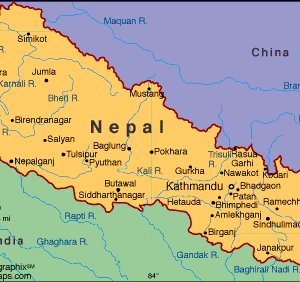
The Nagdhunga–Naubise–Mugling (NNM) road is a crucial transport corridor in Nepal, connecting the Kathmandu Valley to the Terai region and onward to India. As part of Asian Highway AH42, it handles an estimated 60–70 percent of goods entering Kathmandu, including food, fuel, construction materials, and medicines. Recent upgrades under the Strategic Road Connectivity and Trade Improvement Project (SRCTIP) have enhanced pavement quality, road safety, and travel times along the 94.7 km stretch.

Despite these improvements, the project highlighted systemic delays in Nepal’s infrastructure delivery. Land acquisition alone took 35 months—nearly 150% longer than planned—illustrating the broader challenges facing major public investments in roads, hydropower, irrigation, and water supply projects. Structural issues in project execution have led to incomplete projects, delayed services, and limited economic growth, according to the World Bank’s Nepal Capital Expenditure Bottlenecks Analysis (October 2025).

Nepal’s public investment system faces weaknesses across the project cycle. While capital budgets have declined at the federal level and execution rates remain low, project preparation is slowed by prolonged tree-cutting approvals, outdated land valuation, and compensation disputes. Quarterly cash rationing, low disbursements for donor-funded projects, frequent staff turnover, and complex procurement procedures further exacerbate delays. For example, the SRCTIP project experienced a 60-day delay due to inflexible budget reallocation rules, and procurement timelines remain the longest in South Asia.

Addressing these implementation challenges requires reforms that focus on project selection, preparation, financing, and execution rather than merely allocating budgets. Recommended reforms include prioritizing investment-ready projects, accelerating land acquisition and environmental clearances through digital tools, improving cash management and budget reallocations, and streamlining procurement procedures. These steps aim to reduce idle allocations, prevent year-end spending surges, and ensure timely and quality infrastructure delivery.

Some progress has already been made. Following consultations with the government and stakeholders, forest regulations were amended in January 2026 to streamline the tree-cutting approval process. Sustaining this momentum through broader reforms is essential to accelerate infrastructure delivery, enhance economic growth, and generate employment in Nepal.
Related Posts

  • World Bank Supports Nepal Clean Air and Prosperity Project
  • ILO and Zambia Launch Employment Impact Assessment for Luangwa–Mwami Road
  • New Project to Transform Burkina Faso’s Agricultural Sector
  • EU Grants Boost Ukrainian Civil Society Advocacy Projects
  • World Bank Backs Waste Management Modernization in Bosnia and Herzegovina

Primary Sidebar

Latest News

UN Declaration on Enslavement: Three Key Lessons

Norway Boosts Support for Humanitarian Aid Efforts

Sudanese Refugees in Chad Face Aid Funding Crisis

Meaning of a Socially Responsible Business Explained

EU Judiciary Defends LGBTQ+ Rights in Key Ruling

UN Warns of Child Trafficking Crisis in South Sudan

Russia: UN Experts Condemn Abuse of Extremism Laws

Portugal Contributes €70,000 to OPCW Activities

Fragile Economies: Why They Keep Falling Behind

Liberia Focuses on Safety and Economic Growth

SHAPE’s Role in Age-Inclusive Humanitarian Action

Angola Celebrates World Health Day with Focus on Equity

Ghana Launches Maternal Mental Health Policy

Niger Makes Major Progress Against Polio

Angola Enhances Cholera Response with UN Support

OECD Data Shows Record Drop in Aid, Rockefeller Calls for Response

Saint Vincent Hot Pepper Value Chain Gets FAO Training Boost

Multi-Million Dollar Boost for Zambezi River Basin Projects

European Union Funds Accredited Solar Skills Training

India, IFAD Sign $46M Deal for Climate Farming in Mizoram

Mexico Advances Sovereign Path for Trans Rights

Israeli Pressure Silences Palestinian Child Rights Group

Russia Criminalizes Human Rights Work with Memorial Ban

Belarus Mirrors Russia’s Propaganda Strategy

Social Protection Must Adapt to Changing World of Work: ILO

Strengthening Inclusive Organizing in Malaysian Trade Unions

Sudan Refugees, Child Trafficking, Burundi Illness: World News Update

Israeli Strikes Leave Lebanon Health System Overwhelmed

Global Development Finance Gap Risks Reversing Progress

Ireland Allocates €4.4M for Heritage Building Conservation

Rural Chile Digital Divide: Progress and Challenges in La Araucanía

Yemen Floods Worsen Humanitarian and Economic Crisis

Nepal Growth to Moderate in FY26 Amid Global and Domestic Risks

India Growth Slows but Remains Among Fastest-Growing Economies

Bhutan Growth Outlook Strong, But Job Creation Needs Acceleration

Mongolia Economy Shows Resilience Despite Growing Risks: World Bank

First WHO Forum Brings Together 800+ Collaborating Centres

WFP Sudan Office Returns to Khartoum After Three Years of War

Sudanese Refugees in Chad at Risk as Funding Gaps Widen

ADB: Middle East Conflict to Drag Down Maldives Economic Growth

Funds for NGOs
Funds for Companies
Funds for Media
Funds for Individuals
Sample Proposals

Contact us
Submit a Grant
Advertise, Guest Posting & Backlinks
Fight Fraud against NGOs
About us

Terms of Use
Third-Party Links & Ads
Disclaimers
Copyright Policy
General
Privacy Policy

Premium Sign in
Premium Sign up
Premium Customer Support
Premium Terms of Service

©FUNDSFORNGOS LLC.   fundsforngos.org, fundsforngos.ai, and fundsforngospremium.com domains and their subdomains are the property of FUNDSFORNGOS, LLC 1018, 1060 Broadway, Albany, New York, NY 12204, United States.   Unless otherwise specified, this website is not affiliated with the abovementioned organizations. The material provided here is solely for informational purposes and without any warranty. Visitors are advised to use it at their discretion. Read the full disclaimer here. Privacy Policy. Cookie Policy.