• Skip to primary navigation
  • Skip to main content
  • Skip to primary sidebar

fundsforNGOs News

Grants and Resources for Sustainability

  • Subscribe for Free
  • Premium Support
  • Premium Login
  • Premium Sign up
  • Home
  • Funds for NGOs
    • Agriculture, Food and Nutrition
    • Animals and Wildlife
    • Arts and Culture
    • Children
    • Civil Society
    • Community Development
    • COVID
    • Democracy and Good Governance
    • Disability
    • Economic Development
    • Education
    • Employment and Labour
    • Environmental Conservation and Climate Change
    • Family Support
    • Healthcare
    • HIV and AIDS
    • Housing and Shelter
    • Humanitarian Relief
    • Human Rights
    • Human Service
    • Information Technology
    • LGBTQ
    • Livelihood Development
    • Media and Development
    • Narcotics, Drugs and Crime
    • Old Age Care
    • Peace and Conflict Resolution
    • Poverty Alleviation
    • Refugees, Migration and Asylum Seekers
    • Science and Technology
    • Sports and Development
    • Sustainable Development
    • Water, Sanitation and Hygiene (WASH)
    • Women and Gender
  • Funds for Companies
    • Accounts and Finance
    • Agriculture, Food and Nutrition
    • Artificial Intelligence
    • Education
    • Energy
    • Environment and Climate Change
    • Healthcare
    • Innovation
    • Manufacturing
    • Media
    • Research Activities
    • Startups and Early-Stage
    • Sustainable Development
    • Technology
    • Travel and Tourism
    • Women
    • Youth
  • Funds for Individuals
    • All Individuals
    • Artists
    • Disabled Persons
    • LGBTQ Persons
    • PhD Holders
    • Researchers
    • Scientists
    • Students
    • Women
    • Writers
    • Youths
  • Funds in Your Country
    • Funds in Australia
    • Funds in Bangladesh
    • Funds in Belgium
    • Funds in Canada
    • Funds in Switzerland
    • Funds in Cameroon
    • Funds in Germany
    • Funds in the United Kingdom
    • Funds in Ghana
    • Funds in India
    • Funds in Kenya
    • Funds in Lebanon
    • Funds in Malawi
    • Funds in Nigeria
    • Funds in the Netherlands
    • Funds in Tanzania
    • Funds in Uganda
    • Funds in the United States
    • Funds within the United States
      • Funds for US Nonprofits
      • Funds for US Individuals
      • Funds for US Businesses
      • Funds for US Institutions
    • Funds in South Africa
    • Funds in Zambia
    • Funds in Zimbabwe
  • Proposal Writing
    • How to write a Proposal
    • Sample Proposals
      • Agriculture
      • Business & Entrepreneurship
      • Children
      • Climate Change & Diversity
      • Community Development
      • Democracy and Good Governance
      • Disability
      • Disaster & Humanitarian Relief
      • Environment
      • Education
      • Healthcare
      • Housing & Shelter
      • Human Rights
      • Information Technology
      • Livelihood Development
      • Narcotics, Drugs & Crime
      • Nutrition & Food Security
      • Poverty Alleviation
      • Sustainable Develoment
      • Refugee & Asylum Seekers
      • Rural Development
      • Water, Sanitation and Hygiene (WASH)
      • Women and Gender
  • News
    • Q&A
  • Premium
    • Premium Log-in
    • Premium Webinars
    • Premium Support
  • Contact
    • Submit Your Grant
    • About us
    • FAQ
    • NGOs.AI
You are here: Home / cat / Clean Energy Solutions Power Farming Progress in Zambia

Clean Energy Solutions Power Farming Progress in Zambia

Dated: March 6, 2026

Eastern Province in Zambia is experiencing a quiet transformation as rural communities adopt renewable energy solutions powered by the sun, water, and biomass. Through the Joint Sustainable Development Goals (JSDG) Project, communities in Chipata, Mambwe, Lundazi, and Petauke districts are using clean energy to improve livelihoods, create green jobs, and strengthen resilience to climate change. The initiative, implemented by the International Labour Organization (ILO), United Nations Children’s Fund (UNICEF), and United Nations Development Programme (UNDP), aims to accelerate the adoption of sustainable energy solutions while supporting rural entrepreneurs, farmers, and training institutions to boost productivity and economic growth.

As part of the project, 40 micro, small and medium enterprises (MSMEs) and instructors from technical education, vocational, and entrepreneurship training institutions in Eastern Province have been trained to support Zambia’s clean energy transition. By promoting business innovation and integrating renewable energy into training programmes, the initiative is helping build a supportive ecosystem for inclusive green growth, job creation, and the wider adoption of sustainable energy technologies.

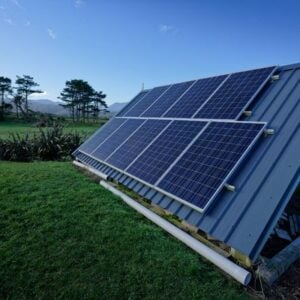
A key example of this transformation is the farming community of Nkhundye, located about 50 kilometres east of Petauke town and home to around 600 households. The community has adopted solar and bioenergy technologies for household use and agro-processing, improving food security while reducing costs for families. A biogas mini-energy facility now provides clean lighting and cooking fuel to households and powers a generator that pumps water to vegetable gardens, enabling year-round farming and better nutrition for residents.

The biogas system is supported by a communal kraal capable of holding up to 300 cattle. Livestock dung collected daily from the kraal is used to produce biogas, turning agricultural resources into a reliable energy source. This approach has brought major benefits, particularly for women, who no longer rely on firewood for cooking. As a result, exposure to harmful smoke and the burden of collecting firewood have been significantly reduced, while households now have easier access to clean water supplied through solar-powered pumps and storage systems.

Energy from the facility is distributed through underground pipes to homes within a 100-metre radius, while households further away receive biogas in portable inflatable bags that last several days. The energy is provided free of charge, ensuring that all families benefit from the initiative regardless of their income level. Residents report that the shift to clean energy has reduced household workloads and created more time for farming and other productive activities.

Encouraged by the project’s success, the community has begun constructing a second kraal with the capacity to hold up to 1,000 cattle. This expansion will allow the village to achieve full energy self-sufficiency while reducing pressure on surrounding forests. Community leaders hope to replicate the model in other villages across Petauke district and beyond, demonstrating how locally available resources can be used to create affordable, sustainable energy systems that support livelihoods and environmental protection.


Related Posts

  • $39.5M Boost for SolarAfrica CESA from Vantage Capital
  • Moldova’s Energy Shift from Russia Challenges Europe’s Energy Union
  • Southern Africa Energy Outlook at SAOGC 2026
  • Solar Boom in Ghana: 1.48GW Capacity Forecast by 2031
  • Rockefeller Foundation Adds $10M to Boost Electricity Access in Africa by 2030

Primary Sidebar

Latest News

Côte d’Ivoire Leading the Way: Inspiring Women in Leadership

Georgia’s Towns Transforming SDGs Into Local Impact

UN Agencies Spotlight Justice and Resources for Women Farmers in 2026

Bangladesh: How Goats Are Helping Reduce Child Marriage Rates

Call for Nominations: UNEP’s 2026 Champions of the Earth Award

EU Donates €1M to Boost Trade Capacity in Developing Countries and LDCs

€1M Funding Boost for Wildlife and Habitat Protection in Zimbabwe

Mission 300 Fellowship Program to Grow Across 18 African Nations

Zimbabwe Halts $367M US Health Funding Over Data Sharing Concerns

Germany Considers Bill That May Undermine Right to Social Security

Israeli Military Orders Mass Evacuation in Southern Lebanon as Conflict Escalates

Angola Enacts New Civil Society Law Amid Human Rights Concerns

From School to Work: Tackling Albinism Discrimination

Middle East Crisis: Australia and Canada Criticized Over Rights Protection

El Salvador Human Rights Defender Faces Ongoing Criminalization

War in the Middle East: Timeline, Impact, and Current Situation

Kosovo’s Forests: Protecting Nature, Boosting Communities and Livelihoods

FAO Launches 2026 International Year of the Woman Farmer to Boost Gender Equality

UN Rome Agencies Spotlight Women Farmers’ Access to Justice and Support on IWD 2026

Africa’s Second Military Emergency Medical Team Set Up in Kenya

UN Urges Fair Competition in Global Critical Minerals Race

Global Update: Sudan Conflict, Rising Inequality, HIV Advances, Domicide Surge

Government of Canada Boosts Youth Jobs in Agriculture

Canada Funds Agri-Food Projects in Montérégie

Federal Government Strengthens Safety and Gender Equality Efforts

Canada and Quebec Fund Sustainable Agriculture Initiatives

Clean Energy Solutions Power Farming Progress in Zambia

Multi-City ILO–ACMA Workshops Build Responsible Business Capacity in Auto Sector

ELA Launches Europe-Wide Campaign to Promote Declared Work

ILO Report: Women More Exposed to Generative AI Job Risks Than Men

Key Insights from Responsible Business Conduct Workshop in India

Japan’s $63.7M Funding Boosts WFP Food Assistance Worldwide

Japan Provides $6.7M to WFP for Rohingya Refugees in Cox’s Bazar

UN Agencies Spotlight Justice and Resources for Women Farmers

Global Partnerships Empower Youth Innovation for the Planet

Kiribati NGOs Call for Stronger Local Governance to Rescue SDGs

Gates Foundation Funds Rainbow Crops with $7M for Food Security Research

UN Tourism and TUI Care Foundation Back Rural Artisans Across Africa

Rockefeller Foundation Adds $10M to Boost Electricity Access in Africa by 2030

South Africa Launches Bid to Produce Long-Acting HIV Drug Lenacapavir

Funds for NGOs
Funds for Companies
Funds for Media
Funds for Individuals
Sample Proposals

Contact us
Submit a Grant
Advertise, Guest Posting & Backlinks
Fight Fraud against NGOs
About us

Terms of Use
Third-Party Links & Ads
Disclaimers
Copyright Policy
General
Privacy Policy

Premium Sign in
Premium Sign up
Premium Customer Support
Premium Terms of Service

©FUNDSFORNGOS LLC.   fundsforngos.org, fundsforngos.ai, and fundsforngospremium.com domains and their subdomains are the property of FUNDSFORNGOS, LLC 1018, 1060 Broadway, Albany, New York, NY 12204, United States.   Unless otherwise specified, this website is not affiliated with the abovementioned organizations. The material provided here is solely for informational purposes and without any warranty. Visitors are advised to use it at their discretion. Read the full disclaimer here. Privacy Policy. Cookie Policy.