A new global report highlights that despite progress in land tenure and governance over the past two decades, only 35 percent of the world’s land has formally documented ownership, tenure, or use rights. Approximately 1.1 billion adults—nearly one in four—believe they could lose some or all rights to their land or housing within the next five years, a figure that has risen in recent years. The report, produced by the FAO, International Land Coalition, and CIRAD, underscores that secure tenure is essential for responsible land governance, enabling sustainable investment, peace, and confidence in land use decisions. Although international and national policies have advanced tenure security, the pace of implementation on the ground remains slow, highlighting the need for stronger political commitment and inclusive frameworks.
Tenure insecurity disproportionately affects women and young people, undermining food security, climate action, and biodiversity protection. Secure land rights, the report emphasizes, are foundational to sustainable development and the achievement of multiple global goals. This comprehensive stocktake draws on two decades of guidance, including the Voluntary Guidelines on the Responsible Governance of Tenure, and links land rights to climate resilience, biodiversity, gender equality, and rural transformation. Evidence-based mapping and analysis aim to strengthen public policies, both nationally and internationally.
Globally, states hold legal ownership over more than 64 percent of land, though much of this includes customary land with undocumented rights. Private ownership accounts for slightly over a quarter of all land, while roughly 10 percent of the world’s land has an unknown tenure status. Agricultural land, covering about 37 percent of global land area, is concentrated among a small number of large landholders: the top 10 percent control 89 percent of all agricultural land.
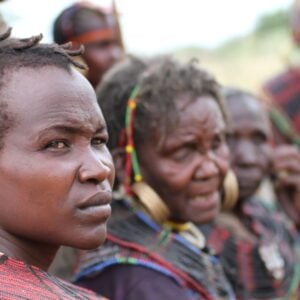
Land tenure systems vary widely across regions. In sub-Saharan Africa, 73 percent of land is held under customary tenure, yet only 1 percent is formally recognized. Eastern and South-Eastern Asia is dominated by state-owned land, while North America, Latin America, and Europe have higher proportions of private ownership. Indigenous Peoples and other customary landholders occupy 42 percent of the world’s land, but only 8 percent have clearly recognized ownership, leaving significant portions of carbon stores and intact forests legally vulnerable. Gender disparities are pronounced, with men more likely than women to hold secure land rights in almost all countries.
The report highlights the imbalance in land distribution: the world’s largest farms of over 1,000 hectares manage more than half of all farmland, whereas 85 percent of farmers cultivate less than two hectares, controlling just 9 percent of agricultural land. While reporting on land-related Sustainable Development Goals remains limited, there is a recent increase in national reporting efforts.
Customary lands, which cover a large portion of the world, play a critical role in biodiversity conservation and climate mitigation. About 77 percent of these lands, totaling 4.2 billion hectares, have been mapped, with significant portions in North America, Europe, Africa, Asia, Latin America, and Oceania. These areas store an estimated 45 gigatons of irrecoverable carbon, equivalent to 37 percent of the global total. Customary lands face growing pressures from urban expansion, industrial agriculture, resource extraction, and even climate-related initiatives like renewable energy and conservation projects, particularly where land lacks formal recognition or protection. Preliminary analysis indicates that substantial portions of intact forests, carbon hotspots, and key biodiversity areas on customary lands remain unrecognized by governments, posing risks to both climate and biodiversity goals.
The report also notes emerging global pressures on land due to large-scale acquisitions driven by climate commitments, such as national net-zero pledges requiring land-based carbon removals. These demands could involve nearly 1.2 billion hectares, roughly the size of all global cropland, highlighting the urgent need for secure, inclusive, and sustainable land governance.