Four years into Russia’s invasion, Ukraine faces unprecedented recovery and reconstruction needs, with the updated Rapid Damage and Needs Assessment (RDNA5) estimating costs at nearly $588 billion (€500 billion) over the next decade, almost three times the country’s projected 2025 nominal GDP. This assessment, prepared jointly by the Government of Ukraine, the World Bank Group, the European Commission, and the United Nations, highlights the scale of long-term reconstruction required across sectors including housing, transport, energy, commerce, industry, and agriculture.
Since February 2022, urgent repair and early recovery initiatives have already addressed at least $20 billion in immediate needs, while the government and development partners have committed over $15 billion for 2026 priorities, including destroyed housing, demining, and multisector support programs. Despite continued attacks on infrastructure, Ukrainian communities and private enterprises have shown resilience, maintaining essential services and supporting ongoing reconstruction efforts.
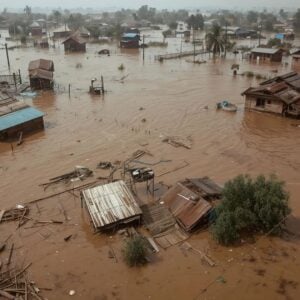
The RDNA5 reports that direct damages now exceed $195 billion (€166 billion), an increase from previous assessments, with housing, transport, and energy sectors most affected. Winter 2025 attacks caused a 21 percent increase in damaged energy infrastructure, while transport needs grew by 24 percent due to intensified attacks on rail and ports. Over three million households have been impacted, with 14 percent of housing damaged or destroyed.
The assessment emphasizes the importance of private sector engagement for recovery, noting that domestic and international investment will depend on reforms that improve the business environment, strengthen competition, expand financial access, and align production with EU green and digital standards. Sustainable and inclusive recovery approaches at the local level, such as the pilot Comprehensive Restoration program, are also critical to fostering community-centered rebuilding and job creation.
Reconstruction costs are highest in the transport sector, exceeding $96 billion (€82 billion), followed by energy ($91 billion/€77 billion), housing ($90 billion/€77 billion), commerce and industry ($63 billion/€54 billion), agriculture ($55 billion/€47 billion), and explosive hazard management and debris clearance ($28 billion/€24 billion). The RDNA5 underlines that human capital—including refugee return, veteran reintegration, and women’s participation in the labor force—is central to Ukraine’s long-term recovery and economic stability.
The assessment also highlights the Government of Ukraine’s efforts to build a resilient, inclusive economic model through postwar recovery planning, anchored in EU accession, IMF and World Bank-supported programs, and the emerging Ukraine Economy of the Future strategy. This strategy focuses on macrofiscal stability, governance reforms, private sector growth, infrastructure rebuilding, and investment in human capital, aiming to strengthen confidence among citizens and investors while accelerating EU convergence and long-term prosperity.