Under the winter sun in Chimkatola, India, Pushpa Devi stands beside a solar-powered rice mill, explaining how women in her village transformed access to irrigation and rice processing. In 2024, the International Water Management Institute (IWMI) and partners introduced solar-powered irrigation pumps and rice mills in Chimkatola and Kevlari, Madhya Pradesh. Just over a year later, these communities are demonstrating that clean energy can enhance both economic empowerment and climate resilience.
The South–South learning exchange, organized under IWMI’s Solar Energy for Agricultural Resilience (SoLAR) project and in partnership with local nonprofit PRADAN, brought researchers and policymakers from Kenya, Ethiopia, Bangladesh, and India to interact with local women farmers. The delegation observed how solar irrigation pumps and rice mills reshaped daily life, highlighting flexible financing, surplus energy utilization, and the potential for combining solar generation with agriculture to significantly boost incomes.
In Kevlari, a community-based Solar Irrigation Pump (SIP) model benefited 13 women farmers. Initial capital investments were covered by IWMI’s SDC-funded SoLAR project, removing financial barriers and allowing women-led Water User Associations (WUAs) to manage operations, water allocation, and revenue. A semi-automatic rice mill powered by unused solar energy was co-financed by the community, IWMI, and a government cash credit loan, enabling local paddy processing and reducing costs.
In Chimkatola, a slightly different model was implemented, with the community contributing to upfront installation costs and reinvesting earnings through a revolving fund. Women-led WUAs operated both the SIPs and solar rice mill, managing financial and technical operations. Training in governance, financial management, and solar technology reinforced collective ownership and energy efficiency, helping initially hesitant women farmers gain confidence to adopt solar irrigation and milling systems.
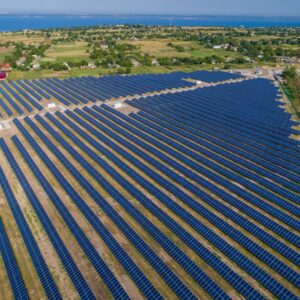
The delegation also visited an agro-photovoltaics (APV) site at ICAR–KVK Ujwa in Southwest Delhi. This system integrates solar panels with crop cultivation, generating additional income from solar power while maintaining agricultural productivity. The 110 kWp APV site demonstrated a 168% increase in total annual income per acre, with 70% of revenue from solar energy and 30% from crops. The model provides a replicable blueprint for regions facing land and water pressures, such as Ethiopia.
The pilot initiatives underscore that technology alone is insufficient. Institutional design, women’s leadership, and financial inclusivity are critical for scaling solar irrigation successfully. IWMI continues to strengthen South–South collaboration, refining community-owned energy models, expanding women-led water governance, and co-developing financing pathways tailored to smallholders’ realities.