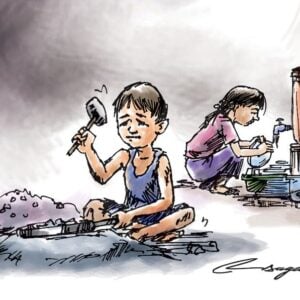
The newly adopted Global Framework for Action against Child Labour emphasizes the urgent need to strengthen implementation of international labour standards, including the ILO Minimum Age Convention (No. 138) and the Worst Forms of Child Labour Convention (No. 182). It calls for improved enforcement, stronger institutions, social dialogue, and effective coordination to combat child labour, which still affects an estimated 138 million children globally, including 54 million in hazardous work. The Framework aims to scale up interventions that have proven effective in reducing child labour.
Adopted at the 6th Global Conference on the Elimination of Child Labour in Marrakech from 11 to 13 February 2026, the Framework underscores the need for faster action to meet the global goal of eliminating child labour by 2030. ILO Director-General Gilbert F. Houngbo highlighted that the challenge lies not in a lack of solutions, but in implementing effective measures at scale. Moroccan Minister Younes Sekkouri noted that the Framework provides a unified platform for governments, employers, and workers to eradicate child labour, particularly in high-risk sectors such as agriculture.
A key focus of the Framework is prevention, especially for children aged 5 to 11 and those in rural areas. Strategies include expanding universal access to free, quality basic education, strengthening social protection systems for children and families, and promoting decent work opportunities for adults and youth. The Framework recognizes that child labour is both a cause and consequence of poverty, shaped by structural factors such as limited employment opportunities and gaps in protections and services.
The Framework advocates for integrated, multidimensional responses linking education, skills development, employment, and social protection to address root causes and expand successful interventions. It also highlights emerging challenges, including technology-facilitated commercial sexual exploitation, and calls for regulatory and policy measures to protect children. Monitoring and accountability are emphasized through improved data collection and regular measurement of progress using agreed indicators.
Particular attention is given to the African region, which, despite being a source of innovation and good practices, has the highest prevalence and absolute numbers of children in child labour. The Marrakech Framework builds on the 2022 Durban Call to Action, reinforcing that eliminating child labour must remain a priority in international sustainable development frameworks through 2030 and beyond. It stresses the need for sustained political leadership, financing, and accountability to ensure continued progress toward ending child labour worldwide.