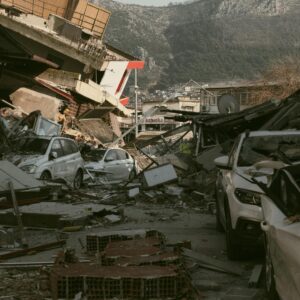
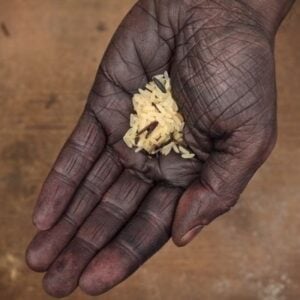
Juliette Touma, Director of Communications at UNOPS, emphasized the urgent need to ease congestion at Gaza’s crossing points and reopen critical supply routes like the Jordan corridor. While the 3 October ceasefire has provided some relief, she stressed that people continue to face daily threats to their lives and cannot wait for a formal reconstruction plan. Immediate access to essential supplies is critical alongside long-term recovery efforts.
UNRWA, the UN agency dedicated to supporting Palestinians, highlighted its longstanding role in Gaza and the wider Occupied Palestinian Territories. Jonathan Fowler, UNRWA Senior Communications Manager, underscored the agency’s responsibility as the largest UN body operating in the Gaza Strip, stressing the need to maintain operations despite the challenging circumstances.
The UN has committed to supporting the newly launched US-led Board of Peace, with Alessandra Vellucci of the UN Information Service noting that the UN’s long-standing leadership in humanitarian aid delivery remains central to the full implementation of Security Council Resolution 2803. Since Sunday, humanitarian partners have provided emergency shelter assistance to over 13,000 households, distributing tents and tarpaulins, though capacity and funding limitations mean only around 40 per cent of the Strip’s 970 displacement sites have been supported.
Healthcare needs in Gaza remain overwhelming, with UNRWA attempting to assist around 15,000 patients daily despite a reduced number of operational clinics—from 22 before the conflict to just six now. Many facilities face restrictions due to their location behind the “Yellow Line,” a series of concrete blocks separating Gazans from Israeli forces, with some buildings heavily damaged or destroyed. UNRWA also remains barred from bringing in its own supplies, further complicating operations.
The agency condemned the recent demolition of its headquarters in East Jerusalem, describing it as a direct attack on the United Nations. Concerns have also been raised about the potential closure of the Kalandia Training Centre, which provides vital vocational skills to lower-income families; its closure would leave students without alternative educational options.
UNRWA officials expressed deep concern about the ongoing situation in the West Bank, particularly one year after Israel’s Operation Iron Wall. The gradual demolition of refugee camps in Jenin, Nur Shams, and Tulkarem is altering the demographics and topography of these communities, with long-term implications for displaced populations and the broader humanitarian landscape in the region.