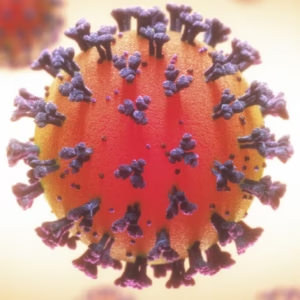
The COVID-19 pandemic began on 31 December 2019 with the first reported cases of pneumonia in Wuhan, China, and over the next three and a half years caused an estimated 6.9 million deaths worldwide. While the global Public Health Emergency of International Concern ended in May 2023, COVID-19 continues to pose a significant health threat. Recent research led by WHO/Europe, together with partners in seven Member States, shows that SARS-CoV-2 still causes hospitalizations and deaths throughout the European Region. The studies confirm that receiving an up-to-date COVID-19 vaccine remains the most effective way to prevent severe disease.
Since the pandemic, WHO/Europe has partnered with ministries of health in eastern European countries to enhance respiratory infection surveillance through the European Severe Acute Respiratory Infection Vaccine Effectiveness (EuroSAVE) Network. Established in 2021, the network covers countries in the Balkans, South Caucasus, and Central Asia. Using this network, research between May 2023 and April 2024 found that nearly 10% of almost 4,000 patients hospitalized for acute respiratory infections had COVID-19. The majority of these patients were over 60 or had at least one chronic condition, groups recommended to receive an annual COVID-19 vaccine. Alarmingly, only 3% of hospitalized patients had received a COVID-19 vaccine in the past year.
COVID-19 continues to cause severe outcomes, with 13% of hospitalized patients requiring intensive care and 11% dying. A comparison with influenza hospitalizations from 2022–2024 showed that COVID-19 patients were more likely to experience severe outcomes, including ICU admission and death. These findings highlight that while COVID-19 is no longer causing the widespread outbreaks seen during the pandemic, it still leads to considerable morbidity and mortality, sometimes exceeding that of influenza.
Studies from the EuroSAVE network further confirm the effectiveness of up-to-date COVID-19 vaccines. Analysis from Kosovo showed that receiving a vaccine within the past six months was 72% effective at preventing COVID-19-related hospitalizations and 67% effective at preventing severe outcomes, including ICU admission and death. Multi-country EuroSAVE data found that vaccination in the previous six months prevented 60% of hospitalizations. Across all studies, most hospitalized high-risk patients had not received an up-to-date vaccine, and in some regions, vaccines were not even available.
In light of ongoing morbidity and mortality, WHO continues to emphasize revaccination for groups at higher risk, including older adults, people with chronic conditions, immunocompromised individuals, pregnant persons, and health workers. Enhanced surveillance through the EuroSAVE network will continue, helping authorities better understand COVID-19’s burden, evaluate vaccine effectiveness, and address urgent public health questions regarding both COVID-19 and other respiratory pathogens.