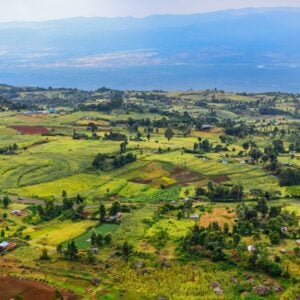
Quito, Ecuador, 9 December 2025 – The IUCN Forest and Grasslands Team, together with IUCN’s South America Regional Office, has launched a new regional Knowledge Platform for Grasslands and Savannahs. The initiative aims to strengthen collaboration, learning, and action across Latin America’s critical grassland and savannah ecosystems, integrating diverse experiences and tools to support sustainable management and restoration while fostering a connected community dedicated to their protection.
Latin America hosts over 600 million hectares of grasslands, savannahs, and rangelands, including high-altitude Puna in the Andes, the Pampas, Campos, Chaco, Cerrado, Caatinga, Patagonian rangelands, and Central America’s dry corridors. These ecosystems support exceptional biodiversity, millions of rural livelihoods, and culturally significant pastoralism and ranching systems, with countries like Argentina, Bolivia, Brazil, Chile, Paraguay, Peru, and Uruguay advancing sustainable practices such as silvopastoralism.
These ecosystems are increasingly threatened by land degradation, unsustainable livestock intensification, and conversion for agriculture. While national measures are emerging, regional collaboration is essential to address cross-border drivers of degradation effectively. The Knowledge Platform seeks to enhance such collaboration, providing a shared space for policymakers, scientists, local communities, pastoralists, NGOs, and civil society organizations to exchange knowledge and co-create solutions.
The platform focuses on systematizing experiences and fostering mutual learning, emphasizing biodiversity conservation, sustainable production, and climate resilience. Social and gender inclusion is prioritized, ensuring Indigenous peoples, local communities, women, and youth actively contribute to knowledge generation. By bridging science, practice, and policy, the platform aims to strengthen technical and political capacities, reduce duplication, and enhance synergies across local, national, and regional levels.
Planned activities include curating technical resources and case studies, hosting webinars and exchanges, supporting capacity building, and facilitating participatory processes that incorporate local and Indigenous knowledge. The platform will also enable policy dialogues and coordinate actions among institutions and countries, advancing sustainable rangeland management throughout the region.
The launch aligns with growing international attention on grasslands and rangelands, including the International Year of Rangelands and Pastoralists 2026 (IYRP) and UNCCD COP17. Recent IUCN World Conservation Congress resolutions recognize the critical role of rangelands in biodiversity, climate action, and human wellbeing, and call for the protection and restoration of native grasslands while addressing threats from land conversion.
In addition to the platform, IUCN collaborates on the BMUKN-IKI-funded project “Safeguarding Overlooked Ecosystems” in Argentina, Colombia, and Paraguay, alongside WWF, Fundación Vida Silvestre Argentina, ZALF, Agri benchmark, governments, research institutions, and local stakeholders. This partnership advances protection, sustainable management, and restoration across the Humid Chaco, Orinoquía, Pampas, and Pantanal regions, integrating these ecosystems into policy agendas and ensuring resilient landscapes.
As 2026 approaches, IUCN aims to leverage the platform, ongoing projects, and international initiatives to sustain the ecological and socio-economic value of Latin America’s grasslands, savannahs, and rangelands for current and future generations.