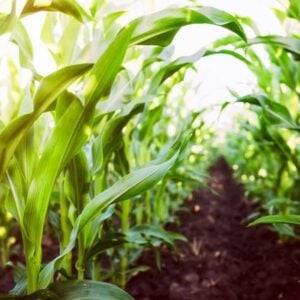
In Wa-Nanbongo, Ghana’s Northern Savannah Zone, women now access a solar-powered borehole that has transformed the community from a drought-stricken area into a productive agricultural hub. Previously, the 2024 dry spell scorched over 1.4 million hectares of crops, forcing families to ration meals and face soaring food prices. Today, farmers can irrigate fields, plant high-yield seeds, and sustain production even during dry spells.
This transformation is made possible by the Additional Financing to the Savannah Investment Program, funded by the Global Agriculture and Food Security Program (GAFSP) through the African Development Bank (AfDB). Women and youth manage the borehole, farmers access climate-smart inputs through a US$1 million rural banking facility, and household incomes rise, replacing reliance on food aid with economic opportunity.
GAFSP grants play a crucial role where borrowing capacity is low, climate risk is high, and private investment is limited. By creating financial space for agriculture, the program helps African countries strengthen food systems, align policies and incentives, and empower communities to build resilient, sustainable farming practices.
Across ten African countries, the AfDB manages more than US$450 million in GAFSP-funded projects, benefiting over 2.3 million farmers. In Liberia, GAFSP has been a consistent agricultural investor, funding projects that expand rice valleys, feeder roads, climate-smart seeds, and farmer-producer linkages. These initiatives have sustained food production, supported nutrition programs, and operationalized farmer field schools, while the World Food Programme now sources school meals locally.
In Tanzania’s Morogoro region, GAFSP provided US$2.85 million to reach remote farmers with climate adaptation, extension services, and market access. This work ties into AfDB’s Tanzania Initiative for Preventing Aflatoxin Contamination, improving drying, storage, and food safety systems to reduce post-harvest losses and open regional and export markets. The infrastructure investments not only safeguard income but also protect health and dignity.
The AfDB–GAFSP partnership addresses gaps in agricultural financing, enabling governments to invest in crop diversification, women-led cooperatives, and climate-risk irrigation where they might otherwise hesitate. By de-risking agriculture with grants, GAFSP mobilizes sovereign lending, private investment, and structured markets to reach remote farmers, land-poor women, unemployed youth, and other marginalized communities.
GAFSP amplifies AfDB flagship programs, such as the Agro-Inputs Risk-Sharing Facility and Business Investment Financing Track, by unlocking capital for agri-businesses that connect smallholders to consumer markets. Grants evolve into risk-mitigated lending, blended finance, and enterprise growth, creating sustainable agricultural pipelines rather than isolated pilots.
The partnership enables resources to reach the most vulnerable, including fragile and conflict-affected areas, with 60% of GAFSP funding directed to countries experiencing fragility. Through collaboration with other multilateral institutions, GAFSP provides a scalable model for delivering agricultural support at scale, bridging gaps in irrigation, storage, seed quality, financial access, youth opportunities, and food safety systems.
Africa’s agriculture is being transformed one investment at a time. From solar boreholes in Wa-Nanbongo to rice fields in Gbarnga, drying sheds in Morogoro, and school kitchens in Jahaur, the AfDB–GAFSP partnership is building resilient, inclusive food systems that expand capacity, reduce hunger, and empower communities. The future of African agriculture is not a promise—it is already under construction.