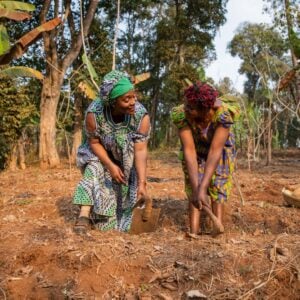
The Acumen Resilient Agriculture Fund (ARAF), financed by multiple partners and development finance institutions including Proparco through AFD Group’s FISEA+ facility, addresses food security and climate change by investing in start-ups that provide innovative solutions for smallholder farmers in East and West Africa. These farmers face severe disruptions due to climate change, such as intense floods followed by long droughts, which threaten crops and livelihoods, particularly affecting vulnerable groups like women and children. Smallholder farmers, who constitute over half of the region’s poor population and supply 80% of its food, are particularly exposed, making agriculture highly unstable and exacerbating food insecurity.
Launched in 2020 by Acumen Capital-Partners, a subsidiary of Acumen, ARAF invests in local start-ups to build an ecosystem that increases farmers’ incomes, enhances living conditions, and strengthens resilience to climate change. By diversifying crops, improving irrigation, and providing access to climate-resistant seeds and species, the fund helps farmers adapt to changing environmental conditions. Its portfolio, as of December 2024, included 13 start-ups operating across East and West Africa, targeting smallholder farmers, more than 30% of whom live below the poverty line. The fund has received $58 million from partners, with a $23 million contribution from the Green Climate Fund (GCF), including a first-loss guarantee facility and grant support for technical assistance to build climate resilience among investees.
ARAF’s initiatives have already impacted more than 2 million farmers in the region, with 90% reporting increased income and improved quality of life. For example, Kenyan farmer Josephine Waweru, who grows coffee in Kirinyaga County, now uses a solar-powered irrigation system from SunCulture, replacing an expensive gasoline system. This technology has allowed her to diversify crops and better manage climate-related risks. Similarly, Jamleck Gichovi Karuri, a farmer and livestock breeder, benefits from reliable solar-powered irrigation, enabling multiple crop cycles and improved livestock care.
Technological solutions are central to ARAF’s approach. SunCulture highlights that reduced rainfall and climate variability have led to Africa’s annual $35 billion food import bill, despite the continent having 65% of the world’s uncultivated arable land. Innovations focus on supporting smallholder farmers who are most vulnerable, ensuring sustainable food production and economic stability. Start-ups like Farmerline, FarmWorks, SunCulture, and East Africa Foods are implementing pragmatic, technology-driven solutions to strengthen climate resilience. FarmWorks, for instance, helps over 3,000 smallholders improve yields and soil health through a climate-resilient supply chain, while Farmerline provides inputs and training tailored to local farmers in Côte d’Ivoire and Ghana, addressing diverse climate risks including irregular rainfall, extreme heat, and flooding.
Access to water is a critical component of climate resilience. SunCulture operates across Kenya, Côte d’Ivoire, Ethiopia, Togo, and Uganda, using off-grid solar technology to provide irrigation, lighting, and mobile phone charging, significantly reducing reliance on rainwater and stabilizing yields. Through these interventions, ARAF supports not only climate adaptation but also food security, economic empowerment, and sustainable livelihoods for smallholder farmers, illustrating the transformative potential of climate-focused agricultural investments in Sub-Saharan Africa.